VRF & Split System Service in Fountain Valley, CA
Medical office suites near the hospital often have rooms with very different needs: exam rooms, imaging, labs, and waiting areas. Ductless and VRF systems let each zone be controlled separately, and dedicated split systems protect server and equipment closets. We size by room, plan for quiet operation, and coordinate with the building owner on electrical capacity and roof or wall space. Our install plan includes electrical capacity checks, roof or wall access, and quiet-operation placement, so patients and staff notice comfort rather than equipment.
Medical office and light-industrial space near the 405/22 interchange.
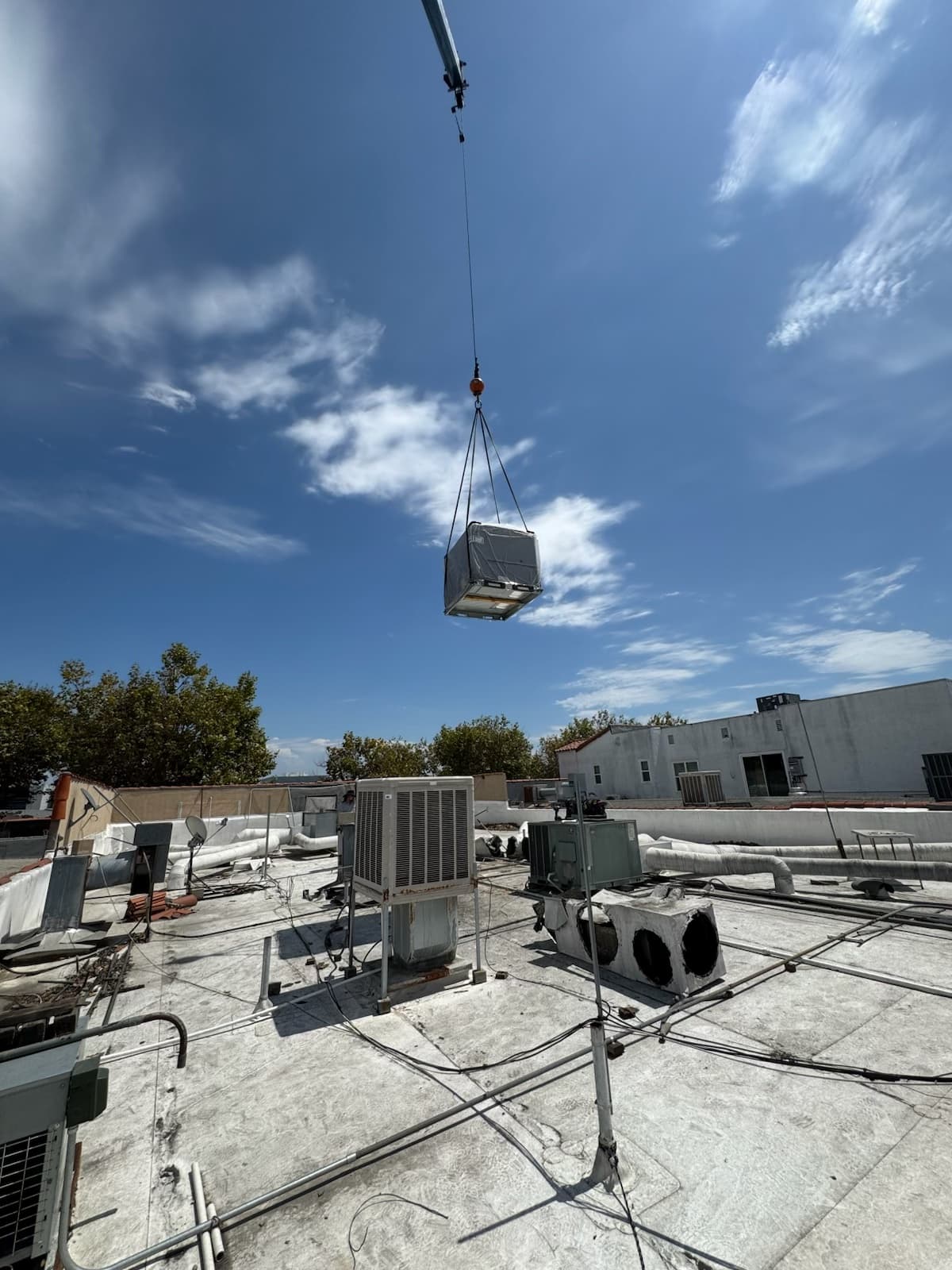
How vrf & split system service work plays out in Fountain Valley
Medical suites in Fountain Valley are where VRF and ductless systems earn their keep. A single floor in one of the buildings near the hospital campuses may hold an imaging room that needs cold, steady air for equipment, exam rooms that swing from empty to crowded every twenty minutes, a lab with its own exhaust, and a waiting room with a wall of west glass. One rooftop unit serving all of that through one thermostat is the source of most comfort complaints in these buildings. Zoned VRF with a branch controller per suite, or dedicated splits for the imaging and server rooms, lets each space hold its own setpoint without a tug of war.
The constraints are practical. Condenser placement on a shared medical condo roof needs association approval and a spot that does not sit in another unit's exhaust. Refrigerant line runs through finished ceilings have to avoid imaging and sterile areas during installation, which usually means evening or weekend work. Electrical capacity in older Euclid and Talbert buildings is often the limiting factor, and we check it before design rather than after. Because this is a mild coastal-basin city, we size for part-load efficiency and quiet operation rather than for extreme-heat survival, which lets smaller condensers do more.
Smaller users benefit too: a dental office adding an operatory, a pharmacy that needs a cold storage room held tightly, or a Brookhurst restaurant converting a storage room into a private dining space. The VRF comparison guide walks through when zoning pays off and when a conventional split is the better choice.
Fountain Valley's climate and what it does to this equipment
Fountain Valley sits in the central basin, with mild coastal influence, moderate summers, and little extreme heat.
For the equipment background behind this page, read our VRF vs. RTU vs. split systems guide or the full VRF & Commercial Split Systems service page.
- Hospital and medical campus areaMedical office and clinical spaces.
- Industrial parks near the 405/22Light-industrial and flex with large RTUs.
- Brookhurst and Warner retailRestaurants and retail centers.
- Euclid and Talbert corridorsOffices and professional services.
- VRF and multi-split service with refrigerant circuit diagnostics
- Ductless mini-split installation for server rooms, tenant spaces, and additions
- Controller, communication, and zoning troubleshooting
- Documented startup and commissioning
What a vrf & split system service visit includes, and the problems we most often find
- Review the system layout: outdoor units, branch controllers, and indoor units
- Read refrigerant-circuit data and communication status
- Inspect drains, filters, coils, and line sets
- Correct the fault and re-verify operation across zones
- Document the system layout and readings by unit
- Communication faults between indoor units, branch boxes, and outdoor units
- Condensate pumps and drains failing in ceiling cassettes
- Refrigerant leaks in long line sets and field joints
- Zones fighting each other because of control setup
VRF & Split System Service in Fountain Valley: questions we get
We are building out a new suite in a Fountain Valley medical condo. Will the association allow a separate VRF condenser on the roof?
Most associations will, but they want a plan first: condenser location, structural support, line-set routing, roof penetration method, and who maintains the equipment. We prepare that package for your architect or the association's manager, coordinate the roofing penetration with the association's roofer so warranties are not voided, and record the installed equipment in your portal account so the suite's system stays distinct from the common rooftop fleet.
Our imaging equipment vendor says the room needs its own cooling. Does a mini split work for that in Fountain Valley?
Often yes, provided it is sized for the equipment's heat output and the vendor's temperature and humidity tolerance, not just the room's square footage. We pull the vendor's specification, size the split with margin, and set it up to run independently of the suite's main system so it holds the room even when the building is in night setback. A redundant head is sometimes worth it where downtime is expensive; we tell you when it is and when it is not.
Do you service all VRF brands?
We service commercial VRF and ductless systems from the major manufacturers. Share the model and we will confirm.
Is VRF right for my building?
It suits buildings with varied zones and limited ceiling space. We help weigh VRF against rooftop and split options for the actual load and layout.
Can you add a ductless unit for a server room?
Yes. Dedicated ductless cooling for IT and equipment rooms is a common job.