RTU & Split Installs in Fountain Valley, CA
Tilt-up buildings in Fountain Valley's industrial pockets frequently carry the same rooftop equipment they were built with, now well past a comfortable service life. Replacement usually involves crane access through narrow drive aisles and loading yards, curb adapters that account for different footprints, and electrical upgrades. We survey conditions in advance, coordinate lift timing with the tenant's shipping schedule, and manage permit and Title 24 acceptance testing. For medical offices, we plan installations outside appointment hours and verify pressure relationships and airflow afterward. A finished binder records equipment data, test results, and warranty details.
Medical office and light-industrial space near the 405/22 interchange.
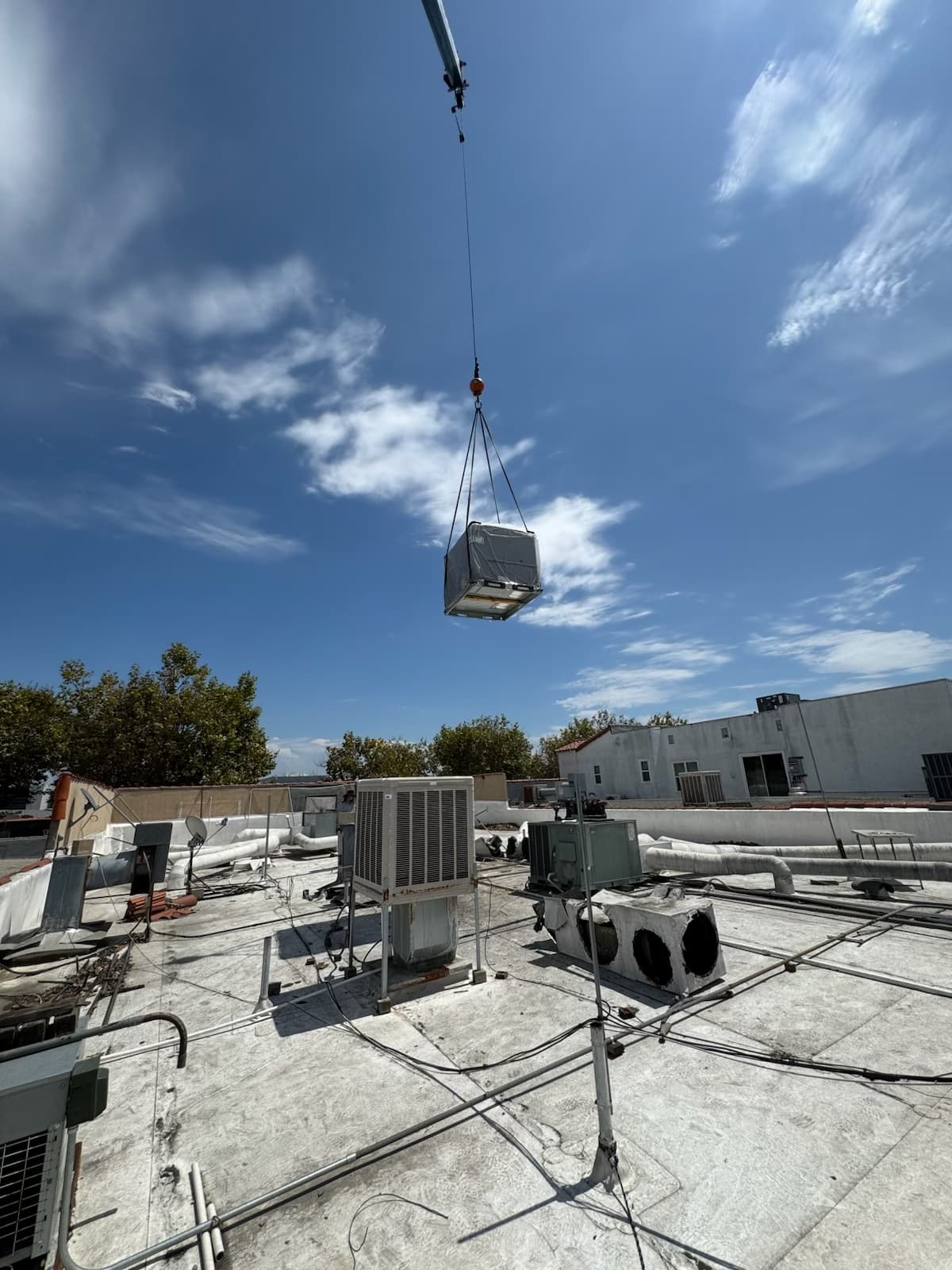
How rtu & split installs work plays out in Fountain Valley
Crane day in a Fountain Valley industrial park has a specific set of constraints. The drive aisles between tilt-up buildings near the 405 and 22 interchange are tight, trucks are staged for loading from early morning, and the roof often holds older units with a footprint no current model matches. Before we schedule anything, we walk the site with the tenant's operations lead and agree on a window, usually a weekday morning after the first wave of outbound freight, and we confirm the crane can set up without blocking a neighbor's dock. Curb adapters are measured and fabricated ahead of time so the old unit comes off and the new one sets in the same lift.
Medical buildings are different. Around the two hospital campuses and the office clusters along Warner and Talbert, we cannot shut cooling to an imaging suite or a surgical center during business hours, so replacements run on weekends or after the last appointment. Pressure relationships in procedure rooms are verified after startup, not assumed, and the practice receives startup readings and a test-and-balance summary it can file. Title 24 acceptance testing and the city permit are handled by us, and the owner sees the inspection card rather than hearing about it.
Retail roofs along Brookhurst are easier structurally but harder on timing, because restaurants and grocers cannot lose cooling on a weekend. Our RTU replacement process is built around getting the shutdown to a single defined block of hours. The rooftop unit guide covers the sizing and selection questions owners here ask most.
Fountain Valley's climate and what it does to this equipment
Fountain Valley sits in the central basin, with mild coastal influence, moderate summers, and little extreme heat.
For the equipment background behind this page, read our commercial rooftop unit guide or the full RTU & Split System Installs service page.
- Hospital and medical campus areaMedical office and clinical spaces.
- Industrial parks near the 405/22Light-industrial and flex with large RTUs.
- Brookhurst and Warner retailRestaurants and retail centers.
- Euclid and Talbert corridorsOffices and professional services.
- Site survey covering load, airflow balancing, and duct condition
- Clean rigging with code-correct gas, electrical, and condensate work
- Startup readings documented and stored in the Portal
- DaVinci Portal included: asset QR tag + warranty paperwork on file
What a rtu & split installs visit includes, and the problems we most often find
- Site survey — existing curb/duct compatibility, load, and airflow requirements
- Equipment selection sized to actual load and hours of operation, not just square footage
- Crane scheduling and rigging coordinated for roof access
- Install with code-correct gas, electrical, and condensate work
- Startup readings taken and documented; warranty registered in the Portal
- Undersized or oversized replacement units causing short-cycling or poor comfort
- Curb mismatches that turn a 'simple swap' into a bigger job mid-install
- Duct transitions that don't match the new unit's airflow requirements
- Aging units on refrigerant types that are getting harder and more expensive to service