Building Controls & Automation in Irvine, CA
Property managers in Irvine often oversee a dozen buildings from one desk, so a controls system is only useful if its schedules, setpoints, and alarms can be trusted across all of them. We audit what the front end shows against what the equipment actually does, correct drifted sensors and overridden schedules, and standardize naming so a manager scanning the portfolio can spot the one unit that is fighting its neighbors.
Dense with corporate campuses, business parks, and multi-tenant office buildings around the Irvine Spectrum and Great Park areas — heavy RTU counts and tight PM windows.
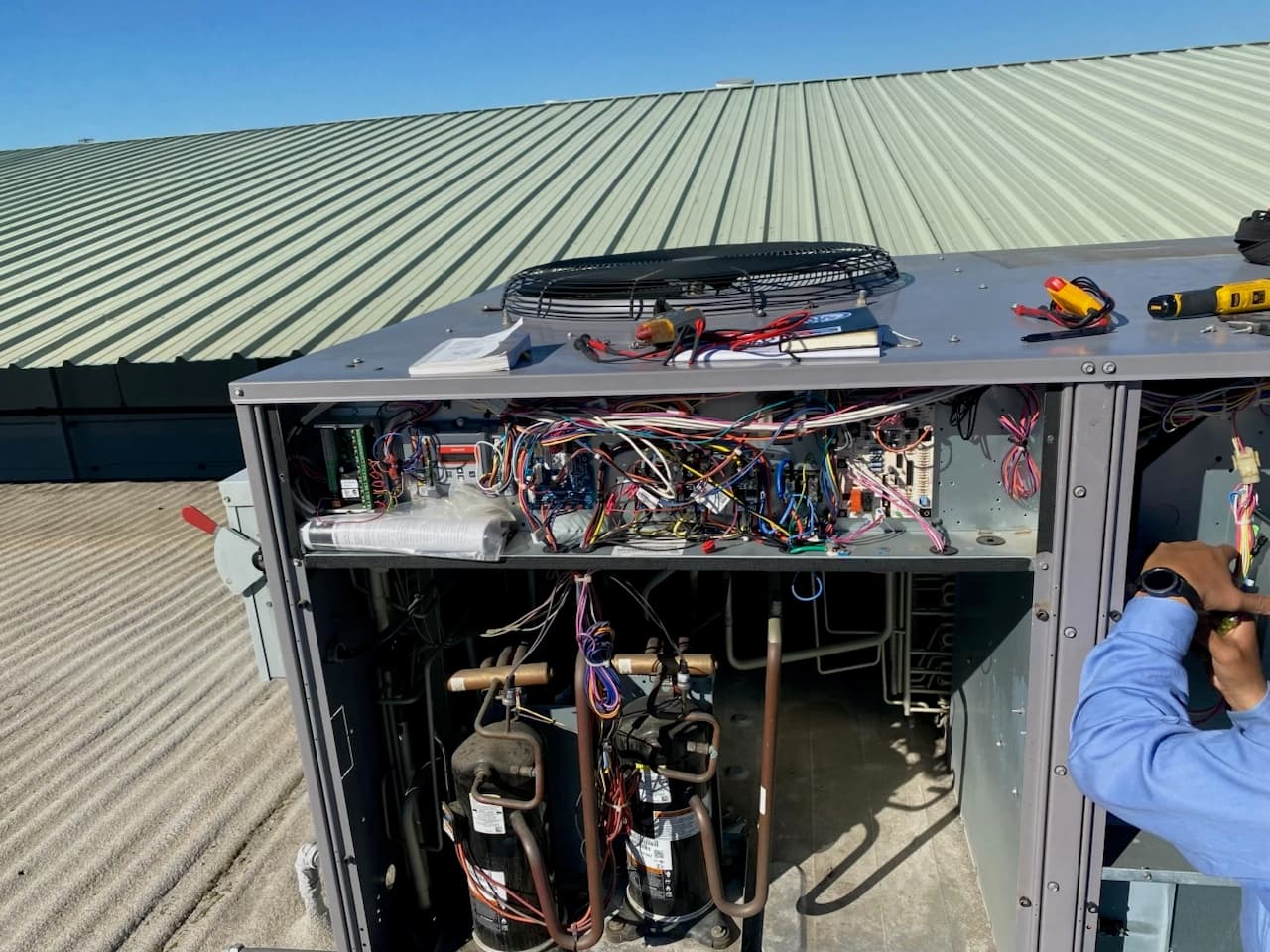
How building controls & automation work plays out in Irvine
Irvine is where building automation either earns its keep or quietly fails for years. The office towers and campuses here mostly have a front end: a workstation or a web page showing schedules, setpoints, and alarms for dozens of units. The problem is that the screen and the roof have drifted apart. A unit shows occupied from seven to six but its local controller was put in hand two summers ago. A space sensor reads 72 while the suite is at 78 because the sensor is in a closet that became a storage room. An economizer shows free cooling while the damper actuator is disconnected. The front end was probably commissioned carefully at install and then edited by a decade of tenant requests and emergency overrides.
The controls audit we run in these buildings compares every point the system claims against the physical equipment: schedule versus actual run status, sensor versus a calibrated reference, commanded damper versus observed position, alarm routing versus who actually receives the email. Irvine's energy cost profile and Title 24 expectations make economizer and demand-controlled ventilation accuracy worth real money, and those are exactly the points most often wrong. Many of these systems also still run on platforms that are out of support, which makes the audit partly a planning exercise about what the next generation of the system should be.
The deliverable is a corrected system and a short written sequence of operations for each major unit, stored in the DaVinci Portal with the equipment it describes. Property managers overseeing several Irvine buildings from one desk also get consistent naming and alarm priorities across the portfolio, so the one unit fighting its neighbors stands out. The building controls and energy guide explains the audit steps and what to expect from a modernization.
Irvine's climate and what it does to this equipment
Irvine sits in the central basin, warm in summer with moderate humidity and little salt exposure. Cooling hours are high and rooftop condensers work hard in September heat, so spring condenser cleaning and economizer checks pay off.
For the equipment background behind this page, read our building controls and energy guide or the full Building Controls & Automation service page.
- Irvine Spectrum and Great ParkRetail, entertainment, restaurants, and newer office and medical development with heavy kitchen and refrigeration loads.
- Irvine Business Complex (near John Wayne Airport)Dense mid-rise office, flex, and light-industrial space, with older RTU populations and tight rooftop access.
- University and Technology corridorsR&D, lab-adjacent, and tech tenants where uptime and temperature control matter.
- Sand Canyon and Alton business parksMulti-building office and flex campuses with many near-identical rooftop units.
- Schedule, setpoint, and sequence review across rooftop and central equipment
- Sensor calibration and economizer verification
- Alarm and trend setup so problems surface early
- Programmable and networked thermostat installation
What a building controls & automation visit includes, and the problems we most often find
- Inventory controllers, thermostats, and any building automation system
- Compare schedules and setpoints to how the building is actually used
- Verify sensors, actuators, and economizer logic against measured conditions
- Correct overrides, sequences, and alarms; document the changes
- Review trends after adjustment to confirm savings and stability
- Schedules left at default so equipment runs when nobody is there
- Equipment overridden manually and never returned to automatic
- Drifting or miswired sensors producing comfort complaints
- Economizers that never actually modulate