Building Controls & Automation in Yorba Linda, CA
When Yorba Linda temperatures spike, buildings that start cooling at opening time fall behind and never catch up. Smart scheduling, such as pre-cooling before staff and customers arrive, makes a real difference. We set controls to start earlier on forecast hot days, check economizers for locked-open dampers that pull in hot air, and confirm sensors read true in sun-exposed locations. A written summary of the heat-wave settings goes to the manager, so the building can switch to hot-weather operation promptly when the forecast calls for it.
Retail centers and municipal buildings along the Imperial Highway corridor.
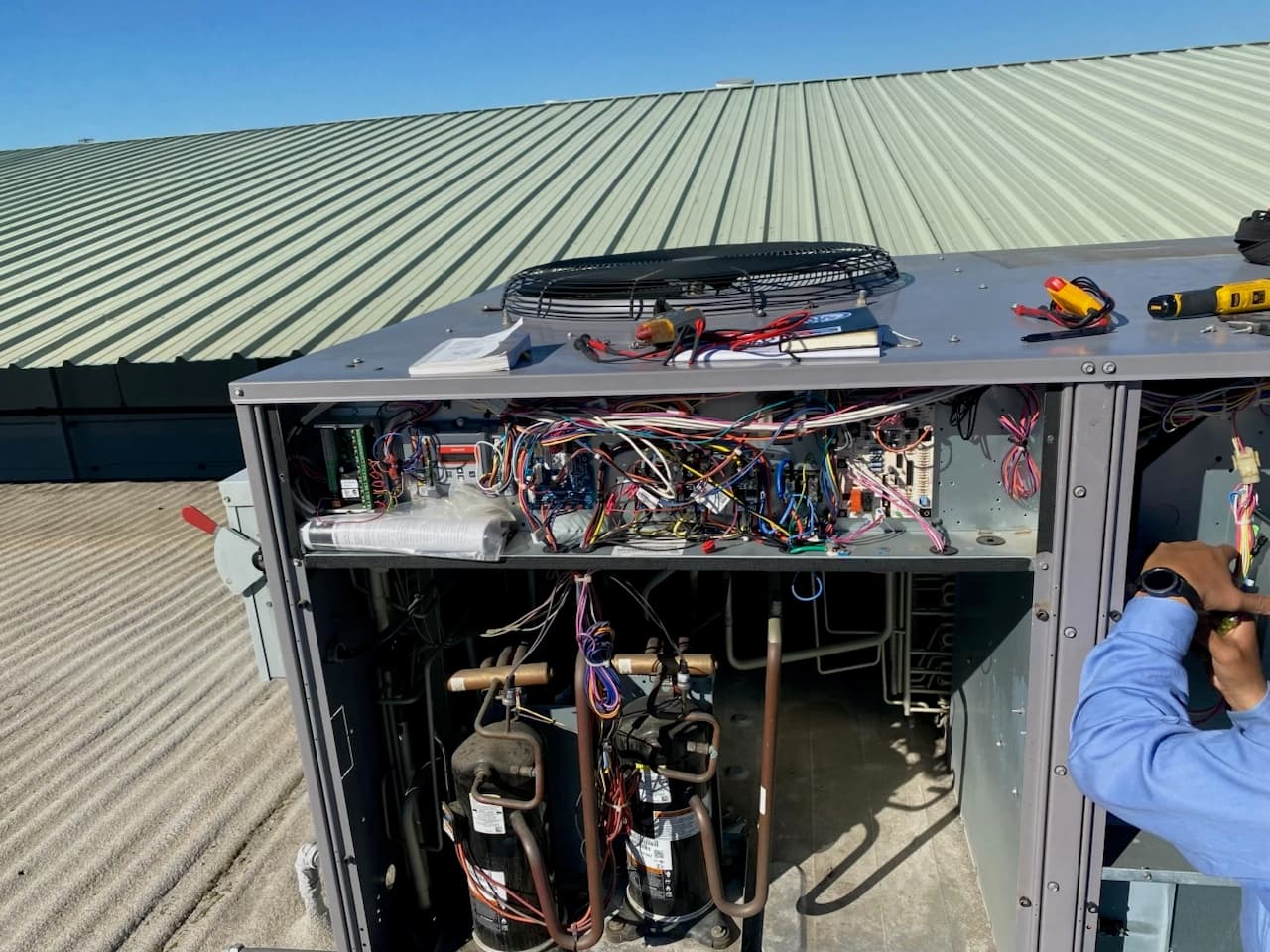
How building controls & automation work plays out in Yorba Linda
In most of Orange County a thermostat schedule is a convenience. In Yorba Linda it is a strategy. A building that waits until opening time to start cooling on a hot day falls behind by eleven and never recovers, because the rooftop units are fighting both the occupied load and the heat the structure absorbed overnight and all morning. Starting earlier on forecast hot days, cooling the mass of the building before the sun is on the roof, and letting the setpoint drift up slightly through the afternoon peak keeps the suite comfortable with less strain on equipment that is already working at its limit. We set that logic up and write it down.
The sensors deserve equal scrutiny. A thermostat on a wall that catches afternoon sun through a west-facing storefront on Imperial Highway will read hot and overcool the back of the suite. An economizer with a stuck-open damper, harmless on a coastal morning, pulls in hundred-degree air here and can double the cooling load. An outdoor air sensor mounted on a hot roof reads wrong and disables free cooling on the mild mornings when it would actually help. We verify each sensor against a calibrated reference and look at the damper position rather than trusting the controller's report.
Civic and school buildings in the city run on building automation systems, and for those owners the work extends to scheduling around actual occupancy, trend logging that survives an audit, and alarm routing that reaches a person. The controls page explains the verification visit, and the schools industry page covers how we coordinate with district facilities staff.
Yorba Linda's climate and what it does to this equipment
Yorba Linda is inland and hilly, with the county's hottest summer afternoons, low humidity, and exposure to wildfire smoke and Santa Ana winds.
For the equipment background behind this page, read our building controls and energy guide or the full Building Controls & Automation service page.
- Imperial Highway corridorRetail centers and offices.
- Savi RanchBig-box retail, restaurants, and business park space.
- Old Town Yorba LindaSmall commercial buildings and restaurants.
- Municipal and community facilitiesCity buildings with public-works requirements.
- Schedule, setpoint, and sequence review across rooftop and central equipment
- Sensor calibration and economizer verification
- Alarm and trend setup so problems surface early
- Programmable and networked thermostat installation
What a building controls & automation visit includes, and the problems we most often find
- Inventory controllers, thermostats, and any building automation system
- Compare schedules and setpoints to how the building is actually used
- Verify sensors, actuators, and economizer logic against measured conditions
- Correct overrides, sequences, and alarms; document the changes
- Review trends after adjustment to confirm savings and stability
- Schedules left at default so equipment runs when nobody is there
- Equipment overridden manually and never returned to automatic
- Drifting or miswired sensors producing comfort complaints
- Economizers that never actually modulate