Building Controls & Automation in Fontana, CA
Fontana's large buildings frequently run on thermostats and time clocks set long ago. Schedules that ignore actual shifts and units that cool empty areas waste energy in a hot climate. We verify and update schedules, test economizer dampers and sensors, and document changes. In multi-building logistics campuses, consistent controls programming across sites makes comparison and troubleshooting far easier.
One of the Inland Empire's heaviest logistics and warehouse cities, with a major Kaiser medical campus, industrial corridors, and relentless heat and dust.
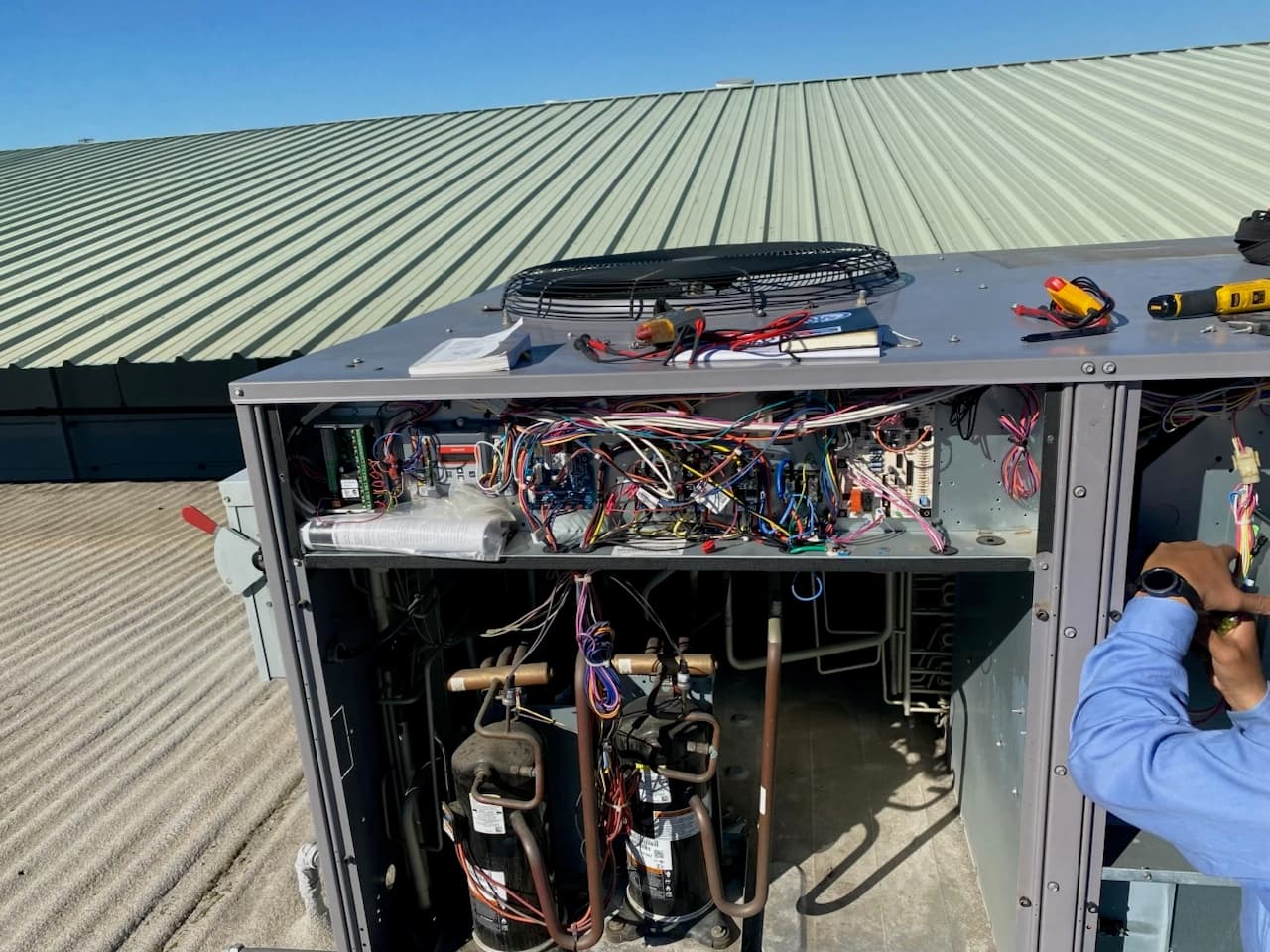
How building controls & automation work plays out in Fontana
Walk into a Fontana distribution center at 2 a.m. and you will often find the rooftop units running at full tilt over an empty floor. The schedule was set when the building ran three shifts, or it was never set at all, and forty units cooling vacant space on a 90-degree night is one of the most expensive habits a logistics property can have. The first controls conversation we have with warehouse owners along Slover and Jurupa is therefore about schedules and setpoints that match the actual operation, and about a networked platform that lets a regional facilities manager see all of it from one screen.
Economizers are the second subject, with a Fontana twist. Nights cool enough for free cooling exist, but outdoor air quality on smog and smoke days can be worse than the air inside, and an economizer that opens into a wildfire smoke event loads filters and pulls particulate into a medical building. Controls should let a facility team lock out outdoor air intentionally on bad air days and restore it afterward, rather than discovering the problem through complaints. We verify damper travel, sensor accuracy, and lockouts, and set up that override capability where it matters.
Medical buildings along Sierra Avenue and around the Kaiser campus need stable exam room temperatures and, in some suites, humidity control that stand-alone thermostats never deliver. Industrial parks with units on a dozen different thermostats benefit from consolidation. Whatever the system, we document sequences and settings in the DaVinci Portal so the configuration survives staff turnover, and the controls service page explains the verification process.
Fontana's climate and what it does to this equipment
Fontana is among the hottest and windiest parts of the region. Its position near the Cajon Pass and the base of the mountains means Santa Ana winds, and the strong gusts that come with them, strike with more force than in many neighboring cities. Dust from open ground and construction settles on coils, filters, and rooftop surfaces, and air quality is frequently poor in summer because of ozone and particulate. Wildfire smoke adds more load. Triple-digit heat is routine in summer, so condensers operate near their limits for long periods, and cold storage faces its highest loads at the worst possible ambient conditions.
For the equipment background behind this page, read our building controls and energy guide or the full Building Controls & Automation service page.
- Slover, Jurupa, and Miller logistics corridorsLarge distribution and fulfillment buildings with extensive rooftop equipment, dock areas, and temperature-controlled space.
- Kaiser medical campus and Sierra AvenueHospital, clinics, pharmacies, and professional offices with high expectations for air quality, temperature stability, and uptime.
- Speedway-adjacent industrial areaLarge-scale industrial and warehouse development in the northwest part of the city, exposed to open ground and strong wind.
- Downtown Fontana and Valley BoulevardSmaller retail, restaurants, and service businesses in older buildings with split systems and compact rooftop units.
- Schedule, setpoint, and sequence review across rooftop and central equipment
- Sensor calibration and economizer verification
- Alarm and trend setup so problems surface early
- Programmable and networked thermostat installation
What a building controls & automation visit includes, and the problems we most often find
- Inventory controllers, thermostats, and any building automation system
- Compare schedules and setpoints to how the building is actually used
- Verify sensors, actuators, and economizer logic against measured conditions
- Correct overrides, sequences, and alarms; document the changes
- Review trends after adjustment to confirm savings and stability
- Schedules left at default so equipment runs when nobody is there
- Equipment overridden manually and never returned to automatic
- Drifting or miswired sensors producing comfort complaints
- Economizers that never actually modulate
Building Controls & Automation in Fontana: questions we get
Our Fontana warehouse runs one shift now but the HVAC schedule was set for three. How much does fixing that matter?
Should our medical building's economizers be locked out during smoke events?
Do you install building automation systems?
Can better controls really cut energy use?
Can you connect to our existing system?
Other services in Fontana
Building Controls & Automation nearby in Inland Empire (Riverside & San Bernardino Counties)
Commercial HVAC and refrigeration across Inland Empire (Riverside & San Bernardino Counties)