Boiler & Hydronic Service in Fontana, CA
Heating plays a smaller role in Fontana, but hospitals and medical buildings still depend on boilers for domestic hot water, reheat, and winter heating. Light seasonal use hides problems that appear when demand rises. We inspect burners, controls, and safeties, test circulation, and confirm combustion and venting, so a clinic or care facility does not discover a boiler fault on a cold morning with a full schedule.
One of the Inland Empire's heaviest logistics and warehouse cities, with a major Kaiser medical campus, industrial corridors, and relentless heat and dust.
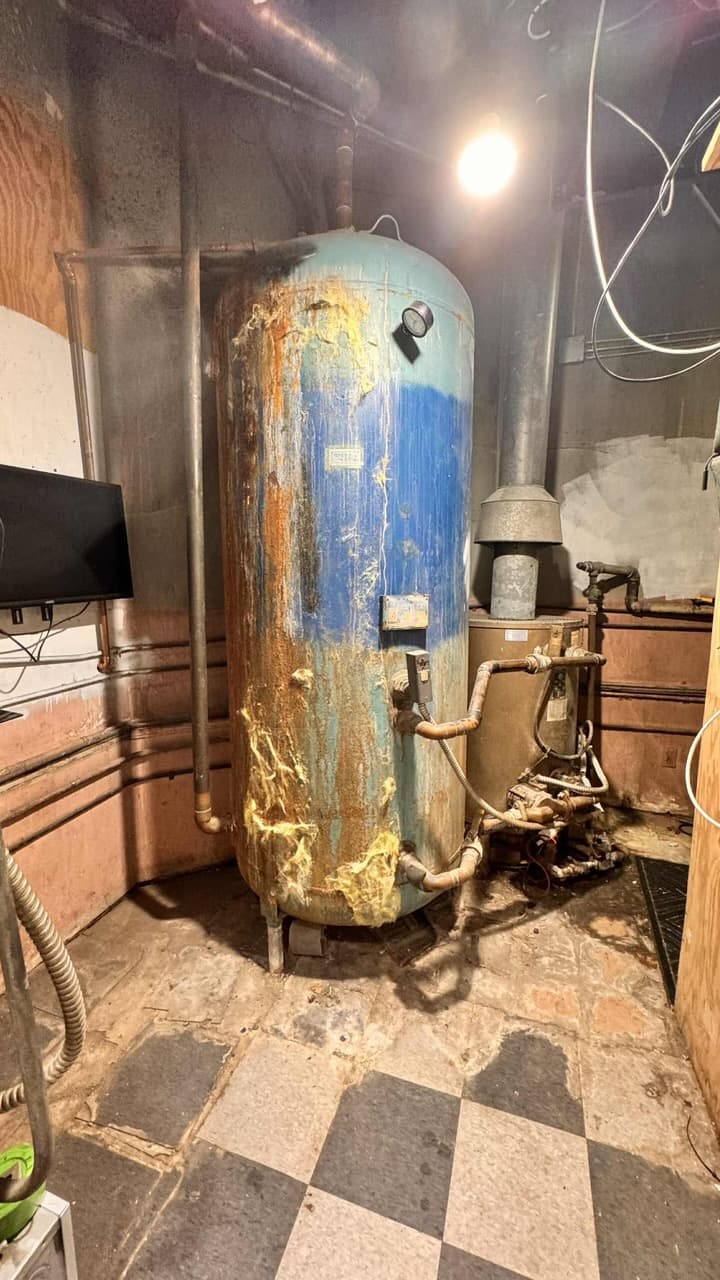
How boiler & hydronic service work plays out in Fontana
Boilers in Fontana work hardest in buildings that cannot tolerate a cold morning: the hospital campus and its surrounding medical offices, where hydronic heating, reheat coils, and domestic hot water all depend on the plant. Heating season is short and the boilers run lightly, which is exactly why they fail. A flame safeguard that has sat idle since March, a circulating pump with a seized bearing, a low water cutoff fouled by hard water scale: each one waits for the first cold snap in late fall to announce itself in a waiting room.
The pre-season visit in October is the answer. We inspect burners, run combustion analysis, test safeties and low water cutoffs, check circulating pumps, expansion tanks, and makeup water, and look specifically for scale, since local water chemistry is unforgiving on boiler systems without treatment. Readings go into the DaVinci Portal so the next year's visit has a comparison point. Reheat loops that leave one wing cold and another overheated are traced to control valves, balancing, and sensors rather than fixed by raising supply temperature.
Outside healthcare, hydronic systems in Fontana are uncommon but present in some older office buildings and in industrial facilities that heat wash-down or process areas. Those boilers are even more neglected, and we start with a full condition assessment. When a boiler is near end of life, replacement is planned for spring or summer when it can be offline without consequence, and the water heaters and boilers guide covers how we approach that decision.
Fontana's climate and what it does to this equipment
Fontana is among the hottest and windiest parts of the region. Its position near the Cajon Pass and the base of the mountains means Santa Ana winds, and the strong gusts that come with them, strike with more force than in many neighboring cities. Dust from open ground and construction settles on coils, filters, and rooftop surfaces, and air quality is frequently poor in summer because of ozone and particulate. Wildfire smoke adds more load. Triple-digit heat is routine in summer, so condensers operate near their limits for long periods, and cold storage faces its highest loads at the worst possible ambient conditions.
For the equipment background behind this page, read our water heaters and boilers guide or the full Boilers & Hydronic Heating service page.
- Slover, Jurupa, and Miller logistics corridorsLarge distribution and fulfillment buildings with extensive rooftop equipment, dock areas, and temperature-controlled space.
- Kaiser medical campus and Sierra AvenueHospital, clinics, pharmacies, and professional offices with high expectations for air quality, temperature stability, and uptime.
- Speedway-adjacent industrial areaLarge-scale industrial and warehouse development in the northwest part of the city, exposed to open ground and strong wind.
- Downtown Fontana and Valley BoulevardSmaller retail, restaurants, and service businesses in older buildings with split systems and compact rooftop units.
- Combustion analysis and tuning with logged results
- Low-water cutoff, relief valve, and flame-safeguard testing
- Condensing and non-condensing boiler service
- Hydronic loop, pump, valve, and expansion-tank diagnostics
What a boiler & hydronic service visit includes, and the problems we most often find
- Review boiler type, age, fuel, and the loads it serves
- Inspect burners, heat exchanger surfaces, venting, and combustion air
- Run combustion analysis and adjust to manufacturer specifications
- Test safeties and controls; check loop pressure, flow, and water quality
- Document results and recommend repairs or replacement timing
- Poor combustion tuning wasting fuel and fouling heat exchangers
- Condensing boilers running with return temperatures too high to condense
- Air in the loop or failing pumps causing cold zones
- Untested safeties on older boilers with no maintenance records
Boiler & Hydronic Service in Fontana: questions we get
Our medical office building in Fontana only uses the boiler a few months a year. Is an annual inspection really necessary?
Does Fontana's hard water affect boilers the way it affects water heaters?
Do commercial boilers need annual service?
Can you replace a boiler without a long shutdown?
Do you work on steam systems?
Other services in Fontana
Boiler & Hydronic Service nearby in Inland Empire (Riverside & San Bernardino Counties)
Commercial HVAC and refrigeration across Inland Empire (Riverside & San Bernardino Counties)