RTU & Split Installs in Newport Beach, CA
Replacing a rooftop unit on a Newport Beach building usually starts with paperwork rather than a crane. Office towers and harbor-front properties have landlord rules on roof access, lift windows, and noise, and the coastal air means the unit itself should arrive with protected coils and sealed electrical compartments. We survey the curb, structural support, and screening, coordinate permit and inspection steps with the building, and sequence the lift for an early weekend slot. Close-out includes startup readings, Title 24 acceptance documentation where it applies, and a nameplate record tied to the asset in your portal.
Class-A office towers, medical office, and upscale retail/restaurant tenants that expect clean, quiet, documented service.
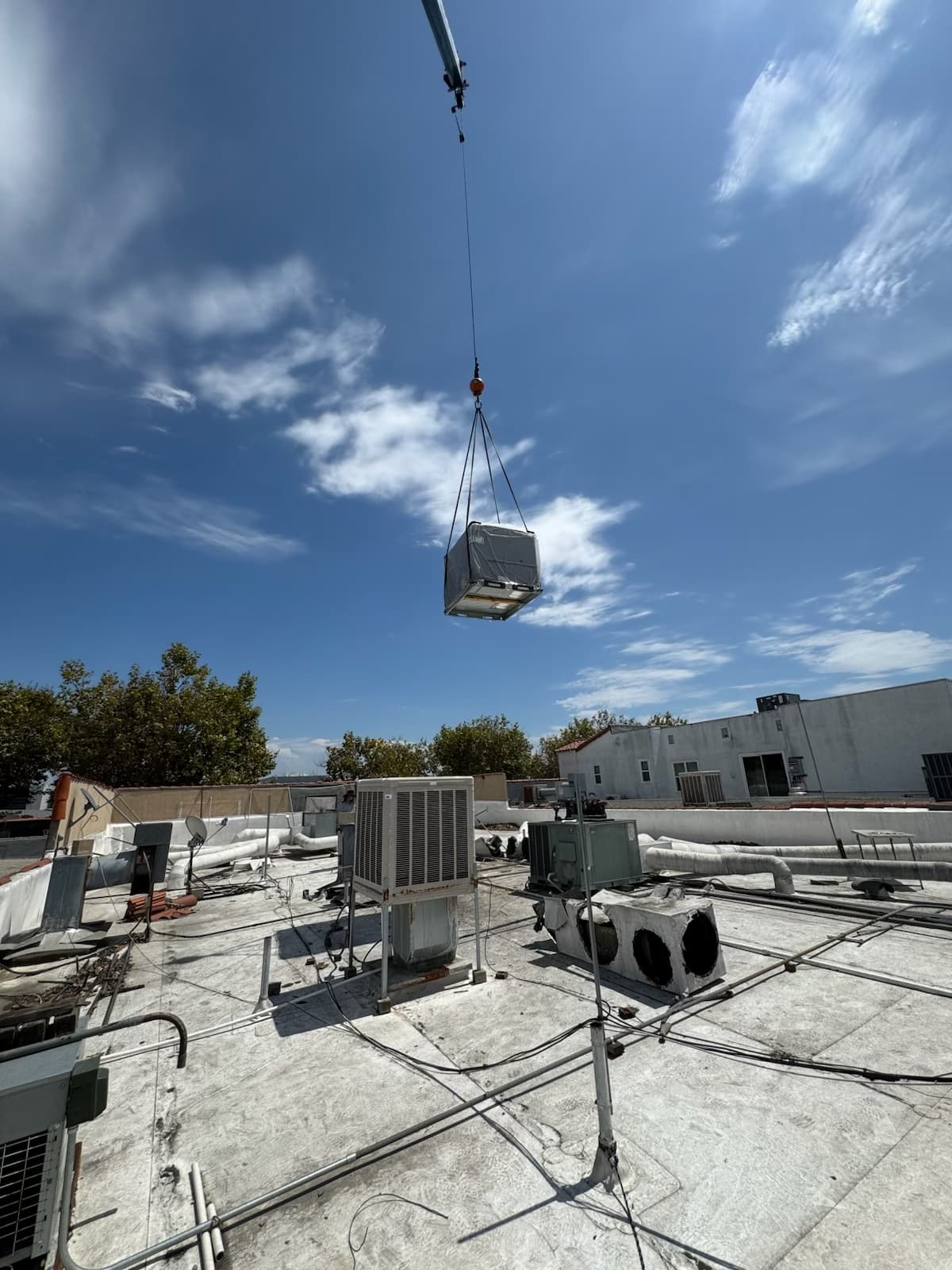
How rtu & split installs work plays out in Newport Beach
Replacing a rooftop unit in Newport Beach is as much a permitting and logistics exercise as a mechanical one. Much of the city west of the 73 sits in the Coastal Zone, and many commercial parcels along Pacific Coast Highway, Mariners Mile, and the Balboa Peninsula fall under rules that can add a review step when equipment changes height, footprint, or visibility. Like-for-like swaps are usually straightforward, but anything that raises a unit above an existing parapet or screen deserves a conversation with the city before the crane is booked. We confirm current requirements with the Community Development Department rather than assuming.
The crane itself has to work around narrow streets and summer traffic. A pick on a Newport Center or airport-area building can often be staged in a loading area early on a weekday. A pick on a peninsula restaurant may mean a street closure permit, a Saturday morning before beach traffic builds, and a shorter window than anyone would like. We walk the site with the crane company first, because a boom that cannot reach from the only legal setup spot changes the whole plan.
Equipment selection matters more here than almost anywhere in Orange County. We specify coated condenser and evaporator coils, stainless or heavily protected hardware, and sealed or gasketed electrical compartments as a baseline for coastal installs. The new unit is matched to measured load, not simply to the nameplate of what came off, and the startup includes economizer and sensor verification required under Title 24, with the acceptance paperwork handed to the owner. See the RTU guide and Title 24 guide for what to expect.
Newport Beach's climate and what it does to this equipment
Newport Beach is directly coastal: marine layer, humidity, and salt. Coated coils and routine rinsing are not optional; they decide whether a rooftop unit lasts 10 years or 18.
For the equipment background behind this page, read our commercial rooftop unit guide or the full RTU & Split System Installs service page.
- Newport Center and Fashion IslandHigh-rise office, retail, and dining with building-engineer oversight.
- Airport area (near John Wayne Airport)Mid-rise offices and professional tenants.
- Balboa Peninsula and harbor-frontRestaurants and hospitality in direct salt-air exposure.
- Mariners Mile and Corona del MarRetail, medical, and professional offices near the coast.
- Site survey covering load, airflow balancing, and duct condition
- Clean rigging with code-correct gas, electrical, and condensate work
- Startup readings documented and stored in the Portal
- DaVinci Portal included: asset QR tag + warranty paperwork on file
What a rtu & split installs visit includes, and the problems we most often find
- Site survey — existing curb/duct compatibility, load, and airflow requirements
- Equipment selection sized to actual load and hours of operation, not just square footage
- Crane scheduling and rigging coordinated for roof access
- Install with code-correct gas, electrical, and condensate work
- Startup readings taken and documented; warranty registered in the Portal
- Undersized or oversized replacement units causing short-cycling or poor comfort
- Curb mismatches that turn a 'simple swap' into a bigger job mid-install
- Duct transitions that don't match the new unit's airflow requirements
- Aging units on refrigerant types that are getting harder and more expensive to service