RTU & Split Installs in Tustin, CA
Tustin's redevelopment history means a property can hold rooftop units of three or four different generations. Some roofs near the former Marine Corps air station sit under large-span buildings with specific structural limits, so lift planning and weight distribution come first. We verify curb dimensions against the new unit, evaluate adapter needs, confirm electrical and gas capacity, and coordinate with the landlord on tenant notification and roof access. Newer buildings are tied into controls so the new unit reports correctly on day one, and the closeout file includes startup data, acceptance test results, and warranty registration.
Growing office and retail development around the Tustin Legacy and Market Place corridors.
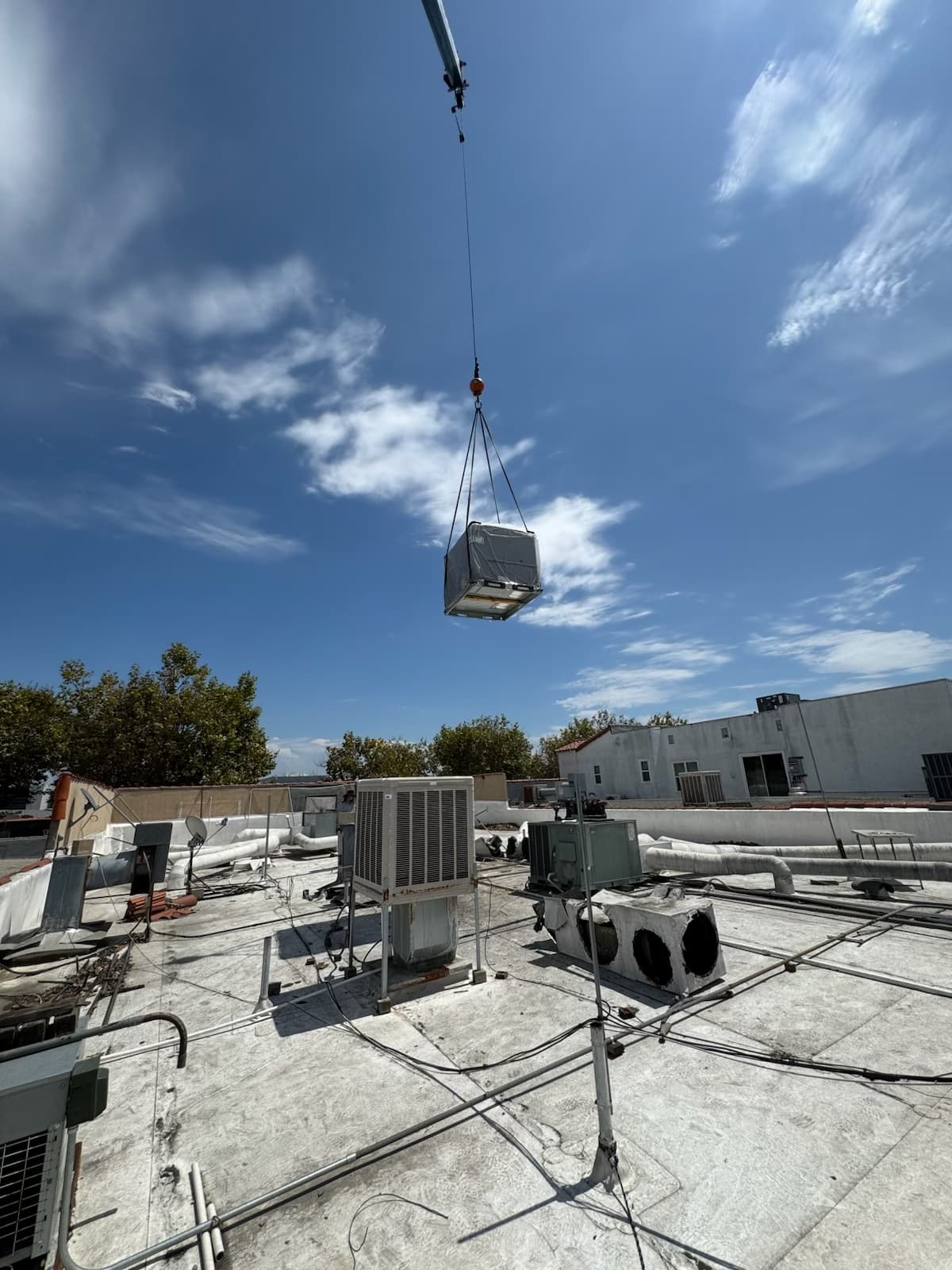
How rtu & split installs work plays out in Tustin
Rooftop replacement in Tustin splits along the same line as the rest of the city's building stock. The Red Hill and Edinger light-industrial buildings and the Newport Avenue strips carry package units that were sized for the original tenant decades ago and have been adapted ever since; the Legacy retail carries newer units, but a tenant improvement that turns a soft-goods retail bay into a restaurant or a fitness studio often means the original RTU is simply too small, and a changeout with a curb adapter and new gas service becomes part of the TI scope.
Permitting goes through the City of Tustin, and Title 24 applies to every replacement: economizer where required by capacity, duct leakage testing when ducts are touched, and the acceptance forms that the inspector will want to see. Crane logistics are generally straightforward on the older corridors, where a unit can be set from a parking lot early in the morning before tenants open. At the Legacy centers and The Market Place, landlords typically require a crane plan, certificate of insurance, and a set window, often before 9 a.m. or on a weekday morning that avoids the restaurant lunch crowd. The Jamboree and Barranca frontage roads carry enough traffic that lane closures are a last resort.
The end state we aim for is a roof where the new unit matches the controls already in the building, the curb is sealed and flashed correctly, and the old refrigerant is recovered and documented. For a longer walk through sizing, Title 24 and how to compare proposals, see the commercial rooftop unit guide and the RTU replacement program.
Tustin's climate and what it does to this equipment
Tustin is warm central basin with moderate humidity; less coastal influence than Costa Mesa or Newport Beach, so heat and dust matter more than salt.
For the equipment background behind this page, read our commercial rooftop unit guide or the full RTU & Split System Installs service page.
- Tustin LegacyNewer retail, restaurant, office, and mixed-use development.
- The Market PlaceLarge retail and restaurant tenants with high refrigeration and RTU loads.
- Old Town Tustin and Newport AvenueOlder small commercial buildings and professional offices.
- Red Hill and Edinger corridorsMedical office, retail, and light-industrial users.
- Site survey covering load, airflow balancing, and duct condition
- Clean rigging with code-correct gas, electrical, and condensate work
- Startup readings documented and stored in the Portal
- DaVinci Portal included: asset QR tag + warranty paperwork on file
What a rtu & split installs visit includes, and the problems we most often find
- Site survey — existing curb/duct compatibility, load, and airflow requirements
- Equipment selection sized to actual load and hours of operation, not just square footage
- Crane scheduling and rigging coordinated for roof access
- Install with code-correct gas, electrical, and condensate work
- Startup readings taken and documented; warranty registered in the Portal
- Undersized or oversized replacement units causing short-cycling or poor comfort
- Curb mismatches that turn a 'simple swap' into a bigger job mid-install
- Duct transitions that don't match the new unit's airflow requirements
- Aging units on refrigerant types that are getting harder and more expensive to service