Commercial Refrigeration in Tustin, CA
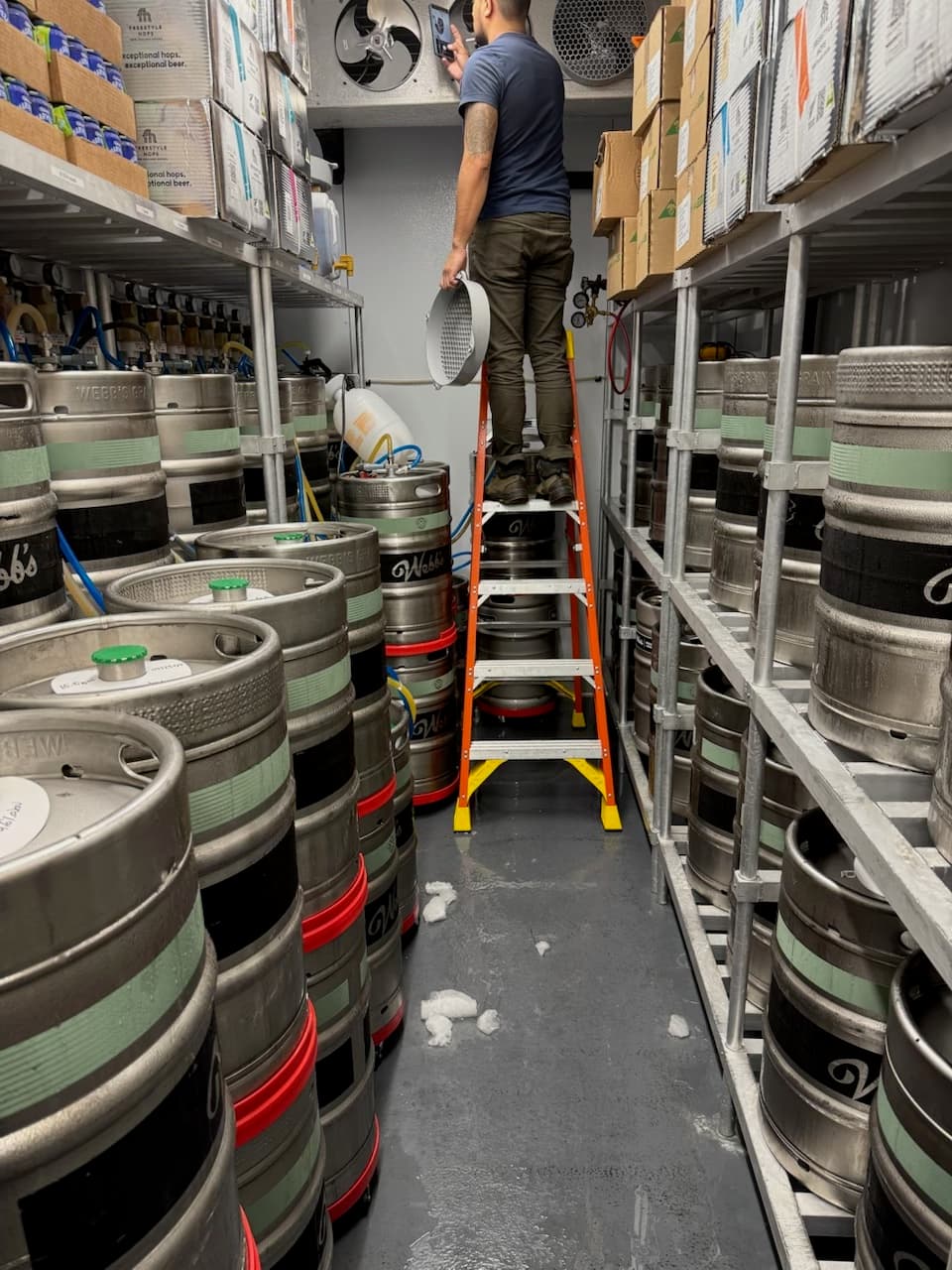
Around the Market Place, restaurants and specialty food tenants share an environment of heavy weekend traffic and long operating days, so the walk-ins see constant door cycles. Our checks focus on what weekend load exposes: evaporator frost patterns, drain line heat, condenser fin condition, and compressor amp draw. We read box temperatures at several points, not just the controller display, since sensor drift can hide a warm shelf. Findings are logged against each box, with a plain note on whether the issue is airflow, charge, controls, or box condition, so a manager can decide between repair and planned replacement.
Growing office and retail development around the Tustin Legacy and Market Place corridors.
How commercial refrigeration work plays out in Tustin
The refrigeration load in Tustin is concentrated along the Jamboree corridor at The Market Place and The District, where full-service restaurants, grocers and specialty food tenants run walk-in boxes, reach-ins and open display cases every day of the week. A second, quieter cluster sits in Old Town, where restaurants in older buildings along El Camino Real and Main Street often have walk-ins squeezed into back rooms or exterior boxes against the alley, with condensing units mounted wherever there was room.
Two local conditions drive the service work. The first is heat: Tustin sits far enough inland that August afternoons push condensing units mounted on hot roofs or in enclosed service yards well past their design ambient, and a box that held temperature all spring starts creeping on the first heat wave. The second is dust and debris from the surrounding construction and landscaping, which loads condenser coils faster than operators expect. Combine the two and the typical failure is a high head pressure trip on a Saturday night when the kitchen is busiest.
On a repair visit we check the whole system, not just the symptom: coil condition, fan motors, refrigerant charge against the actual superheat and subcooling, defrost timing, door gaskets and the evaporator drain. For food tenants on a maintenance program, the quarterly visit is where the condenser gets cleaned and the readings get logged so a drift shows up before it becomes product loss. The walk-in cooler and freezer guide explains what those readings mean, and restaurant operators can see how we approach the vertical on the restaurants page.
Tustin's climate and what it does to this equipment
Tustin is warm central basin with moderate humidity; less coastal influence than Costa Mesa or Newport Beach, so heat and dust matter more than salt.
For the equipment background behind this page, read our walk-in cooler and freezer guide or the full Refrigeration: Walk-In & Reach-In Coolers/Freezers service page.
- Tustin LegacyNewer retail, restaurant, office, and mixed-use development.
- The Market PlaceLarge retail and restaurant tenants with high refrigeration and RTU loads.
- Old Town Tustin and Newport AvenueOlder small commercial buildings and professional offices.
- Red Hill and Edinger corridorsMedical office, retail, and light-industrial users.
- Evaporator/condenser coil cleaning and defrost checks
- TXV/EEV, superheat, subcool, and pressure readings logged
- Door seals, drains, heaters, and fan packages inspected
- DaVinci Portal: temps and pressures logged by asset over time
What a commercial refrigeration visit includes, and the problems we most often find
- Check current box temperature against setpoint and recent trend
- Inspect door seals, drains, and evaporator/condenser coils for buildup
- Take superheat, subcool, and pressure readings against manufacturer spec
- Address the root cause — not just a temporary recharge
- Log readings to the asset so drift is caught early next visit
- Door seals and hinges that no longer hold a tight close
- Evaporator coils iced over from a defrost cycle issue
- Condenser coils caked with grease or debris, especially near kitchen exhaust
- Slow refrigerant leaks that show up as gradual temperature drift, not sudden failure