Commercial Refrigeration in Newport Beach, CA
Restaurants on Lido, Balboa Peninsula, and the bay front often squeeze walk-ins into old service corridors, with condensing units hung on a roof or wall a few hundred yards from open water. Salt eats the copper, fasteners, and fan blades before the compressor shows any trouble. Our visits cover evaporator drain lines, door gaskets, defrost termination, and condenser fin condition, plus a measured pull-down so you know the box can recover after a busy dinner service. Findings go into a dated record that a health inspector or insurance reviewer can read without translation.
Class-A office towers, medical office, and upscale retail/restaurant tenants that expect clean, quiet, documented service.
How commercial refrigeration work plays out in Newport Beach
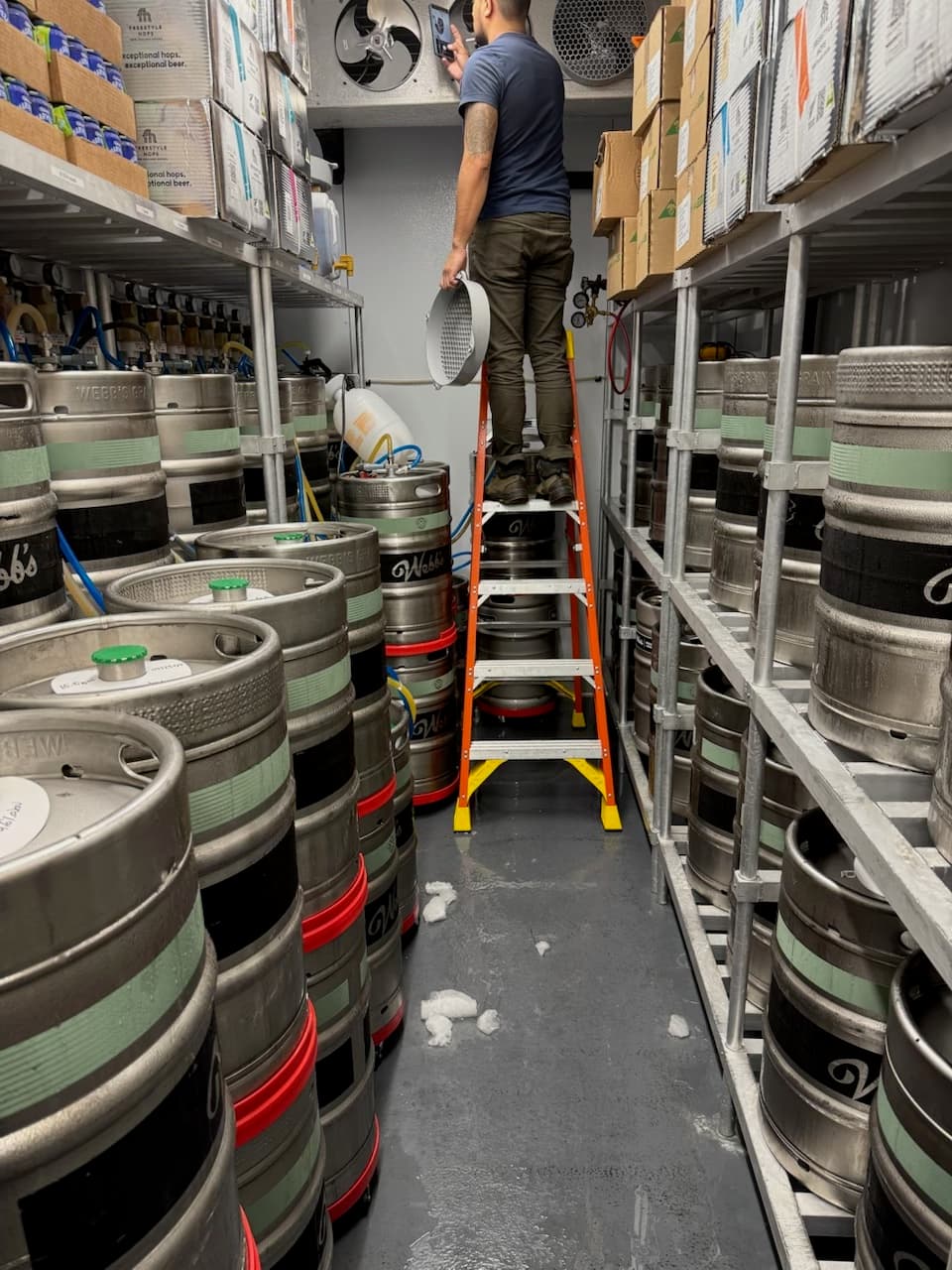
Walk-in boxes in Newport Beach live in difficult places. Harbor-front restaurants on the Balboa Peninsula, Lido Marina Village, and along Mariners Mile often have the walk-in tucked into a rear addition or a corner of a small kitchen, with the condensing unit outside on a wall bracket or a low roof in direct salt air. Hotel banquet kitchens in Newport Center and along the Newport Coast have larger multi-box systems that run constant and are expected never to be the reason a dinner service stops. Grocery and specialty food stores in the Corona del Mar and Westcliff centers depend on display cases that must hold temperature in a sales floor full of doors opening to humid afternoon air.
The coastal failure mode is predictable. Condenser coils foul with salt and grease, head pressure climbs, run time stretches, and the box slowly loses its ability to recover after a delivery or a lunch rush. Door gaskets and strip curtains matter more here because humid air carries more moisture into the box, and that moisture ends up as ice on the evaporator. We check defrost timing against the actual load pattern rather than leaving it at the factory default.
A refrigeration visit on a Newport Beach property usually happens between services, which means early morning or mid-afternoon with the kitchen crew working around us. We bring what the common box sizes need so one trip finishes the job, document temperatures and pressures, and leave the owner a dated record in the DaVinci Portal. For specialty and grocery tenants, the grocery and retail page outlines how we handle display case lineups.
Newport Beach's climate and what it does to this equipment
Newport Beach is directly coastal: marine layer, humidity, and salt. Coated coils and routine rinsing are not optional; they decide whether a rooftop unit lasts 10 years or 18.
For the equipment background behind this page, read our walk-in cooler and freezer guide or the full Refrigeration: Walk-In & Reach-In Coolers/Freezers service page.
- Newport Center and Fashion IslandHigh-rise office, retail, and dining with building-engineer oversight.
- Airport area (near John Wayne Airport)Mid-rise offices and professional tenants.
- Balboa Peninsula and harbor-frontRestaurants and hospitality in direct salt-air exposure.
- Mariners Mile and Corona del MarRetail, medical, and professional offices near the coast.
- Evaporator/condenser coil cleaning and defrost checks
- TXV/EEV, superheat, subcool, and pressure readings logged
- Door seals, drains, heaters, and fan packages inspected
- DaVinci Portal: temps and pressures logged by asset over time
What a commercial refrigeration visit includes, and the problems we most often find
- Check current box temperature against setpoint and recent trend
- Inspect door seals, drains, and evaporator/condenser coils for buildup
- Take superheat, subcool, and pressure readings against manufacturer spec
- Address the root cause — not just a temporary recharge
- Log readings to the asset so drift is caught early next visit
- Door seals and hinges that no longer hold a tight close
- Evaporator coils iced over from a defrost cycle issue
- Condenser coils caked with grease or debris, especially near kitchen exhaust
- Slow refrigerant leaks that show up as gradual temperature drift, not sudden failure