RTU & Split Installs in Mission Viejo, CA
Many Mission Viejo commercial buildings are small: a handful of rooftop units on a retail pad, a split system on a professional office, or a medical suite sharing a roof with neighbors. Replacements here are less about heavy rigging and more about careful sizing, duct condition, and permit coordination with the city. We perform a load check instead of copying the old tonnage, review roof structure and screening, and plan around clinic hours. Final documentation covers startup readings, permit close-out, equipment data, and warranty registration so the owner has one folder with everything.
Retail centers, medical office, and municipal buildings along the I-5 corridor.
How rtu & split installs work plays out in Mission Viejo
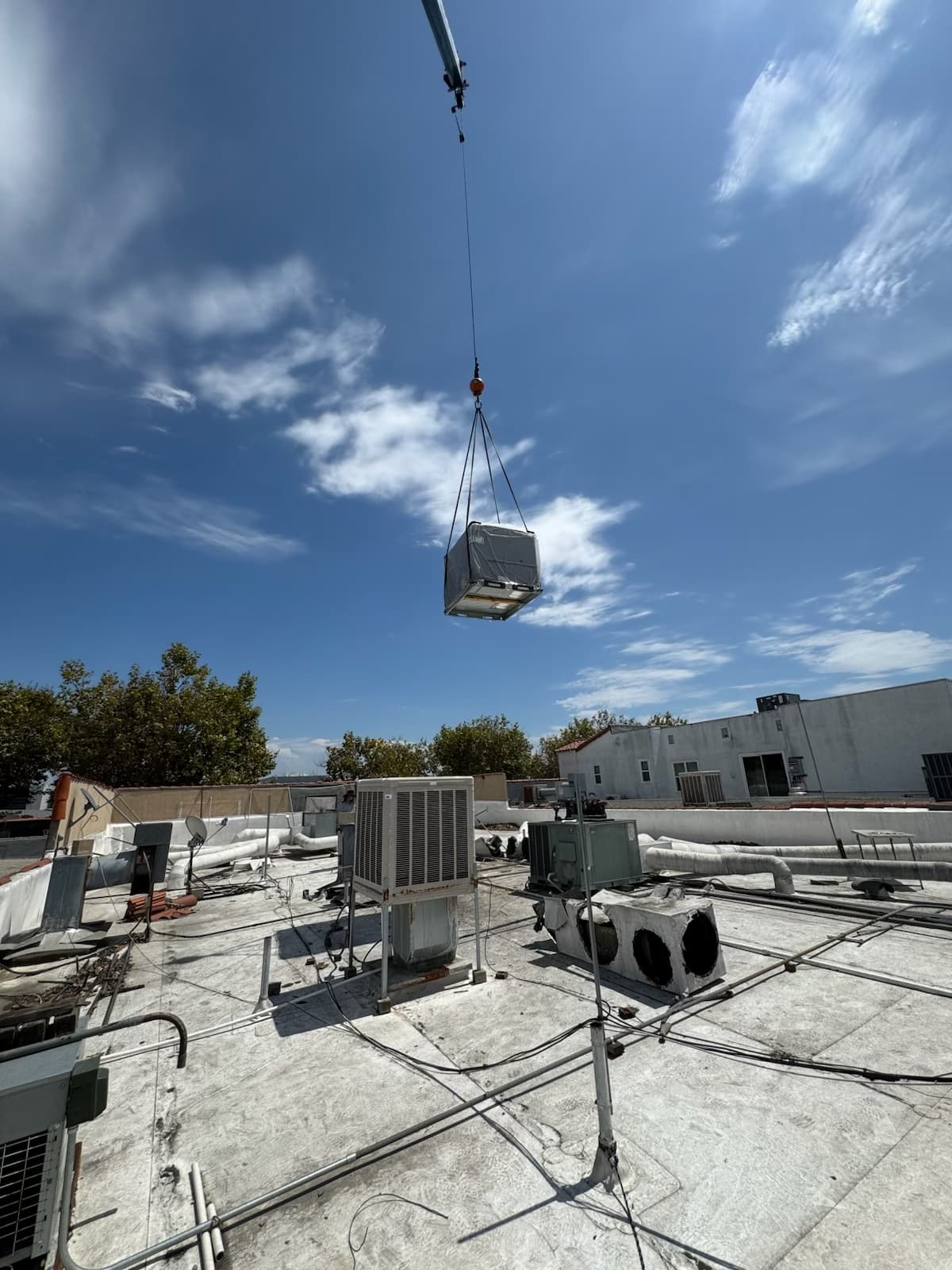
Rooftop replacement in Mission Viejo is shaped by terrain. The city is built on slopes, and a lot of its retail sits on pads cut into hillsides, so a crane that would be routine in a flat Santa Ana parking lot may need a longer reach, a different setup location, or a morning when the center's lower lot is empty. Before we quote a replacement at a center on Marguerite Parkway or near Oso Parkway, we walk the lot with the crane company, look at the grade, overhead lines, and parking layout, and pick the window that keeps the center open. A lift at seven in the morning on a weekday is usually the least disruptive answer.
Most Mission Viejo commercial roofs carry 3- to 15-ton package units on older curbs, often from a different manufacturer than the unit sitting on them today. We measure the existing curb and specify an adapter or a new curb, confirm the gas and electrical sizing on a building that may have had tenants change from retail to a restaurant, and submit for the city permit with the Title 24 documentation the inspector will ask for, including economizer and refrigerant charge acceptance tests. The Title 24 and permits guide explains what owners should expect from that process.
Medical office buildings and the professional buildings along the I-5 frontage are where split systems and small VAV rooftops show up. Those tenants want the changeover done in one day with zero dust in treatment rooms, so we stage equipment the day before, protect interior registers, and leave the building with a start-up report and new photos in the asset record. See commercial RTU replacement for how we scope those projects.
Mission Viejo's climate and what it does to this equipment
Mission Viejo is inland south county with warm summers and lower humidity than the coast, plus exposure to wildfire smoke and Santa Ana winds.
For the equipment background behind this page, read our commercial rooftop unit guide or the full RTU & Split System Installs service page.
- Shopping center area near Crown Valley and MargueriteLarge retail and restaurant tenants.
- Medical office near the hospital campusesTemperature-critical medical storage and procedure rooms.
- I-5 corridor business parksOffices and light-industrial.
- Municipal and community facilitiesCity buildings and community centers with prevailing-wage considerations.
- Site survey covering load, airflow balancing, and duct condition
- Clean rigging with code-correct gas, electrical, and condensate work
- Startup readings documented and stored in the Portal
- DaVinci Portal included: asset QR tag + warranty paperwork on file
What a rtu & split installs visit includes, and the problems we most often find
- Site survey — existing curb/duct compatibility, load, and airflow requirements
- Equipment selection sized to actual load and hours of operation, not just square footage
- Crane scheduling and rigging coordinated for roof access
- Install with code-correct gas, electrical, and condensate work
- Startup readings taken and documented; warranty registered in the Portal
- Undersized or oversized replacement units causing short-cycling or poor comfort
- Curb mismatches that turn a 'simple swap' into a bigger job mid-install
- Duct transitions that don't match the new unit's airflow requirements
- Aging units on refrigerant types that are getting harder and more expensive to service