Commercial Refrigeration in Irvine, CA
Restaurants around Spectrum and the newer Great Park developments often sit in buildings where the landlord owns the roof, the alley, and the utility rooms, and the tenant owns only the box. That arrangement makes refrigeration problems slow to solve unless someone maps it early. We locate the condensing units, trace line sets to the evaporators, check defrost termination and door heater operation, and record where airflow is restricted by screening or neighboring equipment. We also note which items belong to the tenant and which to the landlord, so approvals for access or repairs do not stall while a walk-in drifts upward overnight.
Dense with corporate campuses, business parks, and multi-tenant office buildings around the Irvine Spectrum and Great Park areas — heavy RTU counts and tight PM windows.
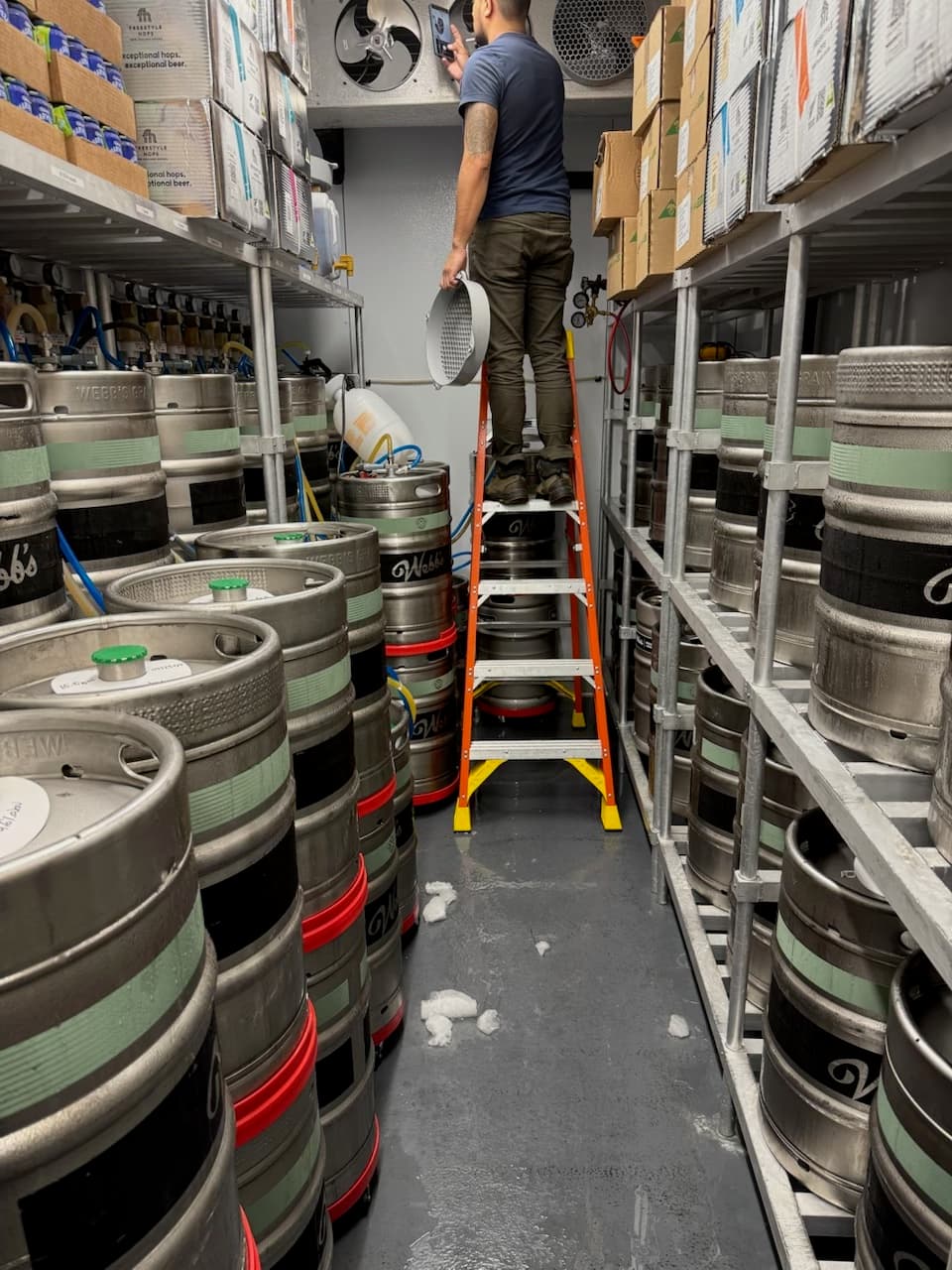
How commercial refrigeration work plays out in Irvine
Irvine Spectrum Center, Los Olivos Marketplace, and the newer dining clusters near the Great Park are full of restaurants that share walls, roofs, and service corridors with each other. A walk-in in one of those suites almost never has its condenser right outside the back door. It is on a roof the tenant does not control, up a ladder in a landlord-managed well, or on a ground rack behind a screen wall shared with three neighbors. Before anything else, a refrigeration job in Irvine is a logistics conversation: who holds the roof key, which hours the center allows service vehicles in the back lot, and whether the landlord's roofing warranty requires their roofer to be present for any penetration.
The equipment itself tends to be decent and fairly young in the newer centers, which means problems are usually installation and operation issues rather than worn-out boxes: undersized or poorly routed line sets from a fast tenant buildout, condensers packed against the parapet with no airflow, drain lines that freeze because the box was set for a different product than it now holds. Older centers along Culver Drive and Walnut Avenue, and the grocery anchors in the neighborhood centers, have the opposite profile: solid boxes with aging compressors, tired door hardware, and rack systems that have been patched by several contractors with no shared record.
What a good outcome looks like here is a box that holds temperature through a Saturday dinner rush with the door opening every ninety seconds, and a condenser that has been moved or ducted so it stops recirculating its own heat. Each box gets a tag and its readings go in the DaVinci Portal, which matters when the health inspector asks for temperature history and when the landlord asks who touched the roof. For the fundamentals, see our walk-in cooler and freezer guide.
Irvine's climate and what it does to this equipment
Irvine sits in the central basin, warm in summer with moderate humidity and little salt exposure. Cooling hours are high and rooftop condensers work hard in September heat, so spring condenser cleaning and economizer checks pay off.
For the equipment background behind this page, read our walk-in cooler and freezer guide or the full Refrigeration: Walk-In & Reach-In Coolers/Freezers service page.
- Irvine Spectrum and Great ParkRetail, entertainment, restaurants, and newer office and medical development with heavy kitchen and refrigeration loads.
- Irvine Business Complex (near John Wayne Airport)Dense mid-rise office, flex, and light-industrial space, with older RTU populations and tight rooftop access.
- University and Technology corridorsR&D, lab-adjacent, and tech tenants where uptime and temperature control matter.
- Sand Canyon and Alton business parksMulti-building office and flex campuses with many near-identical rooftop units.
- Evaporator/condenser coil cleaning and defrost checks
- TXV/EEV, superheat, subcool, and pressure readings logged
- Door seals, drains, heaters, and fan packages inspected
- DaVinci Portal: temps and pressures logged by asset over time
What a commercial refrigeration visit includes, and the problems we most often find
- Check current box temperature against setpoint and recent trend
- Inspect door seals, drains, and evaporator/condenser coils for buildup
- Take superheat, subcool, and pressure readings against manufacturer spec
- Address the root cause — not just a temporary recharge
- Log readings to the asset so drift is caught early next visit
- Door seals and hinges that no longer hold a tight close
- Evaporator coils iced over from a defrost cycle issue
- Condenser coils caked with grease or debris, especially near kitchen exhaust
- Slow refrigerant leaks that show up as gradual temperature drift, not sudden failure