RTU & Split Installs in Huntington Beach, CA
Industrial and office buildings off Gothard Street and Edinger Avenue often carry rooftop units from the same installation wave, which makes phased replacement a practical idea. We walk the roof, document each unit's age and condition, and propose an order that spreads disruption across several seasons. Curb adapters, gas and electrical capacity, and condensate routing are checked before anything is ordered. Near the water, we favor coated coils and stainless hardware. Each completed install ends with a startup log, permit sign-off, and a labeled asset entry so the next replacement has a starting record.
Coastal retail, hospitality, and office space where salt-air corrosion shortens equipment life without regular PM.
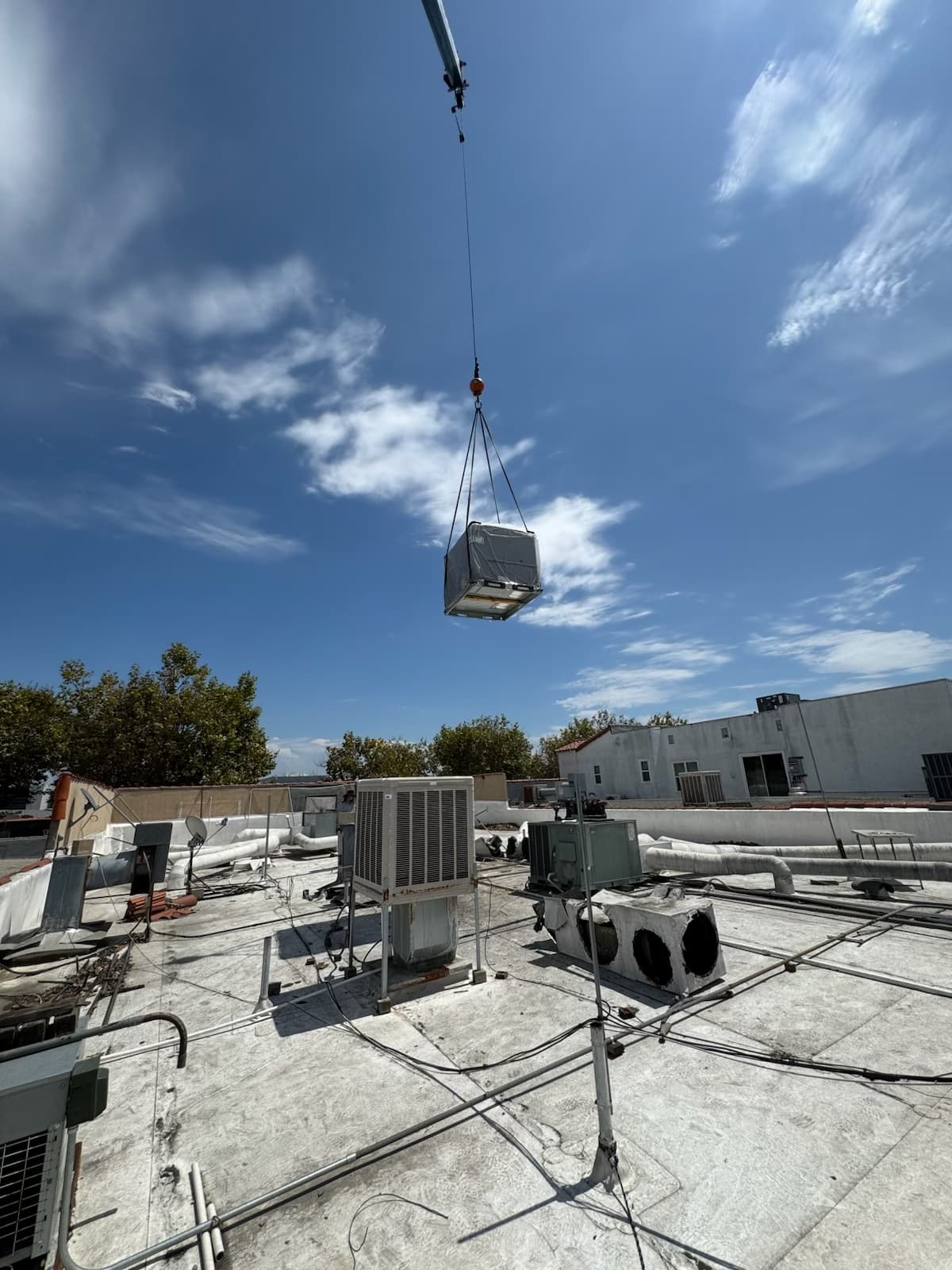
How rtu & split installs work plays out in Huntington Beach
Specifying a rooftop unit for Huntington Beach starts with a question most inland projects skip: how far is the roof from the water, and which way does it face? Equipment on Pacific Coast Highway, downtown, and the hotel strip across from the pier takes direct salt spray and marine air every day, and a standard unit there is a short-lived unit. We specify coated condenser coils, corrosion-resistant fasteners and hardware, sealed electrical compartments, and often a hail guard or coil guard that also sheds spray. The cost difference is real but small compared to replacing a unit years early.
Inland installs are a different project. The retail centers at Beach Boulevard and Edinger Avenue around Bella Terra, the medical and office buildings along Beach Boulevard, and the industrial users near Gothard Street and the Boeing site have large roofs with conventional access, and the planning questions are about crane staging, tenant coordination, and permitting with the City of Huntington Beach rather than corrosion. Title 24 applies in both cases: economizers where required, fault detection, and acceptance testing before the inspector signs off.
Downtown roofs are the hardest. Buildings on Main Street and the first few blocks of PCH are tight to each other, street closures for a crane affect heavy pedestrian traffic, and the city coordinates closures around the summer season and events. We walk the site, confirm the lift plan with the crane company and the city, and schedule early morning sets on weekdays outside peak season whenever the owner can wait. The RTU replacement page covers the sequencing in detail.
Huntington Beach's climate and what it does to this equipment
Huntington Beach is directly coastal. Marine layer, salt, and humidity corrode coils, cabinets, and electrical connections faster than anywhere inland.
For the equipment background behind this page, read our commercial rooftop unit guide or the full RTU & Split System Installs service page.
- Downtown and Pier areaRestaurants, bars, and hotels directly exposed to salt air.
- Beach Boulevard corridorRetail, medical, and office properties.
- Huntington Center and Gothard industrial areasAerospace-adjacent and light-industrial users with large RTUs.
- Bolsa Chica and Edinger business areasOffices and retail near the coast.
- Site survey covering load, airflow balancing, and duct condition
- Clean rigging with code-correct gas, electrical, and condensate work
- Startup readings documented and stored in the Portal
- DaVinci Portal included: asset QR tag + warranty paperwork on file
What a rtu & split installs visit includes, and the problems we most often find
- Site survey — existing curb/duct compatibility, load, and airflow requirements
- Equipment selection sized to actual load and hours of operation, not just square footage
- Crane scheduling and rigging coordinated for roof access
- Install with code-correct gas, electrical, and condensate work
- Startup readings taken and documented; warranty registered in the Portal
- Undersized or oversized replacement units causing short-cycling or poor comfort
- Curb mismatches that turn a 'simple swap' into a bigger job mid-install
- Duct transitions that don't match the new unit's airflow requirements
- Aging units on refrigerant types that are getting harder and more expensive to service