RTU & Split Installs in Fullerton, CA
In Fullerton the calendar controls the project. School and college rooftop work needs to land in summer break or a holiday window, which means equipment ordering, submittals, and any state or district review have to start many months earlier. We work backward from that deadline, confirm structural and curb conditions before anything is purchased, and prepare certified payroll and prevailing-wage records where the owner requires them. Downtown buildings along Harbor and Commonwealth present a different challenge: older roofs, parapets, and limited crane staging that need a rigging plan rather than improvisation.
Institutional and light-industrial mix, including school and college mechanical rooms.
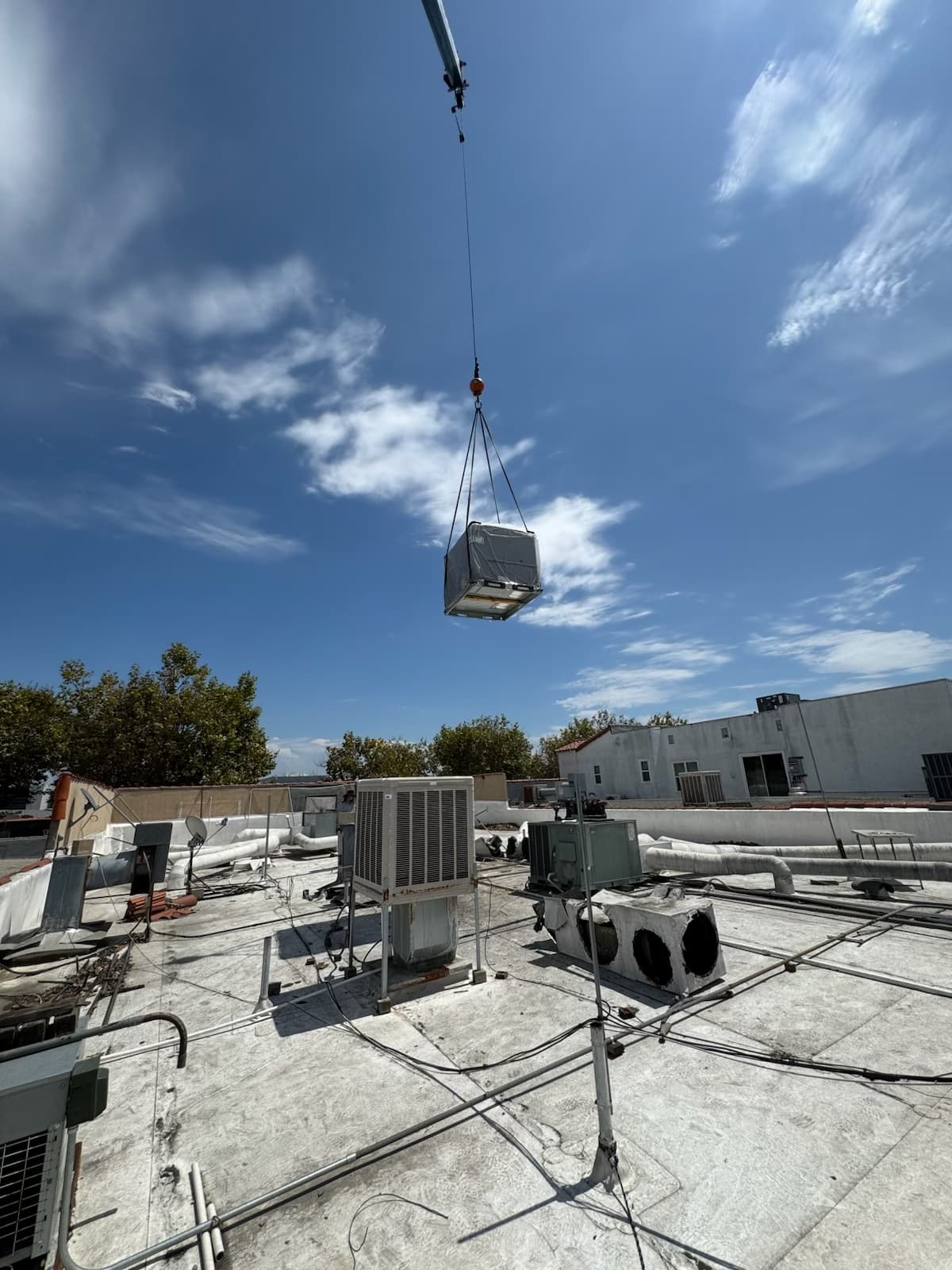
How rtu & split installs work plays out in Fullerton
Rooftop replacement in Fullerton falls into two very different calendars. School and college buildings run on an academic schedule, so a rooftop unit that is limping through spring is replaced between June and early August, or over winter break if it is small enough. Those jobs also carry prevailing-wage requirements and, for K-12 buildings, review by the Division of the State Architect where structural or accessibility changes are involved. We work backward from the first day of instruction: lead times on units, crane permits, and inspection scheduling all get fixed before the old equipment is touched.
The commercial side is simpler but has its own constraints. Light-industrial buildings along the 57 and 91 near Raymond Avenue and Orangethorpe have large single-story footprints with units spread across the roof, which usually means a crane set from a parking lot or a street closure permit from the City of Fullerton. Older retail buildings along Harbor Boulevard and in the downtown core often have curbs that no longer match any current product, so adapter curbs and structural confirmation are part of the scope, not a surprise on install day.
Every replacement here is a Title 24 project: economizers where required, fault detection and diagnostics, and acceptance testing with the paperwork the City of Fullerton inspector expects. The commercial RTU replacement process covers how we sequence permits, crane, and startup so the building is not left without cooling during the hot north-county summer.
Fullerton's climate and what it does to this equipment
Fullerton is north county, with hotter summers than the coast and occasional wildfire smoke and wind events from nearby hills.
For the equipment background behind this page, read our commercial rooftop unit guide or the full RTU & Split System Installs service page.
- University and college campusesLarge buildings with chilled-water, boilers, and rooftop equipment on academic schedules.
- Downtown FullertonRestaurants, bars, and small commercial buildings in older structures.
- Industrial and office areas near the freewaysLight industrial and corporate offices.
- School district facilitiesPublic school buildings under prevailing-wage and DSA requirements.
- Site survey covering load, airflow balancing, and duct condition
- Clean rigging with code-correct gas, electrical, and condensate work
- Startup readings documented and stored in the Portal
- DaVinci Portal included: asset QR tag + warranty paperwork on file
What a rtu & split installs visit includes, and the problems we most often find
- Site survey — existing curb/duct compatibility, load, and airflow requirements
- Equipment selection sized to actual load and hours of operation, not just square footage
- Crane scheduling and rigging coordinated for roof access
- Install with code-correct gas, electrical, and condensate work
- Startup readings taken and documented; warranty registered in the Portal
- Undersized or oversized replacement units causing short-cycling or poor comfort
- Curb mismatches that turn a 'simple swap' into a bigger job mid-install
- Duct transitions that don't match the new unit's airflow requirements
- Aging units on refrigerant types that are getting harder and more expensive to service