Ice Machine Service in Lake Forest, CA
Ice machines in Lake Forest show up in fitness studios, family restaurants, medical offices, and break rooms in larger employers around the business parks. Many sit in tight closets with little airflow, which pushes condensing temperatures up and cuts production when the afternoon is warm. We sanitize and descale on a schedule, verify clearances, clean the condenser, and replace filtration. Water quality across south county can be hard, so scale control is part of the visit. Each service is logged so a manager can show what was done and when.
Business parks and light-industrial/flex space along the El Toro corridor.
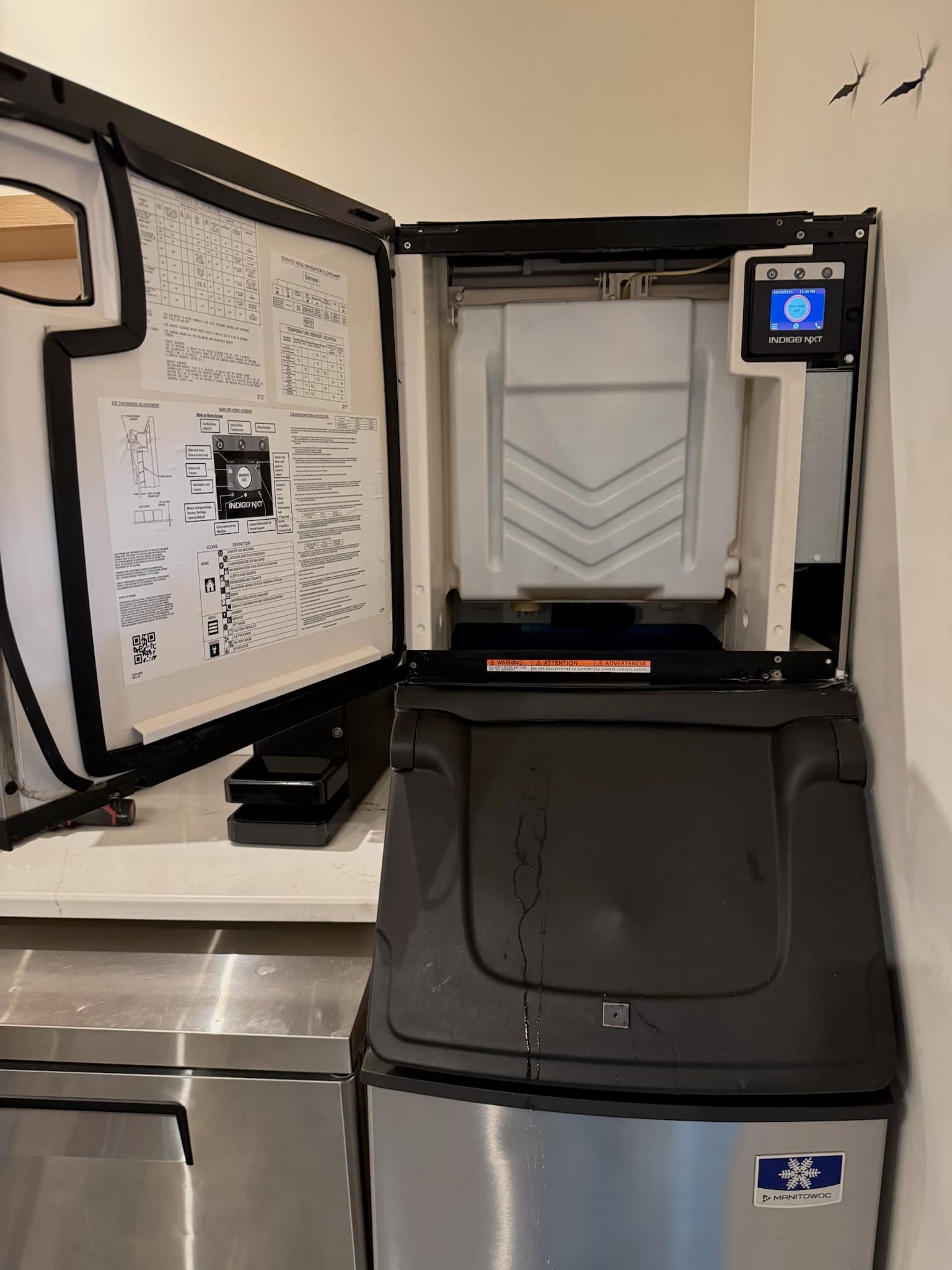
How ice machine service work plays out in Lake Forest
The ice machine population in Lake Forest is dominated by restaurants in the centers along El Toro Road and around Foothill Ranch, fitness clubs and sports facilities that serve a large youth and adult athletics community, medical and urgent care offices, and break rooms in the business parks. Few of these machines are in showpiece bars; most are workhorses in back rooms, and the owner's expectation is simple: it makes ice, the ice is clean, and it does not quit in August.
Dust is the local enemy. Inland air carries more particulate than coastal air, Santa Ana winds deposit a fine layer of canyon dust on everything, and ice machine condensers in back rooms and storage areas collect it quickly. A dusty condenser cuts production and shortens compressor life well before anyone notices the bin is lower than usual. Hard water is the other factor; scale builds on evaporator plates and in distribution tubes, and a machine that has not been descaled on schedule will start producing thin, slow, or incomplete cubes. Neither problem is dramatic, which is exactly why they get ignored until a machine fails during the hot season.
Our ice machine service in Lake Forest is a scheduled visit that covers condenser cleaning, descale and sanitize, filter replacement, water quality check, and a production test, recorded against the machine's own entry in the DaVinci Portal. For sports facilities and medical offices we pay attention to the sanitation record, because both have people asking about it. For restaurants in the busier centers we also look at whether the machine and bin match current demand, since several centers have added seating and patio capacity over the years. The ice machine guide explains machine types and sizing.
Lake Forest's climate and what it does to this equipment
Lake Forest is inland south county: warm and drier than the coast, with notable afternoon heat and some exposure to wildfire smoke and Santa Ana winds.
For the equipment background behind this page, read our commercial ice machine guide or the full Ice Machines — Service & Sanitation service page.
- El Toro Road corridorRetail, restaurants, and medical office.
- Business parks near Bake and Rancho ParkwayMulti-tenant office and flex with many identical RTUs.
- Foothill RanchRetail centers and light industrial.
- Lake Forest Drive areaOffices and professional services.
- Scale removal, deep sanitation, and filter change-out programs
- Bin sensors, harvest cycles, pumps, and valves checked
- OEM-spec readings taken against manufacturer PM intervals
- DaVinci Portal: photo-logged cleanings and reminder scheduling
What a ice machine service visit includes, and the problems we most often find
- Check ice quality, production rate, and bin sensor operation
- Full descale of water lines and evaporator plate
- Sanitize all food-contact surfaces per manufacturer spec
- Inspect water filtration and replace if due
- Photo-document the cleaning for your compliance records
- Scale buildup from hard water slowing production and clouding ice
- Bin sensors misreading and causing over- or under-production
- Water filters overdue for change, affecting both taste and machine health
- Visible slime or mold in the bin — the most common health-inspection flag