Commercial Refrigeration in Ventura, CA
Restaurants, breweries and food retailers around downtown Ventura rely on walk-in coolers that are often installed in repurposed rooms with limited airflow and warm back-of-house conditions. Outdoor condensing units placed near the harbor or on coastal roofs take salt damage faster than inland units. We service walk-ins, reach-ins and prep tables, check evaporator frost patterns, door seals and charge, and keep records that show temperature performance over time.
A coastal county-seat city of downtown and Main Street restaurants, a working harbor, hospitals, and oil- and agriculture-adjacent industrial space along the 101 and Highway 126 corridors.
How commercial refrigeration work plays out in Ventura
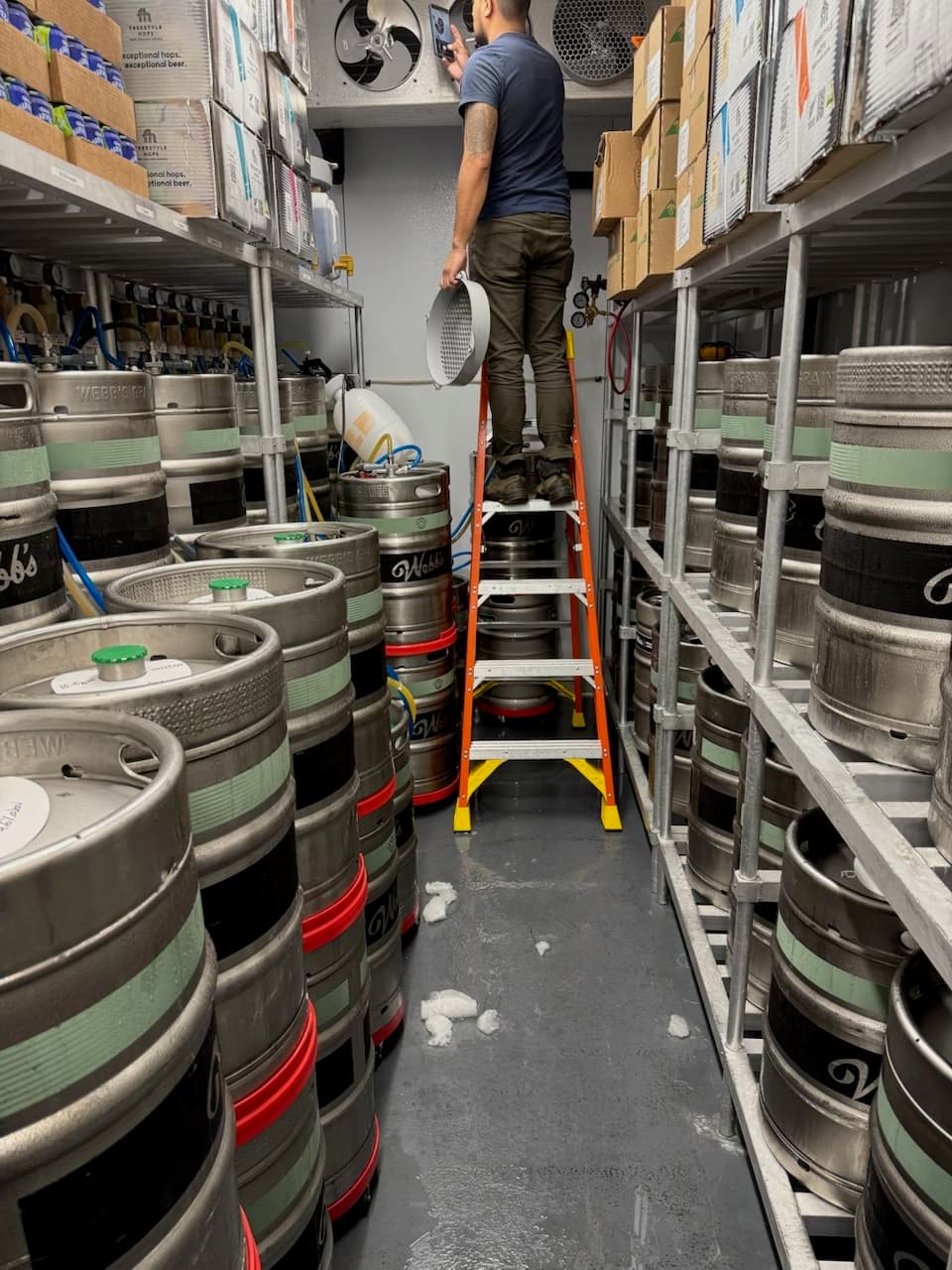
Refrigeration in Ventura lives in two very different environments. Downtown and in the Harbor Village, restaurants, breweries, taprooms and seafood operators keep walk-ins in back rooms that were storage closets or garages before they were coolers, with condensing units wherever a previous owner could find a spot: a flat roof section, a side yard, an alley wall. The boxes work, but the back of house is warm, airflow around the condenser is poor, and the harbor-side units take salt spray directly. In the Harbor, the question is often not whether a condenser is corroding but how far along it is.
Out along Victoria Avenue, Telephone Road and the 126 corridor, the picture is grocery display cases, pharmacy and clinic refrigerators that hold medication and vaccines, and agricultural support businesses with coolers serving the orchards and row crops toward Saticoy and Santa Paula. Vaccine refrigerators at the medical offices near the hospital campuses have strict temperature records attached to them, and a box that drifted overnight is a reporting event. Brewery cold rooms downtown have their own demands, holding fermentation and packaged product at tight setpoints.
We service walk-ins, reach-ins, display cases, prep tables and medical refrigeration with the same method: measured superheat and subcooling, evaporator frost pattern, defrost termination, door gaskets and closers, condenser coil condition and a photographed record in the DaVinci Portal. A restaurant with four boxes gets a history showing which one is drifting before it spoils a weekend's product. The walk-in cooler and freezer guide explains what the readings mean, and commercial refrigeration systems covers the larger systems.
Ventura's climate and what it does to this equipment
Ventura sits directly on the Pacific, so marine influence dominates: cool summer mornings, a frequent low overcast known as the May Gray and June Gloom pattern, mild winters and afternoon sea breezes. Salt in the air and damp mornings drive corrosion on anything outdoors, especially within a mile or two of the beach and harbor. The hills behind the city bring a different risk, since Santa Ana wind events and wildfire smoke in the fall can load filters, coat coils with ash and force quick changes in outdoor-air strategy. Heat is rarely the main stress; salt and smoke are.
For the equipment background behind this page, read our walk-in cooler and freezer guide or the full Refrigeration: Walk-In & Reach-In Coolers/Freezers service page.
- Downtown Ventura and Main StreetRestaurants, bars and older mixed-use buildings with tight roofs, constrained kitchens, and heavy evening demand.
- Ventura Harbor and the marina areaWaterfront restaurants, marine services and visitor-oriented retail in constant salt spray and wind.
- Ventura Avenue and Highway 126 industrial corridorOil-heritage light industrial, equipment yards and support businesses with a mix of old and newer buildings.
- Telephone Road, Johnson Drive and the hospital districtMedical campuses, offices and professional space where continuous cooling and hot water are mission-critical.
- Evaporator/condenser coil cleaning and defrost checks
- TXV/EEV, superheat, subcool, and pressure readings logged
- Door seals, drains, heaters, and fan packages inspected
- DaVinci Portal: temps and pressures logged by asset over time
What a commercial refrigeration visit includes, and the problems we most often find
- Check current box temperature against setpoint and recent trend
- Inspect door seals, drains, and evaporator/condenser coils for buildup
- Take superheat, subcool, and pressure readings against manufacturer spec
- Address the root cause — not just a temporary recharge
- Log readings to the asset so drift is caught early next visit
- Door seals and hinges that no longer hold a tight close
- Evaporator coils iced over from a defrost cycle issue
- Condenser coils caked with grease or debris, especially near kitchen exhaust
- Slow refrigerant leaks that show up as gradual temperature drift, not sudden failure