Ice Machine Service in Ventura, CA
In a city of bars, seafood restaurants and harbor-front dining, ice machines are a central piece of equipment, and a dirty one is a health-department problem. Coastal humidity and mineral content in the supply water accelerate scale and biofilm. We sanitize and descale on a documented schedule, verify filtration, inspect the condenser for salt and grease contamination from nearby kitchen air, and note any drainage or air-gap issues that invite contamination.
A coastal county-seat city of downtown and Main Street restaurants, a working harbor, hospitals, and oil- and agriculture-adjacent industrial space along the 101 and Highway 126 corridors.
How ice machine service work plays out in Ventura
Ventura is a bar and seafood town with a working harbor, and ice is part of the infrastructure. The taprooms and restaurants on Main Street and California Street, the seafood houses along Spinnaker Drive at the harbor, the hotels near the pier and the beach, and the hospital kitchens and clinics in Midtown all depend on machines that produce reliably and pass a health inspection without a conversation. The coastal factors conspire against both. Humid air grows slime in bins and chutes between cleanings, mineral content in the supply water scales evaporators, and air-cooled condensers in cramped downtown back rooms clog with grease, lint and salt.
Placement is the recurring downtown problem. A machine installed in a 1940s building ends up in the one corner with a floor drain, which is often beside the dish machine or under a shelf that blocks condenser airflow. Production drops on warm afternoons, cycles run long, and the owner buys bagged ice through the summer without knowing why. At the harbor, machines in semi-outdoor service areas take salt directly into the condenser. In medical settings the standard is higher still: ice for patient use is treated as a food, and the cleaning records are part of the facility's documentation.
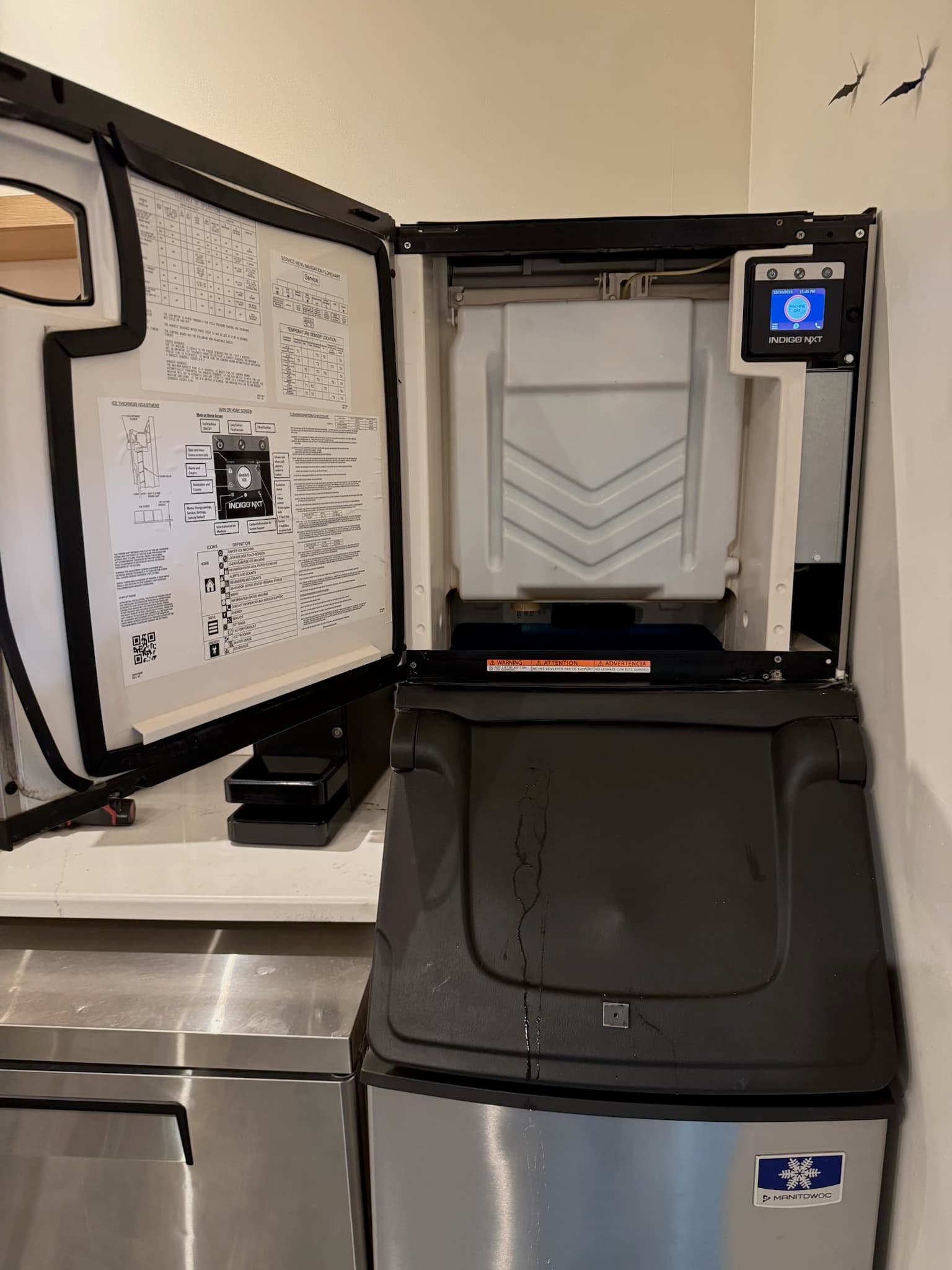
Our service follows the manufacturer's descale and sanitize procedure, verifies water filtration and flow, measures freeze and harvest cycle times against spec, cleans the condenser, checks the drain air gap and bin drain, and leaves a photographed record in the Portal. Visits are timed between service periods so a kitchen is not without ice at dinner. The commercial ice machine guide covers what a clean machine looks like and how to tell when it is overdue.
Ventura's climate and what it does to this equipment
Ventura sits directly on the Pacific, so marine influence dominates: cool summer mornings, a frequent low overcast known as the May Gray and June Gloom pattern, mild winters and afternoon sea breezes. Salt in the air and damp mornings drive corrosion on anything outdoors, especially within a mile or two of the beach and harbor. The hills behind the city bring a different risk, since Santa Ana wind events and wildfire smoke in the fall can load filters, coat coils with ash and force quick changes in outdoor-air strategy. Heat is rarely the main stress; salt and smoke are.
For the equipment background behind this page, read our commercial ice machine guide or the full Ice Machines — Service & Sanitation service page.
- Downtown Ventura and Main StreetRestaurants, bars and older mixed-use buildings with tight roofs, constrained kitchens, and heavy evening demand.
- Ventura Harbor and the marina areaWaterfront restaurants, marine services and visitor-oriented retail in constant salt spray and wind.
- Ventura Avenue and Highway 126 industrial corridorOil-heritage light industrial, equipment yards and support businesses with a mix of old and newer buildings.
- Telephone Road, Johnson Drive and the hospital districtMedical campuses, offices and professional space where continuous cooling and hot water are mission-critical.
- Scale removal, deep sanitation, and filter change-out programs
- Bin sensors, harvest cycles, pumps, and valves checked
- OEM-spec readings taken against manufacturer PM intervals
- DaVinci Portal: photo-logged cleanings and reminder scheduling
What a ice machine service visit includes, and the problems we most often find
- Check ice quality, production rate, and bin sensor operation
- Full descale of water lines and evaporator plate
- Sanitize all food-contact surfaces per manufacturer spec
- Inspect water filtration and replace if due
- Photo-document the cleaning for your compliance records
- Scale buildup from hard water slowing production and clouding ice
- Bin sensors misreading and causing over- or under-production
- Water filters overdue for change, affecting both taste and machine health
- Visible slime or mold in the bin — the most common health-inspection flag
Ice Machine Service in Ventura: questions we get
Our downtown Ventura bar's ice machine grows pink film within weeks of cleaning. What are we doing wrong?
Possibly nothing beyond the interval. Pink and black films are biological growth that thrives in warm, humid air, and a downtown bar back room in a coastal climate is ideal habitat. Shorten the cleaning cycle, make sure the bin lid seals and stays closed, keep the area around the machine clean, and check that the drain has a proper air gap so nothing backs up. A machine with persistent growth despite good practice may have a damaged water distribution tube or a worn bin surface that harbors film.
Should a harbor-side restaurant in Ventura choose a water-cooled or remote-condenser ice machine instead of a standard air-cooled unit?
A remote condenser is often the best fit where the back room is hot or salty and there is a roof or wall location with cleaner air. Water-cooled units avoid the air problem but use a lot of water and may run into local restrictions, so confirm current rules before choosing one. If you stay air-cooled, specify a coated condenser, give it clearance, and plan on more frequent condenser cleaning than an inland site would need.
How often should ice machines be sanitized?
Most manufacturers recommend sanitizing every six months minimum, more often in high-mineral water areas. We'll set the interval based on your machine and water supply.
Can you fix low production without a full replacement?
Often, yes. Scale buildup, refrigerant charge, and water filtration are the most common causes of low ice production and are usually repairable.