Building Controls & Automation in Ventura, CA
Ventura's marine climate gives smart controls real value, because mild days and cool nights allow extended economizer operation. The catch is that sensors and damper actuators on salt-exposed roofs drift and stick, and smoke events call for outdoor-air lockout strategies. We verify schedules, economizer logic, sensor accuracy and damper movement, and document a wildfire-smoke sequence so operators can limit outdoor air when air quality drops.
A coastal county-seat city of downtown and Main Street restaurants, a working harbor, hospitals, and oil- and agriculture-adjacent industrial space along the 101 and Highway 126 corridors.
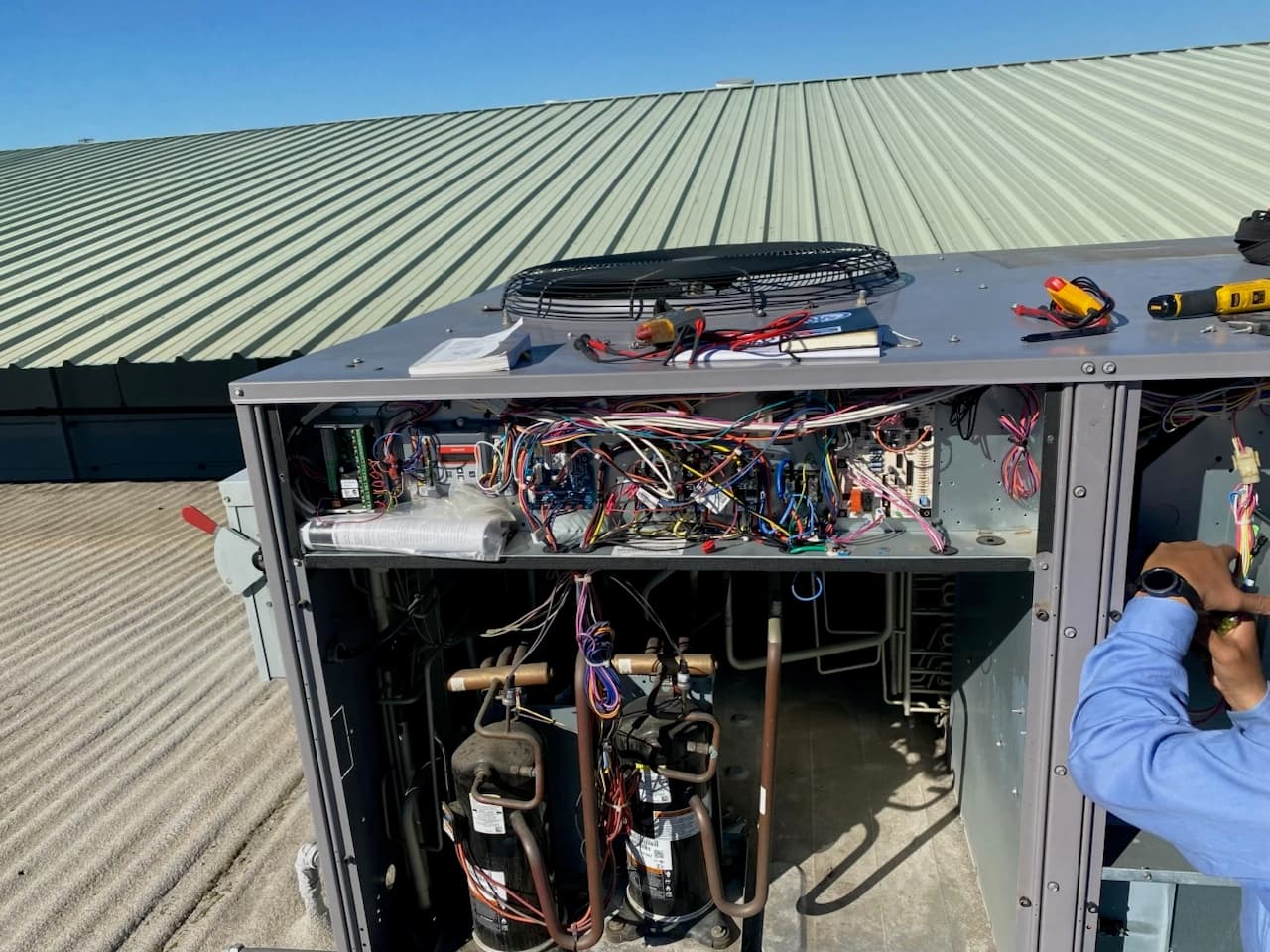
How building controls & automation work plays out in Ventura
Ventura has one of the best free-cooling climates in California and a specific threat that can ruin it. Mild, breezy afternoons and cool nights mean economizers on offices, medical buildings, the shopping centers near Pacific View Mall and the county buildings on Victoria Avenue can carry the cooling load for a large part of the year. The threat is fall, when Santa Ana winds push smoke from fires in the hills behind the city down over the roofs. An economizer that is still running wide open during a smoke event fills the building with ash and particulates. Every controls strategy here needs an outdoor-air lockout the operator can trigger quickly, and ideally one tied to an air-quality signal.
The coast adds the usual sensor problems. Outdoor-air temperature and humidity sensors on salt-exposed roofs drift and read wrong, damper linkages corrode and stick, and economizers revert to mechanical cooling without anyone noticing. Humid days require changeover logic that considers moisture, not just dry-bulb temperature, or the building goes clammy. For the medical buildings, the controls that matter extend to pressure relationships in procedure rooms and alarm thresholds on medication refrigeration, and for restaurant and brewery owners it is often as simple as a thermostat schedule that matches when the kitchen actually runs.
We verify thermostat schedules and setpoints on smaller buildings, test economizer sequences and sensors to Title 24 acceptance standards on rooftop units, and review building automation on larger medical, institutional and office buildings: trend logs, lockouts, alarm routing, smoke-event sequences and a written record of what the system should do. Refrigeration alarm chains are tested through to the notification. For the mechanical side of what these controls operate, the commercial rooftop unit guide is a useful companion.
Ventura's climate and what it does to this equipment
Ventura sits directly on the Pacific, so marine influence dominates: cool summer mornings, a frequent low overcast known as the May Gray and June Gloom pattern, mild winters and afternoon sea breezes. Salt in the air and damp mornings drive corrosion on anything outdoors, especially within a mile or two of the beach and harbor. The hills behind the city bring a different risk, since Santa Ana wind events and wildfire smoke in the fall can load filters, coat coils with ash and force quick changes in outdoor-air strategy. Heat is rarely the main stress; salt and smoke are.
For the equipment background behind this page, read our building controls and energy guide or the full Building Controls & Automation service page.
- Downtown Ventura and Main StreetRestaurants, bars and older mixed-use buildings with tight roofs, constrained kitchens, and heavy evening demand.
- Ventura Harbor and the marina areaWaterfront restaurants, marine services and visitor-oriented retail in constant salt spray and wind.
- Ventura Avenue and Highway 126 industrial corridorOil-heritage light industrial, equipment yards and support businesses with a mix of old and newer buildings.
- Telephone Road, Johnson Drive and the hospital districtMedical campuses, offices and professional space where continuous cooling and hot water are mission-critical.
- Schedule, setpoint, and sequence review across rooftop and central equipment
- Sensor calibration and economizer verification
- Alarm and trend setup so problems surface early
- Programmable and networked thermostat installation
What a building controls & automation visit includes, and the problems we most often find
- Inventory controllers, thermostats, and any building automation system
- Compare schedules and setpoints to how the building is actually used
- Verify sensors, actuators, and economizer logic against measured conditions
- Correct overrides, sequences, and alarms; document the changes
- Review trends after adjustment to confirm savings and stability
- Schedules left at default so equipment runs when nobody is there
- Equipment overridden manually and never returned to automatic
- Drifting or miswired sensors producing comfort complaints
- Economizers that never actually modulate
Building Controls & Automation in Ventura: questions we get
During the last smoke event our Ventura office building filled with the smell of smoke even with doors closed. What should the controls have done?
They should have closed the outdoor-air dampers to minimum, or fully where code and occupancy allow, and run the building on recirculated air with upgraded filtration until air quality recovered. Most economizers will not do that on their own; it needs a smoke or air-quality lockout sequence that an operator can trigger, or that reacts to a sensor or an external air-quality feed. We set up and document that sequence so the building has a button to push, not a scramble.
Our Ventura building's economizers passed inspection when they were installed. Why would they need verification again?
Because coastal roofs change equipment. Sensors that read correctly at installation drift under salt exposure, actuators fail, linkages corrode and controllers get overridden during service calls and never reset. A unit that passed acceptance testing five years ago may be running on mechanical cooling full time today while the economizer sits closed. A periodic verification runs each unit through its full sequence, confirms sensor readings against a reference and documents what was found and corrected.
Do you install building automation systems?
We install and service thermostats and controls on rooftop and mechanical equipment, and work with larger automation systems on a project basis.
Can better controls really cut energy use?
Often. Correct schedules, setpoints, and economizer operation are among the cheapest efficiency gains in an existing building.
Can you connect to our existing system?
In most cases. Send us what is installed and we will confirm the integration approach.