Chiller & Central Plant Service in Ventura, CA
Central plant needs in Ventura are concentrated in hospitals and larger medical and institutional buildings. These plants cannot go down casually, and coastal air accelerates corrosion on towers, pumps and piping insulation jackets. We provide chiller diagnostics, pump and tower service and replacement planning with phased shutdowns, water treatment review and trend documentation that helps facility engineers defend capital requests.
A coastal county-seat city of downtown and Main Street restaurants, a working harbor, hospitals, and oil- and agriculture-adjacent industrial space along the 101 and Highway 126 corridors.
How chiller & central plant service work plays out in Ventura
Central plant work in Ventura is institutional. The hospital campuses in Midtown and along Loma Vista Road, the county government complex on Victoria Avenue, the college campus on Telephone Road and a few larger office and medical buildings run chillers, cooling towers, pumps and air handlers that serve surgical suites, courtrooms, labs and large occupied floors. None of them shuts down casually. A hospital plant is scheduled around clinical operations, a courthouse around the calendar, a college around the academic year, and every repair or replacement is a sequencing discussion with the facility's own engineers.
Salt and ash set the maintenance agenda. Open cooling towers a mile or two from the beach pull airborne salt into the basin on top of what the makeup water brings, pushing chemistry out of range faster and attacking fill, basins, fan decks and structural steel. Air-cooled chillers lose capacity as condenser coils corrode, and fire-season ash bonds to those coils if it is not washed off promptly. Pump seals, exposed piping and insulation jackets show the damp. Trend data is what catches the slow decline: approach temperature, condenser water chemistry, vibration, amperage and oil analysis logged visit by visit.
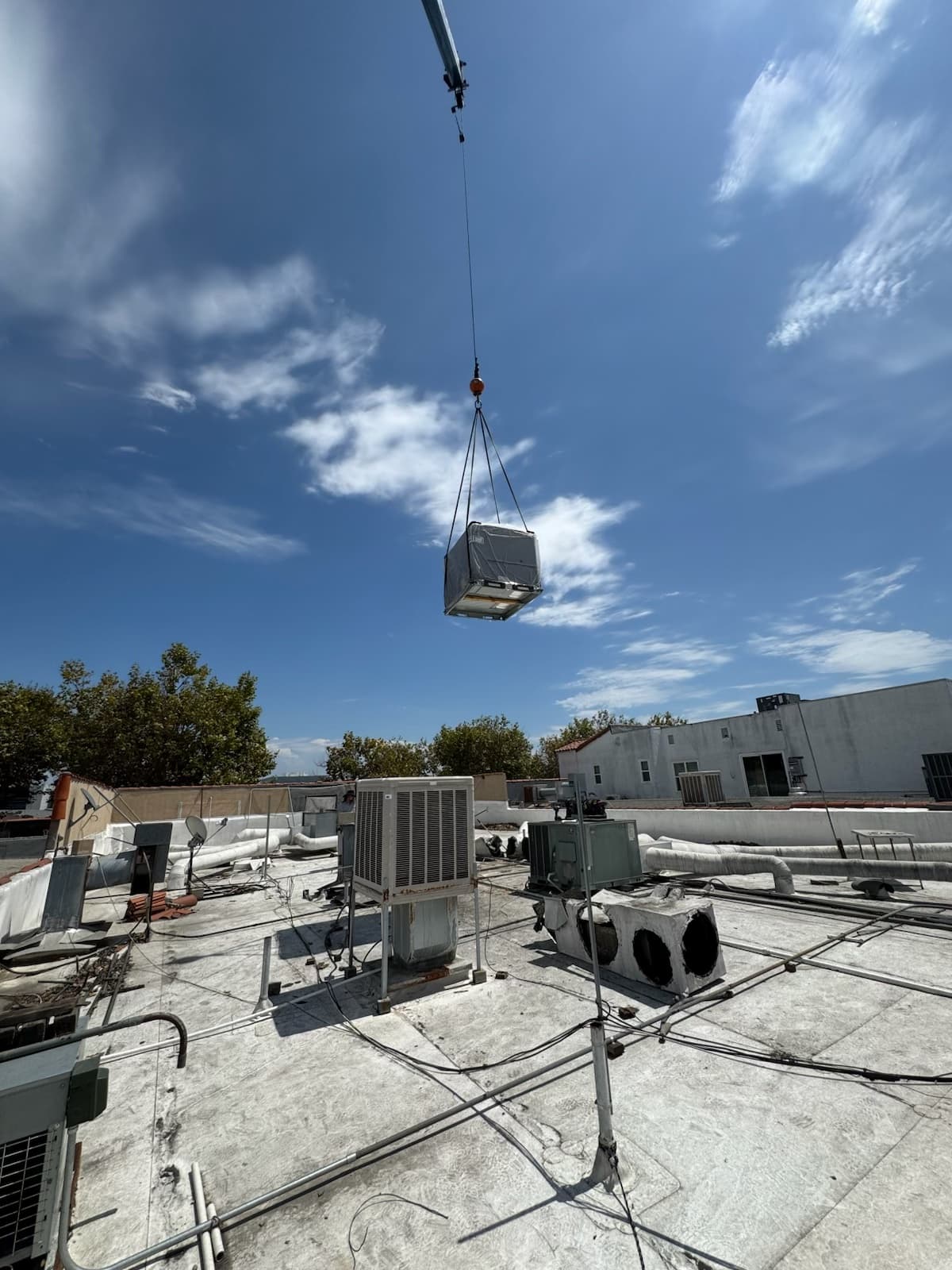
Replacement planning aims for a phased changeover that keeps the building on chilled water throughout, with temporary cooling staged where redundancy is thin. Public and institutional plant work in Ventura County is bid-level, prevailing-wage work, and we document it to that standard. Our bid projects page and the County of Ventura page describe how we work with agencies, and the chillers and hydronic systems guide covers diagnostics in depth.
Ventura's climate and what it does to this equipment
Ventura sits directly on the Pacific, so marine influence dominates: cool summer mornings, a frequent low overcast known as the May Gray and June Gloom pattern, mild winters and afternoon sea breezes. Salt in the air and damp mornings drive corrosion on anything outdoors, especially within a mile or two of the beach and harbor. The hills behind the city bring a different risk, since Santa Ana wind events and wildfire smoke in the fall can load filters, coat coils with ash and force quick changes in outdoor-air strategy. Heat is rarely the main stress; salt and smoke are.
For the equipment background behind this page, read our chillers and hydronic systems guide or the full Chillers & Central Plant Service service page.
- Downtown Ventura and Main StreetRestaurants, bars and older mixed-use buildings with tight roofs, constrained kitchens, and heavy evening demand.
- Ventura Harbor and the marina areaWaterfront restaurants, marine services and visitor-oriented retail in constant salt spray and wind.
- Ventura Avenue and Highway 126 industrial corridorOil-heritage light industrial, equipment yards and support businesses with a mix of old and newer buildings.
- Telephone Road, Johnson Drive and the hospital districtMedical campuses, offices and professional space where continuous cooling and hot water are mission-critical.
- Chiller, tower, pump, and VFD service with logged operating data
- Trend-based diagnosis: approach, delta-T, amp draw, and pressures
- Replacement planning with rigging, power, and temporary cooling considered
- Water-treatment and Legionella-control coordination for water-cooled plants
What a chiller & central plant service visit includes, and the problems we most often find
- Review the plant: chillers, pumps, towers, controls, and recent operating history
- Take full operating readings and compare against design and prior visits
- Inspect and test safeties, strainers, VFDs, valves, and control sequences
- Report findings with prioritized repairs and a forward capital outlook
- Document the plant by asset in the DaVinci Portal for the next visit
- Falling delta-T pushing chillers to run more than the load requires
- Fouled condenser tubes or coils raising approach temperature and amp draw
- Neglected water treatment causing scale, corrosion, and biological growth
- Controls overridden to manual and never returned to automatic