RTU & Split Installs in Ventura, CA
Installing rooftop and split systems in Ventura means working around older structures, parapets, limited crane access on narrow downtown streets, and the coastal exposure that shortens equipment life. Corrosion-protected coils and careful hardware choices are part of the specification, and permit and Title 24 paperwork has to match what is actually going on the roof. Where Main Street buildings or historic-feeling structures are involved, we confirm access, structural support and neighboring-tenant impacts before the lift day.
A coastal county-seat city of downtown and Main Street restaurants, a working harbor, hospitals, and oil- and agriculture-adjacent industrial space along the 101 and Highway 126 corridors.
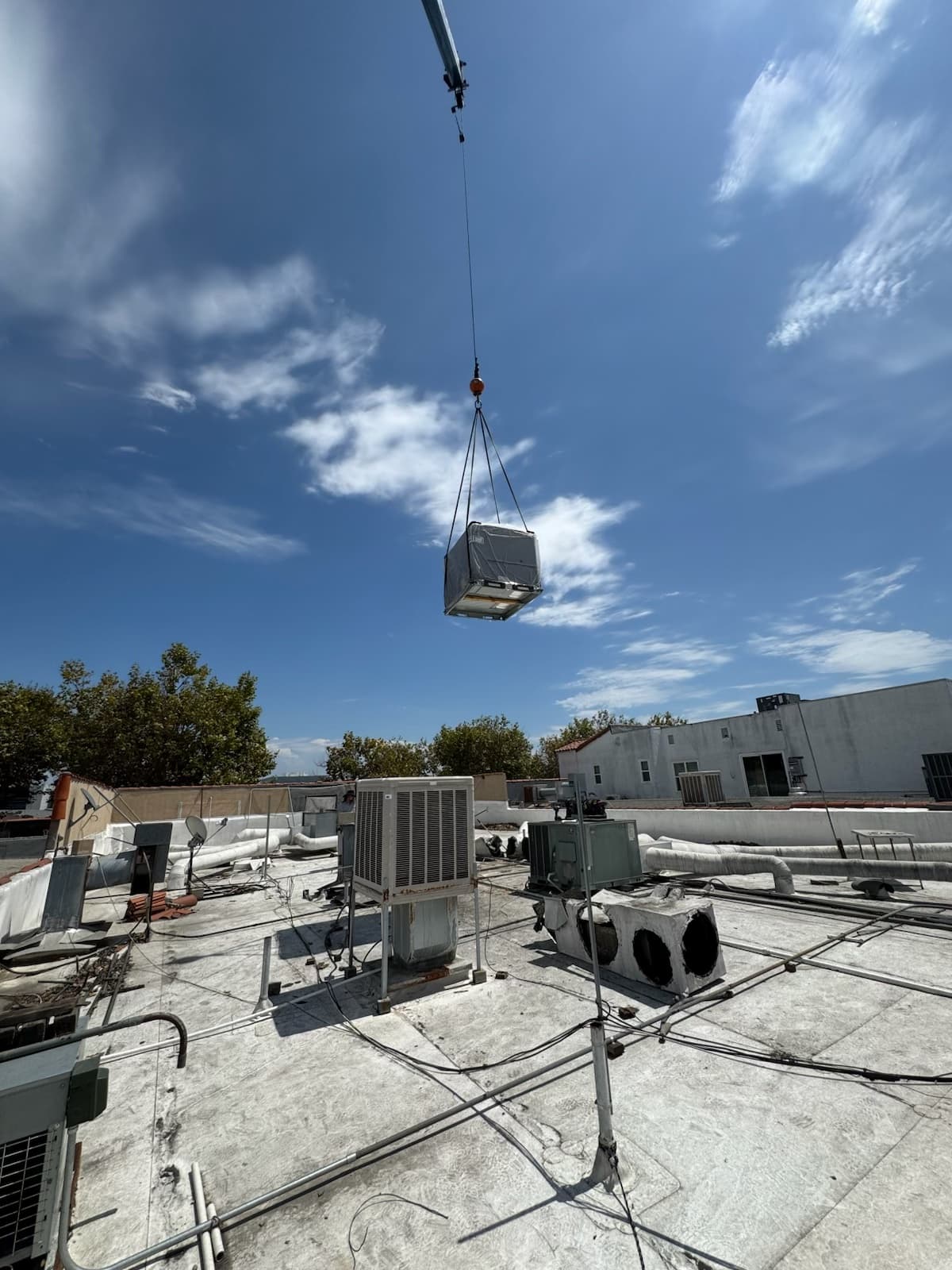
How rtu & split installs work plays out in Ventura
Replacing a rooftop unit on Main Street is as much a traffic problem as a mechanical one. The downtown blocks between the 101 and Poli Street are narrow, lined with parked cars and active storefronts, and the roofs sit behind parapets that hide equipment from the street and complicate a crane's reach. A lift here needs a street-use permit, an early-morning window before the breakfast crowd, coordination with neighboring tenants whose doors fall under the swing, and a plan for the old unit coming down through a space nobody has measured in forty years. We walk the site, measure the reach and confirm structural support before quoting, because the surprise on these buildings is usually under the curb, not in the unit.
The rest of the city is more straightforward on access and harder on exposure. Units on the medical and office buildings in Midtown and along Telephone Road, the shopping centers near Pacific View Mall and Victoria Avenue, and the industrial buildings off Johnson Drive and Market Street all sit within a few miles of the ocean, and a replacement that ignores that will corrode in a few seasons. Coated coils, sealed control compartments, stainless or treated hardware and a condensate design that handles fog-season moisture belong in the specification. Permits run through the city, and Title 24 acceptance testing on economizers and controls is part of the closeout; the Title 24 and permits guide covers the sequence.
The best outcome on a multi-unit roof is one planned project rather than a series of emergencies. We survey every unit, rank by condition and tenant impact, and group replacements so one crane day covers several units. Harbor and beach-area buildings get the most conservative material choices. See commercial RTU replacement for how the project is structured end to end.
Ventura's climate and what it does to this equipment
Ventura sits directly on the Pacific, so marine influence dominates: cool summer mornings, a frequent low overcast known as the May Gray and June Gloom pattern, mild winters and afternoon sea breezes. Salt in the air and damp mornings drive corrosion on anything outdoors, especially within a mile or two of the beach and harbor. The hills behind the city bring a different risk, since Santa Ana wind events and wildfire smoke in the fall can load filters, coat coils with ash and force quick changes in outdoor-air strategy. Heat is rarely the main stress; salt and smoke are.
For the equipment background behind this page, read our commercial rooftop unit guide or the full RTU & Split System Installs service page.
- Downtown Ventura and Main StreetRestaurants, bars and older mixed-use buildings with tight roofs, constrained kitchens, and heavy evening demand.
- Ventura Harbor and the marina areaWaterfront restaurants, marine services and visitor-oriented retail in constant salt spray and wind.
- Ventura Avenue and Highway 126 industrial corridorOil-heritage light industrial, equipment yards and support businesses with a mix of old and newer buildings.
- Telephone Road, Johnson Drive and the hospital districtMedical campuses, offices and professional space where continuous cooling and hot water are mission-critical.
- Site survey covering load, airflow balancing, and duct condition
- Clean rigging with code-correct gas, electrical, and condensate work
- Startup readings documented and stored in the Portal
- DaVinci Portal included: asset QR tag + warranty paperwork on file
What a rtu & split installs visit includes, and the problems we most often find
- Site survey — existing curb/duct compatibility, load, and airflow requirements
- Equipment selection sized to actual load and hours of operation, not just square footage
- Crane scheduling and rigging coordinated for roof access
- Install with code-correct gas, electrical, and condensate work
- Startup readings taken and documented; warranty registered in the Portal
- Undersized or oversized replacement units causing short-cycling or poor comfort
- Curb mismatches that turn a 'simple swap' into a bigger job mid-install
- Duct transitions that don't match the new unit's airflow requirements
- Aging units on refrigerant types that are getting harder and more expensive to service