Commercial Refrigeration in Oxnard, CA
Oxnard's cooler work ranges from restaurant walk-ins to produce cooling rooms where air flow, defrost cycles and door traffic decide whether product holds temperature. Humid coastal air loads evaporators with frost faster than inland sites see, and salt air eats at condensing units placed outdoors. We service walk-ins, reach-ins and display cases with attention to coil condition, defrost timing, gasket integrity and refrigerant charge, and document each box so a pattern of drifting temperatures is visible before spoilage is.
Ventura County's largest city, built around agricultural packing, cold storage and food processing, the Port Hueneme harbor area, regional retail at The Collection and the Esplanade, and several hospitals, all under a salt-laden coastal climate.
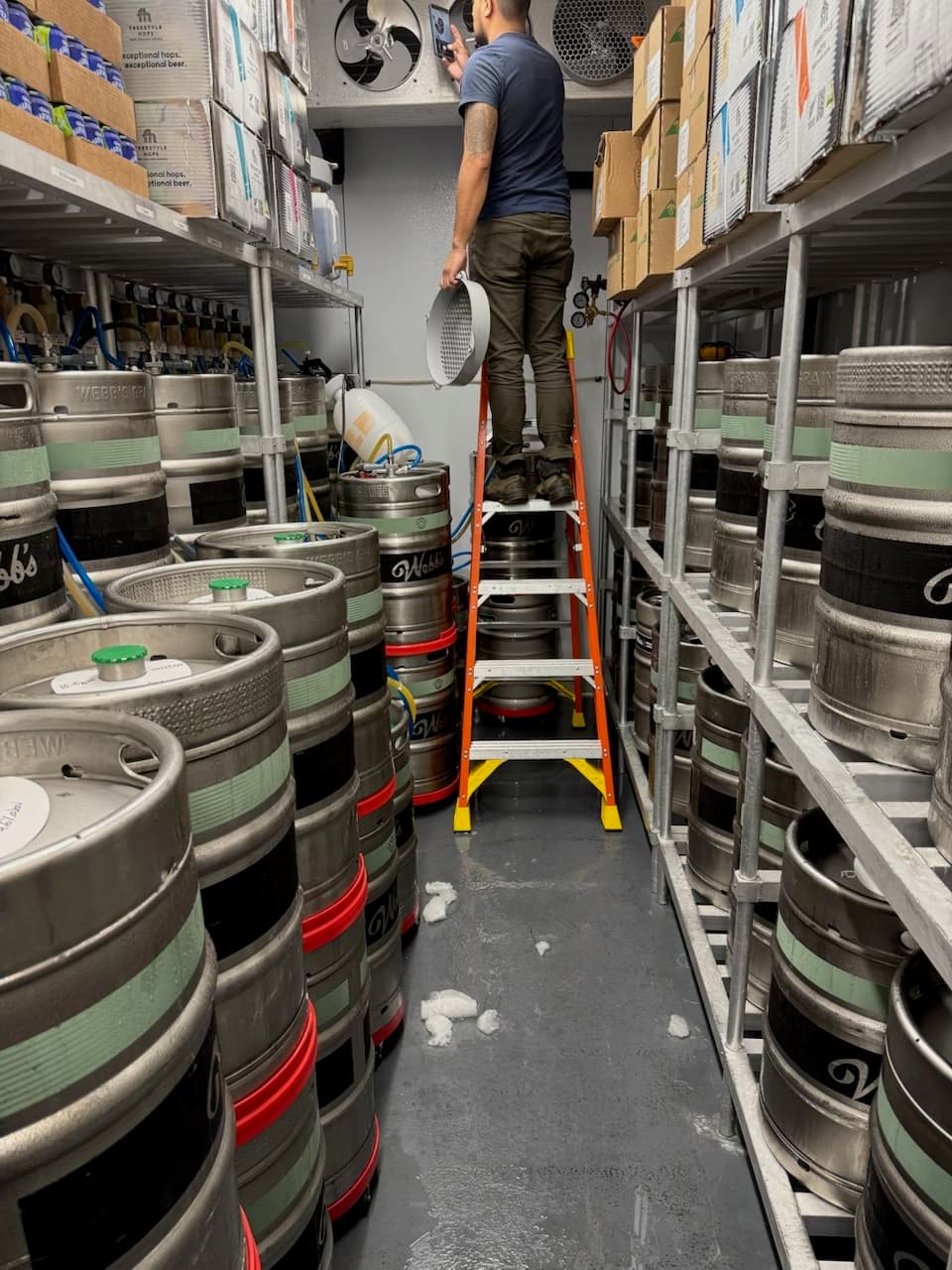
How commercial refrigeration work plays out in Oxnard
Oxnard is one of the few Southern California cities where refrigeration is the main event rather than a sideline. The Oxnard Plain ships strawberries, celery, lettuce and cut flowers through forced-air coolers, pre-cool tunnels and holding rooms that run around the clock from spring into fall, and the Port of Hueneme next door brings imported produce into cold storage on the way inland. That is engineered refrigeration with rack systems, evaporative or air-cooled condensers and tight humidity targets, and it sits a short drive from the restaurant walk-ins and grocery display cases at RiverPark, the Esplanade and the neighborhood centers along Saviers Road and Ventura Road.
The coastal climate works against both kinds of box in different ways. In the packing houses, humid outside air pulled in through open dock doors loads the evaporators with frost faster than an inland cooler would see, so defrost timing that was right in a drier valley is wrong here. On a restaurant walk-in behind a RiverPark kitchen, the problem is more often a condensing unit on the roof or in a side yard whose coil has quietly corroded while the box seemed fine, until the first warm week in September when it cannot keep up. Reach-ins in a hot dish pit with a salty, greasy condenser fail the same way.
We service walk-ins, reach-ins, prep tables, display cases and the larger systems that food handlers depend on, and we treat temperature history as part of the job. Every box gets a logged check of evaporator frost pattern, defrost cycle, superheat, door gaskets and condenser condition, and a facility with a dozen boxes gets a record that shows which one is drifting before it spoils anything. For the regulatory side of larger charges, the California refrigerant compliance guide covers what applies, and the walk-in cooler and freezer guide goes deeper on box diagnostics.
Oxnard's climate and what it does to this equipment
Oxnard has one of the mildest climates in Southern California, with a persistent marine layer, cool nights, and summer highs that stay moderate near the water. The mildness is deceptive for equipment. Salt-laden air, morning fog and high humidity attack condenser coils, fasteners, cabinet panels and electrical terminals, while airborne farm dust and fine soil clog coils and filters during dry, windy stretches. Santa Ana wind events occasionally push hot, dry air to the coast and spike loads quickly. Systems here tend to fail from corrosion and fouling long before they fail from heat.
For the equipment background behind this page, read our walk-in cooler and freezer guide or the full Refrigeration: Walk-In & Reach-In Coolers/Freezers service page.
- Agricultural packing and cold-storage corridorsPacking houses, coolers and processing buildings on the Oxnard Plain, where walk-in-scale and engineered refrigeration runs through harvest peaks.
- Port Hueneme and the Channel Islands Boulevard industrial beltMarine-adjacent warehouses, distribution and light industrial space in the harshest salt-air band of the city.
- The Collection at RiverPark and the EsplanadeOpen-air retail, restaurants, theaters and big-box tenants with dense rooftop equipment and heavy kitchen loads.
- Hospital and medical-office clustersAcute-care and outpatient buildings around the central city where reliable cooling, pressure relationships and hot water are non-negotiable.
- Evaporator/condenser coil cleaning and defrost checks
- TXV/EEV, superheat, subcool, and pressure readings logged
- Door seals, drains, heaters, and fan packages inspected
- DaVinci Portal: temps and pressures logged by asset over time
What a commercial refrigeration visit includes, and the problems we most often find
- Check current box temperature against setpoint and recent trend
- Inspect door seals, drains, and evaporator/condenser coils for buildup
- Take superheat, subcool, and pressure readings against manufacturer spec
- Address the root cause — not just a temporary recharge
- Log readings to the asset so drift is caught early next visit
- Door seals and hinges that no longer hold a tight close
- Evaporator coils iced over from a defrost cycle issue
- Condenser coils caked with grease or debris, especially near kitchen exhaust
- Slow refrigerant leaks that show up as gradual temperature drift, not sudden failure