Commercial Refrigeration in Thousand Oaks, CA
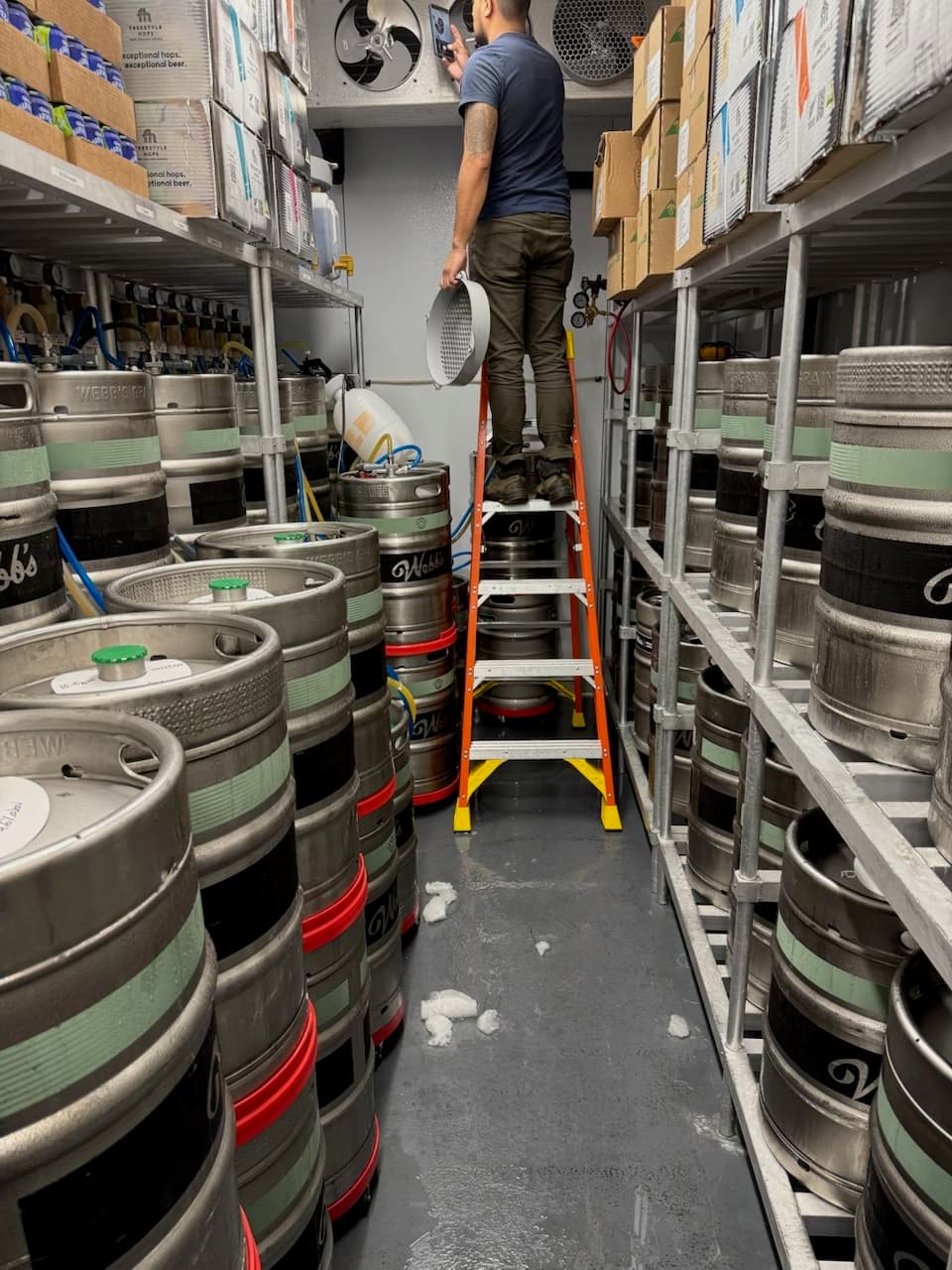
Cooling and cold storage in Thousand Oaks includes restaurant walk-ins and the specialized cold rooms, reach-ins and stability storage that life-science buildings keep. Inland heat means condensers work harder, and ambient temperatures in mechanical yards can push head pressures up in August. We service walk-in and reach-in units, check condenser clearance and cleanliness, verify alarm and logging setups, and support documentation that shows temperature history for products or samples stored in the unit.
An inland Conejo Valley city anchored by biotech and pharmaceutical campuses, Oaks Mall and Thousand Oaks Boulevard retail, suburban business parks and medical offices, with hot summers and real wildfire-smoke exposure.
How commercial refrigeration work plays out in Thousand Oaks
Refrigeration in Thousand Oaks splits into two worlds that rarely meet. The first is food service: walk-ins behind the restaurants on Thousand Oaks Boulevard and in the Janss Marketplace and Oaks Mall dining areas, grocery display cases in the neighborhood centers along Lynn Road and Moorpark Road, and prep refrigeration in corporate cafeterias. These boxes see heavy door traffic and warm back-of-house conditions, and remote condensing units on the roof take the full valley afternoon. Evaporator frost from a worn gasket and a condenser running hot from a dirty coil are the usual pair behind a box that will not hold temperature.
The second world is life science. Research buildings in Newbury Park and the Rancho Conejo parks keep cold rooms, reagent refrigerators and sample freezers where the temperature log is part of the product record. Here the equipment is often fine and the problem is monitoring: an alarm threshold set too wide, a probe placed in the wrong spot, a door switch that no longer registers. We service the mechanical side of walk-in cold rooms and reach-ins and verify the alarm and logging setup, and we are careful to stay inside the site's change-control process when anything on a validated unit is touched.
In both cases a job well done leaves the owner with documented pull-down performance, defrost timing that matches the load, condenser clearance confirmed, and a Portal entry for each box. See the walk-in cooler and freezer guide for the general principles; the local twist is heat and documentation.
Thousand Oaks's climate and what it does to this equipment
Thousand Oaks is cut off from the ocean's moderating effect by the hills, so it runs noticeably hotter in summer than coastal Ventura County, with long stretches of high temperatures and cooling-dominated operation. Cool nights soften the cycle, but afternoon peaks push condensers and compressors hard, particularly on dark roofs. Fall brings Santa Ana winds and the area's history of wildfires, and smoke can foul filters and coat outdoor coils with ash. Winters are mild with occasional frost, so heating is modest but not negligible for medical and laboratory space.
For the equipment background behind this page, read our walk-in cooler and freezer guide or the full Refrigeration: Walk-In & Reach-In Coolers/Freezers service page.
- Rancho Conejo and Conejo Valley business parksBiotech, pharmaceutical, light manufacturing and corporate buildings with precise cooling, humidity and exhaust requirements.
- Thousand Oaks Boulevard retail and diningRestaurants, specialty retail and small centers with numerous mid-size rooftop units and kitchen loads.
- Oaks Mall areaLarge-format retail and entertainment with big air handlers, long run hours and landlord-managed equipment.
- Los Robles and Conejo Valley medical officesHospital-adjacent clinics and outpatient buildings where cooling, ventilation and hot water must stay dependable.
- Evaporator/condenser coil cleaning and defrost checks
- TXV/EEV, superheat, subcool, and pressure readings logged
- Door seals, drains, heaters, and fan packages inspected
- DaVinci Portal: temps and pressures logged by asset over time
What a commercial refrigeration visit includes, and the problems we most often find
- Check current box temperature against setpoint and recent trend
- Inspect door seals, drains, and evaporator/condenser coils for buildup
- Take superheat, subcool, and pressure readings against manufacturer spec
- Address the root cause — not just a temporary recharge
- Log readings to the asset so drift is caught early next visit
- Door seals and hinges that no longer hold a tight close
- Evaporator coils iced over from a defrost cycle issue
- Condenser coils caked with grease or debris, especially near kitchen exhaust
- Slow refrigerant leaks that show up as gradual temperature drift, not sudden failure
Commercial Refrigeration in Thousand Oaks: questions we get
Our restaurant walk-in near the Oaks Mall struggles only on the hottest afternoons. Is that a refrigerant problem?
Usually not. A box that holds temperature in the morning and loses it after 2 p.m. is typically fighting a condensing unit that cannot reject heat on a hot roof, either because the coil is dirty, airflow is blocked by a parapet or nearby equipment, or the unit was sized for a milder location. We measure head pressure and condenser approach on a hot afternoon before anyone adds refrigerant, because adding charge to a unit with a heat-rejection problem makes it worse.
Can you service a cold room in a Newbury Park research building without disrupting the samples inside?
In most cases yes. Condenser-side work, controls checks and alarm verification happen without opening the room. When evaporator or door work requires the room to come up in temperature, we coordinate with the site to move product or schedule a window and document the time outside range. We also respect the site's change-control requirements and will not adjust setpoints or alarm thresholds on a validated unit without written direction.
Can you service equipment during business hours?
We can work around service windows for kitchens and retail floors, including early-morning or after-hours visits when product safety is time-sensitive.
Do you handle health-department documentation?
Yes — temperature and pressure readings are logged to the asset in the Portal, so you have a record ready for inspection.