Chiller & Central Plant Service in Oxnard, CA
Central plant equipment in Oxnard serves hospitals, larger medical campuses and some industrial processes. Cooling towers and air-cooled chillers near the coast face salt-driven corrosion and chemistry challenges that inland plants rarely meet, and fog can leave equipment wet for long stretches. We handle pump service, chiller diagnostics, tower inspection and replacement planning, with emphasis on water treatment records, vibration and approach trends, and the shutdown windows that critical-care buildings allow.
Ventura County's largest city, built around agricultural packing, cold storage and food processing, the Port Hueneme harbor area, regional retail at The Collection and the Esplanade, and several hospitals, all under a salt-laden coastal climate.
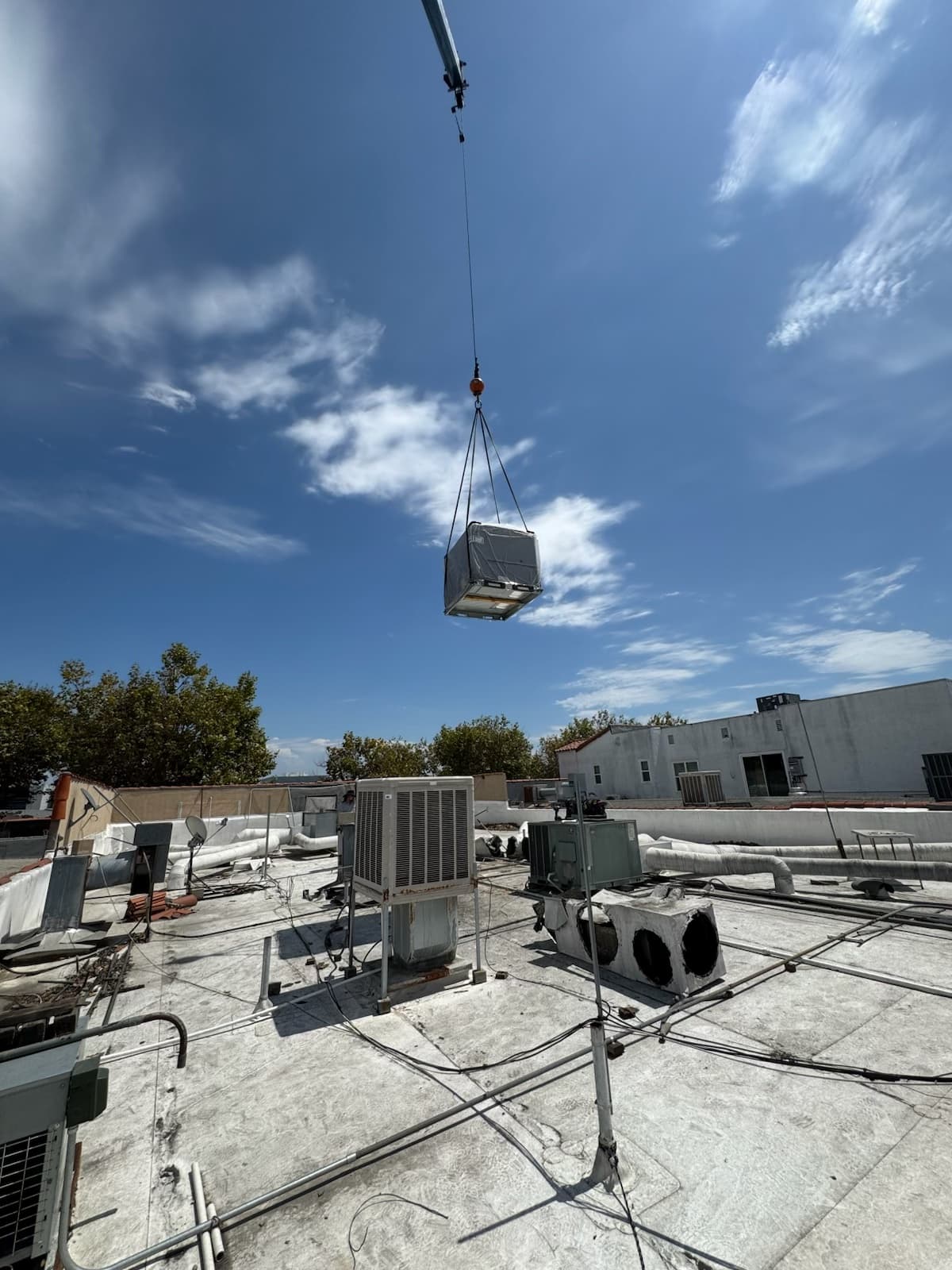
How chiller & central plant service work plays out in Oxnard
Central plant work in Oxnard concentrates in a few places: the hospital campuses and larger medical buildings around Rose Avenue and Gonzales Road, some food processing and cold storage operations that use chilled water or glycol for process cooling, and larger institutional buildings such as the college and civic facilities. These are not plants that can be shut down on a convenient afternoon. A hospital plant has surgical suites and pharmacy storage behind it, and a processing plant has product behind it, so every repair or replacement is a sequencing exercise with the facility's engineers.
The coast sets the maintenance agenda. Open cooling towers a few miles from the Pacific take salt from the air on top of what is already in the makeup water, which pushes chemistry out of range faster and attacks basins, fill, fan decks and structural steel. Air-cooled chillers lose capacity as their condenser coils corrode, and the fog keeps everything outdoors damp for hours every morning. Pump seals, insulation jackets and exposed piping all show it. Vibration, approach temperature, condenser water chemistry and amperage trends are the early-warning instruments, and we log them each visit so a slow decline is visible before it becomes a failure.
On replacement planning, the goal is a phased changeover that keeps the building cooled throughout, with temporary cooling where redundancy is thin. Larger public and institutional plant projects in Ventura County tend to be formal bid-level work, and our bid projects page describes how we approach prevailing-wage, certified-payroll scopes. For hospital settings specifically, see hospitals and health systems in Ventura County. The chillers and hydronic systems guide covers the diagnostic side in depth.
Oxnard's climate and what it does to this equipment
Oxnard has one of the mildest climates in Southern California, with a persistent marine layer, cool nights, and summer highs that stay moderate near the water. The mildness is deceptive for equipment. Salt-laden air, morning fog and high humidity attack condenser coils, fasteners, cabinet panels and electrical terminals, while airborne farm dust and fine soil clog coils and filters during dry, windy stretches. Santa Ana wind events occasionally push hot, dry air to the coast and spike loads quickly. Systems here tend to fail from corrosion and fouling long before they fail from heat.
For the equipment background behind this page, read our chillers and hydronic systems guide or the full Chillers & Central Plant Service service page.
- Agricultural packing and cold-storage corridorsPacking houses, coolers and processing buildings on the Oxnard Plain, where walk-in-scale and engineered refrigeration runs through harvest peaks.
- Port Hueneme and the Channel Islands Boulevard industrial beltMarine-adjacent warehouses, distribution and light industrial space in the harshest salt-air band of the city.
- The Collection at RiverPark and the EsplanadeOpen-air retail, restaurants, theaters and big-box tenants with dense rooftop equipment and heavy kitchen loads.
- Hospital and medical-office clustersAcute-care and outpatient buildings around the central city where reliable cooling, pressure relationships and hot water are non-negotiable.
- Chiller, tower, pump, and VFD service with logged operating data
- Trend-based diagnosis: approach, delta-T, amp draw, and pressures
- Replacement planning with rigging, power, and temporary cooling considered
- Water-treatment and Legionella-control coordination for water-cooled plants
What a chiller & central plant service visit includes, and the problems we most often find
- Review the plant: chillers, pumps, towers, controls, and recent operating history
- Take full operating readings and compare against design and prior visits
- Inspect and test safeties, strainers, VFDs, valves, and control sequences
- Report findings with prioritized repairs and a forward capital outlook
- Document the plant by asset in the DaVinci Portal for the next visit
- Falling delta-T pushing chillers to run more than the load requires
- Fouled condenser tubes or coils raising approach temperature and amp draw
- Neglected water treatment causing scale, corrosion, and biological growth
- Controls overridden to manual and never returned to automatic