Chiller & Central Plant Service in Thousand Oaks, CA
Larger Conejo Valley campuses run chillers, cooling towers and pumps to serve laboratory, manufacturing and hospital-adjacent loads. Hot summer days stress condensing performance, and process cooling cannot stop while a repair is scheduled. We diagnose chiller performance, service pumps and towers, and plan replacements with redundancy and phased changeover in mind. Water treatment review and trend data support the capital plans that campus facility teams must justify.
An inland Conejo Valley city anchored by biotech and pharmaceutical campuses, Oaks Mall and Thousand Oaks Boulevard retail, suburban business parks and medical offices, with hot summers and real wildfire-smoke exposure.
How chiller & central plant service work plays out in Thousand Oaks
Central plants in Thousand Oaks belong mostly to the campuses: research, manufacturing and corporate buildings in Newbury Park and Rancho Conejo, the hospital and its adjacent medical buildings near Los Robles, and a few larger institutional and educational properties, including the California Lutheran University area. These are water-cooled and air-cooled chillers, cooling towers in screened yards, primary and secondary pumps and the piping that ties it all together. Many of them serve process or lab loads that do not stop when the plant has a problem, so redundancy and sequencing matter more than almost anything else.
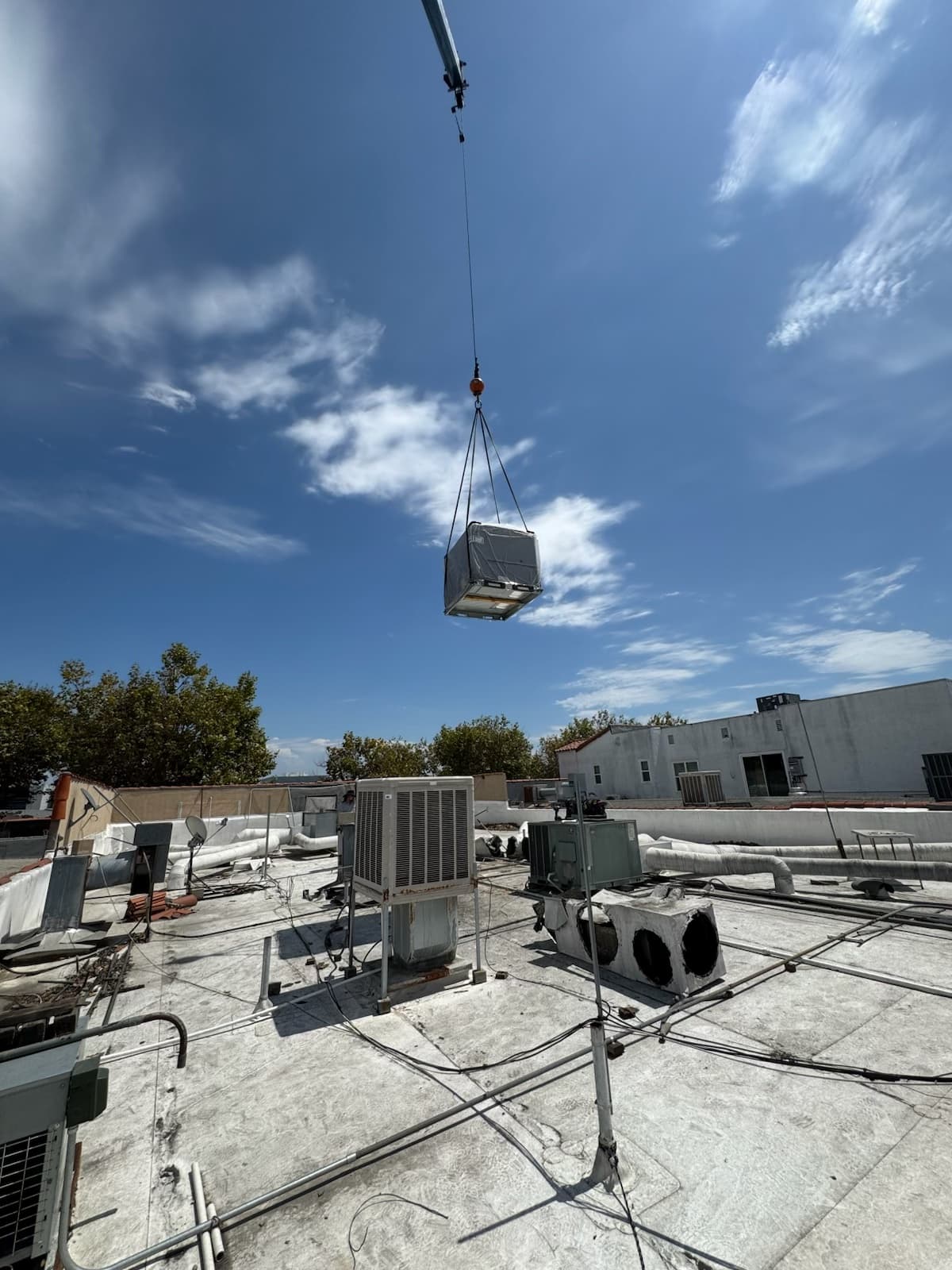
Valley heat is the daily stress. On a September afternoon with Santa Ana conditions, air-cooled chillers lose capacity and cooling towers work against a dry, hot wind that increases evaporation and chemistry drift. Dust and, in bad years, ash settle into tower fill and onto condenser coils. We watch approach temperatures, condenser water chemistry records, pump vibration and chiller efficiency trends, and we flag the slow creep that precedes a tube or compressor failure. Replacement planning is typically phased: a temporary chiller or a redundant machine carries the load while the primary is swapped, with crane and yard access confirmed against campus security and traffic rules.
A good outcome is a plant that holds setpoint on the worst afternoon of the year with one machine down, a water treatment program that is documented rather than assumed, and a trend history in the DaVinci Portal that supports the capital case facility engineers have to make. The chillers and hydronic systems guide and the labs and biotech sector page go deeper.
Thousand Oaks's climate and what it does to this equipment
Thousand Oaks is cut off from the ocean's moderating effect by the hills, so it runs noticeably hotter in summer than coastal Ventura County, with long stretches of high temperatures and cooling-dominated operation. Cool nights soften the cycle, but afternoon peaks push condensers and compressors hard, particularly on dark roofs. Fall brings Santa Ana winds and the area's history of wildfires, and smoke can foul filters and coat outdoor coils with ash. Winters are mild with occasional frost, so heating is modest but not negligible for medical and laboratory space.
For the equipment background behind this page, read our chillers and hydronic systems guide or the full Chillers & Central Plant Service service page.
- Rancho Conejo and Conejo Valley business parksBiotech, pharmaceutical, light manufacturing and corporate buildings with precise cooling, humidity and exhaust requirements.
- Thousand Oaks Boulevard retail and diningRestaurants, specialty retail and small centers with numerous mid-size rooftop units and kitchen loads.
- Oaks Mall areaLarge-format retail and entertainment with big air handlers, long run hours and landlord-managed equipment.
- Los Robles and Conejo Valley medical officesHospital-adjacent clinics and outpatient buildings where cooling, ventilation and hot water must stay dependable.
- Chiller, tower, pump, and VFD service with logged operating data
- Trend-based diagnosis: approach, delta-T, amp draw, and pressures
- Replacement planning with rigging, power, and temporary cooling considered
- Water-treatment and Legionella-control coordination for water-cooled plants
What a chiller & central plant service visit includes, and the problems we most often find
- Review the plant: chillers, pumps, towers, controls, and recent operating history
- Take full operating readings and compare against design and prior visits
- Inspect and test safeties, strainers, VFDs, valves, and control sequences
- Report findings with prioritized repairs and a forward capital outlook
- Document the plant by asset in the DaVinci Portal for the next visit
- Falling delta-T pushing chillers to run more than the load requires
- Fouled condenser tubes or coils raising approach temperature and amp draw
- Neglected water treatment causing scale, corrosion, and biological growth
- Controls overridden to manual and never returned to automatic