Chiller & Central Plant Service in Camarillo, CA
Camarillo's larger technical and life-science buildings sometimes run chillers and pumps for process and comfort cooling, and a few hospitality or institutional campuses do the same. Warm afternoons stress heat rejection, and nearby agricultural dust can foul condensers and towers quickly. We service chillers, pumps and cooling towers, review water treatment, and develop replacement phasing that protects production schedules. Trend records help owners decide between repair and replacement.
A 101-corridor city with airport-area industrial, aerospace and biotech users, Camarillo Premium Outlets, business parks, and farmland pressing against nearly every edge of the commercial map.
How chiller & central plant service work plays out in Camarillo
Central plant equipment in Camarillo is concentrated in a few places: the larger biotech, pharmaceutical and electronics buildings in the airport industrial area and Mission Oaks, the hospital and its adjacent medical campus, the community college and university campuses on the city's edges, and the occasional hotel or institutional building with a chilled water loop. These are not the mega-plants of a downtown district, but they serve process cooling, cleanroom air handlers, imaging equipment and large air handlers that cannot be swapped for a rooftop unit when they fail.
The site conditions are unusual for a coastal county. Cooling towers sit in yards within a few hundred yards of farm fields, so fill and basins collect fine soil and the chemistry program has to account for dirt load as well as hardness. Air-cooled chillers get the same dust treatment that rooftop condensers do, with capacity sliding on warm afternoons as the coils foul. Fog mornings leave equipment damp, then afternoon sun bakes the deposits on. We track approach temperatures, condenser water chemistry, pump vibration and amperage, and chiller efficiency trends, and we read them against the season, since a number that is fine in a foggy May is a warning in a dusty August.
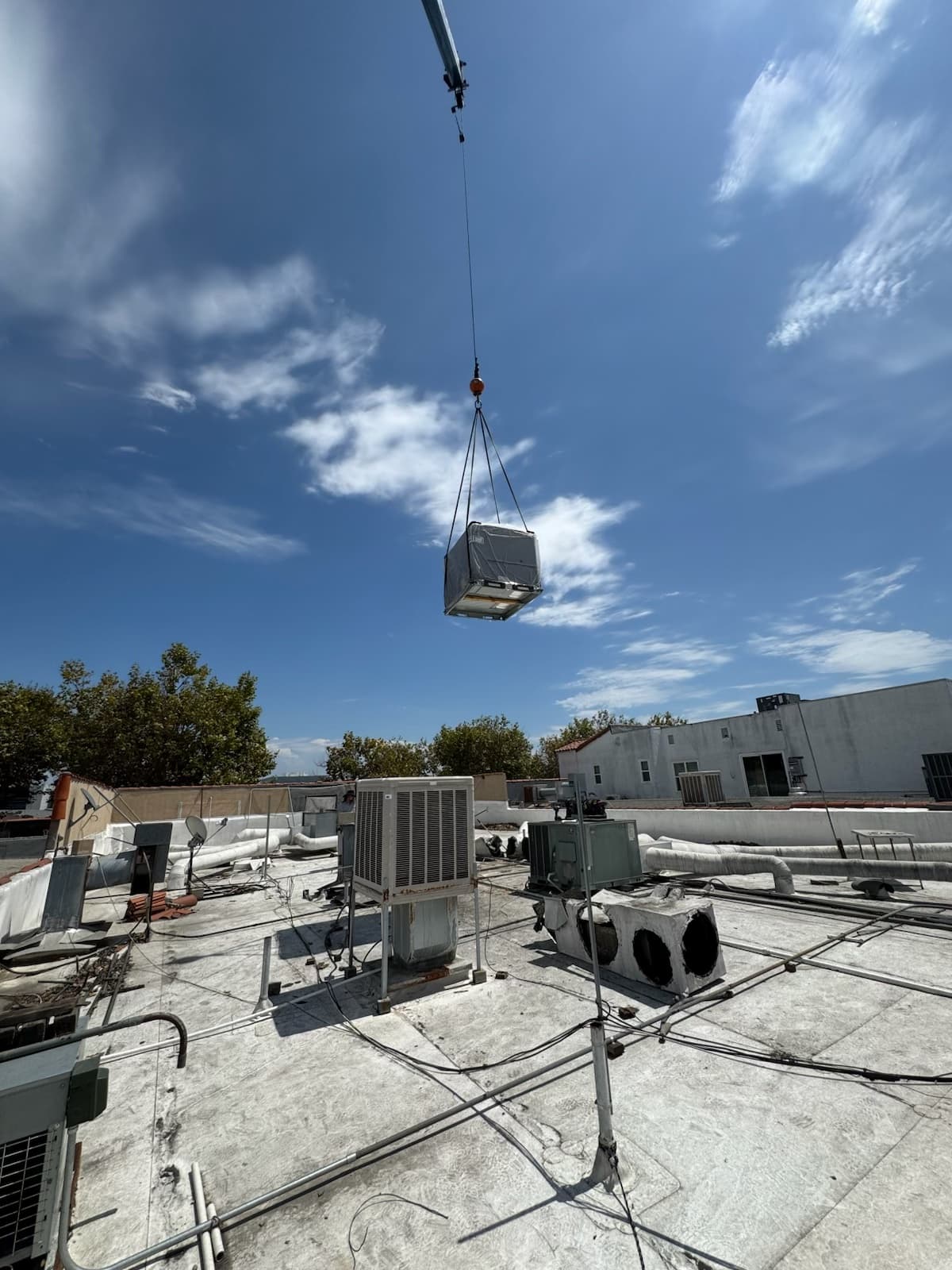
Replacement planning is phased around production. A biotech building cannot stop its process cooling for a changeover, so a rental chiller, a redundant machine or a new pad beside the old one is planned with the site, along with crane access that respects a business park's traffic and any airport-area height coordination. The trend history in the DaVinci Portal supports the capital decision. The chillers and hydronic systems guide and the labs and biotech sector page cover the broader picture.
Camarillo's climate and what it does to this equipment
Camarillo sits in a transition zone between the cool coast and the hotter valleys to the east. Mornings often start under marine fog and low cloud, then burn off to warm, dry afternoons that run hotter than Oxnard or Ventura. Long summer cooling seasons are the norm, while winter heating is light. Dust from surrounding fields settles on coils and filters, especially in windy periods, and Santa Ana winds can bring heat and fine particulates in the fall. The result is equipment that sees both humidity swings and heavy fouling, with condensers working hard on warm afternoons.
For the equipment background behind this page, read our chillers and hydronic systems guide or the full Chillers & Central Plant Service service page.
- Camarillo Airport area and Aviation Drive industrialAerospace, electronics, biotech and flex-industrial buildings with process cooling and clean-air requirements.
- Camarillo Premium Outlets and the 101 retail corridorLarge-format outlet retail, food service and hotels with long run hours and numerous rooftop units.
- Pleasant Valley Road and Las Posas Road business parksOffice, flex and light manufacturing space with professionally managed rooftop equipment.
- Camarillo Town Center and Ventura Boulevard areaRestaurants, grocery and neighborhood commercial buildings with kitchen loads and refrigeration.
- Chiller, tower, pump, and VFD service with logged operating data
- Trend-based diagnosis: approach, delta-T, amp draw, and pressures
- Replacement planning with rigging, power, and temporary cooling considered
- Water-treatment and Legionella-control coordination for water-cooled plants
What a chiller & central plant service visit includes, and the problems we most often find
- Review the plant: chillers, pumps, towers, controls, and recent operating history
- Take full operating readings and compare against design and prior visits
- Inspect and test safeties, strainers, VFDs, valves, and control sequences
- Report findings with prioritized repairs and a forward capital outlook
- Document the plant by asset in the DaVinci Portal for the next visit
- Falling delta-T pushing chillers to run more than the load requires
- Fouled condenser tubes or coils raising approach temperature and amp draw
- Neglected water treatment causing scale, corrosion, and biological growth
- Controls overridden to manual and never returned to automatic