Building Controls & Automation in Thousand Oaks, CA
For Thousand Oaks life-science and medical buildings, controls are a compliance tool as much as a comfort tool. We verify schedules, setpoints, alarm thresholds and sensor calibration, and test economizer logic that should free-cool on the valley's cooler nights but lock out during smoke events. Data from the building automation system is used to spot trends such as slow temperature creep, and changes are documented for quality and audit teams.
An inland Conejo Valley city anchored by biotech and pharmaceutical campuses, Oaks Mall and Thousand Oaks Boulevard retail, suburban business parks and medical offices, with hot summers and real wildfire-smoke exposure.
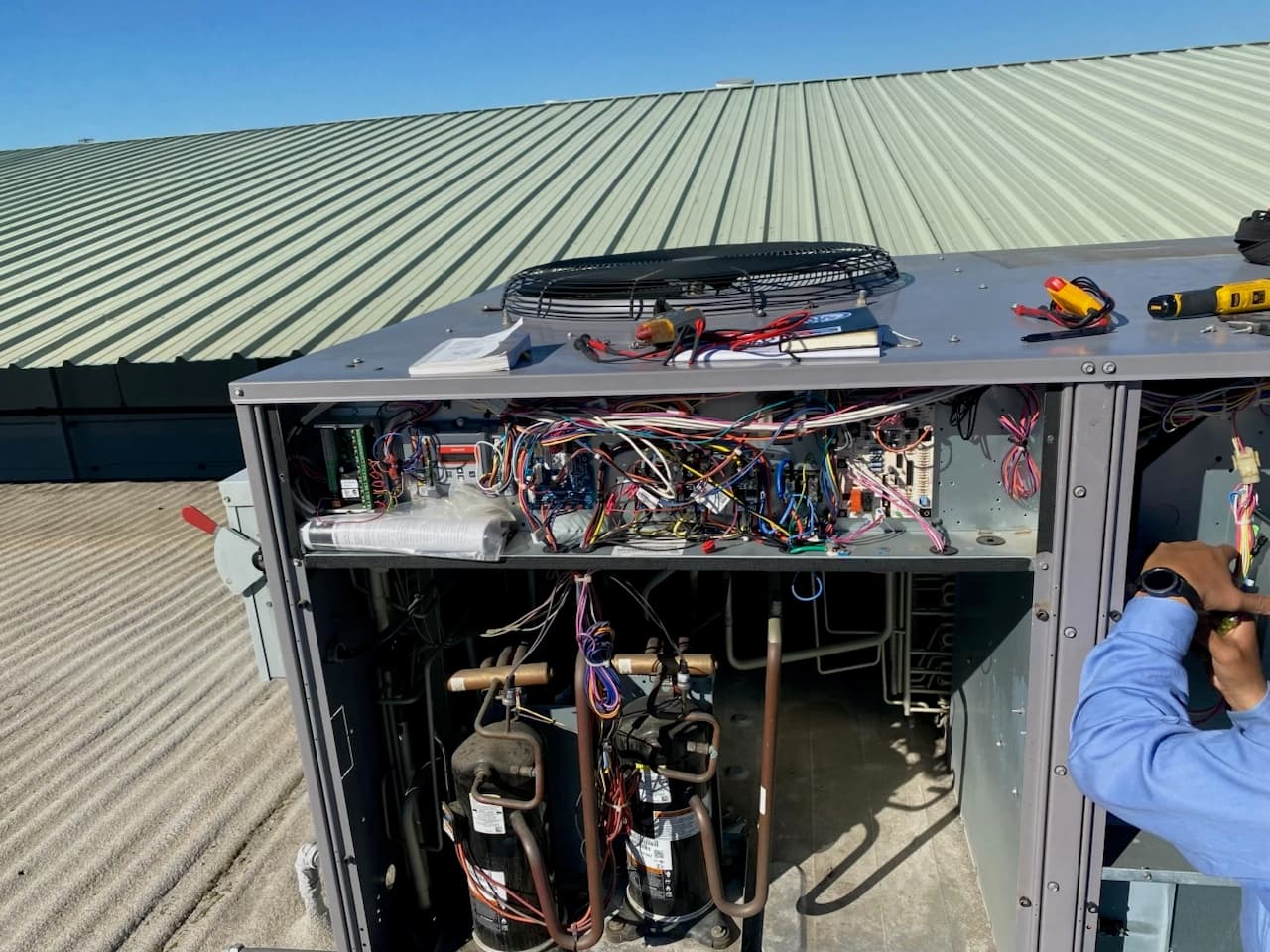
How building controls & automation work plays out in Thousand Oaks
Controls are where Thousand Oaks buildings either save a lot or quietly waste a lot, because the valley's climate gives them something to work with. Nights drop into the 50s and 60s for much of the year even when afternoons hit the 90s, so a building automation system that runs economizers and pre-cooling sequences correctly can carry a building through the morning on outside air. The catch is that the same system has to lock out outdoor air within minutes when wildfire smoke reaches the Conejo Valley, and many systems have never had that sequence written, let alone tested.
The research and manufacturing campuses in Newbury Park and Rancho Conejo treat the BAS as a compliance record. Space temperature and humidity trends, pressure relationships between rooms, alarm history and setpoint change logs are things a quality auditor may ask to see. We verify sensor calibration against reference instruments, confirm alarm thresholds and notification paths, test economizer and pressurization sequences, and document any change we make with before and after values. On the retail and office side, Thousand Oaks Boulevard centers and the business parks along the 101 mostly run programmable thermostats or light BAS systems, where the common problems are schedules that no longer match tenant hours, overrides left in place, and economizer dampers that have never actually opened.
A good controls visit here ends with a written sequence for smoke events, verified sensor readings, a schedule that matches how the building is used, and a Portal record of every setting so the next person can see what normal looks like. The controls service page explains the general scope.
Thousand Oaks's climate and what it does to this equipment
Thousand Oaks is cut off from the ocean's moderating effect by the hills, so it runs noticeably hotter in summer than coastal Ventura County, with long stretches of high temperatures and cooling-dominated operation. Cool nights soften the cycle, but afternoon peaks push condensers and compressors hard, particularly on dark roofs. Fall brings Santa Ana winds and the area's history of wildfires, and smoke can foul filters and coat outdoor coils with ash. Winters are mild with occasional frost, so heating is modest but not negligible for medical and laboratory space.
For the equipment background behind this page, read our building controls and energy guide or the full Building Controls & Automation service page.
- Rancho Conejo and Conejo Valley business parksBiotech, pharmaceutical, light manufacturing and corporate buildings with precise cooling, humidity and exhaust requirements.
- Thousand Oaks Boulevard retail and diningRestaurants, specialty retail and small centers with numerous mid-size rooftop units and kitchen loads.
- Oaks Mall areaLarge-format retail and entertainment with big air handlers, long run hours and landlord-managed equipment.
- Los Robles and Conejo Valley medical officesHospital-adjacent clinics and outpatient buildings where cooling, ventilation and hot water must stay dependable.
- Schedule, setpoint, and sequence review across rooftop and central equipment
- Sensor calibration and economizer verification
- Alarm and trend setup so problems surface early
- Programmable and networked thermostat installation
What a building controls & automation visit includes, and the problems we most often find
- Inventory controllers, thermostats, and any building automation system
- Compare schedules and setpoints to how the building is actually used
- Verify sensors, actuators, and economizer logic against measured conditions
- Correct overrides, sequences, and alarms; document the changes
- Review trends after adjustment to confirm savings and stability
- Schedules left at default so equipment runs when nobody is there
- Equipment overridden manually and never returned to automatic
- Drifting or miswired sensors producing comfort complaints
- Economizers that never actually modulate