Commercial Refrigeration in Fullerton, CA
Between campus dining facilities, the restaurants and bars around Spring Street, and grocery tenants in the shopping centers along Harbor Boulevard, Fullerton has a varied refrigeration population. Institutional kitchens want documentation that satisfies both the health department and internal audit; downtown restaurants often fit boxes into old buildings with poor ventilation around the condensing unit. We handle both by logging box temperatures, defrost behavior, and condenser condition, then reporting any space or airflow issue that will keep causing callbacks. Seasonal closures at schools also create a startup checklist each time a kitchen reopens.
Institutional and light-industrial mix, including school and college mechanical rooms.
How commercial refrigeration work plays out in Fullerton
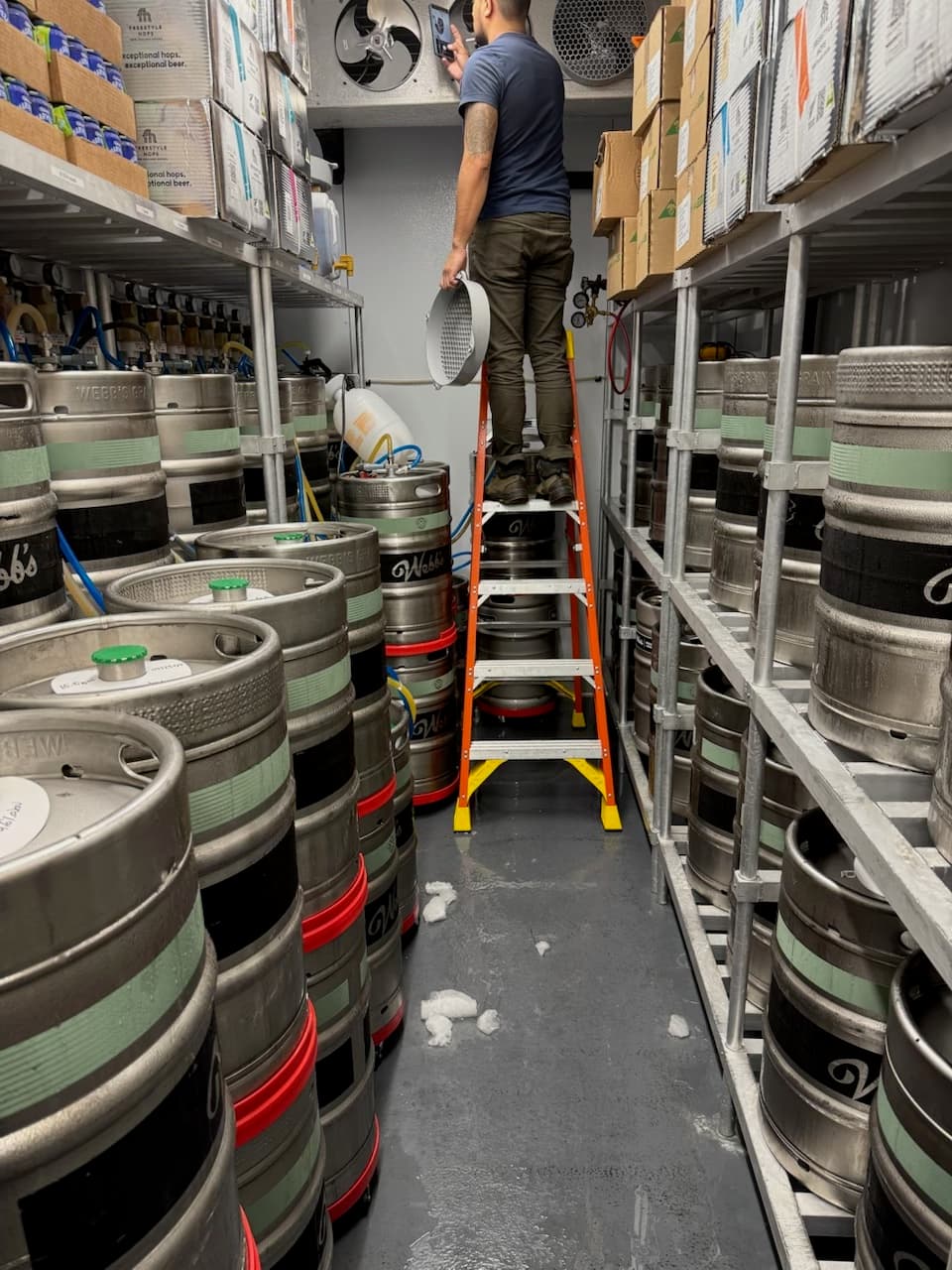
Walk-in failures in Fullerton tend to show up on two kinds of properties. The first is institutional food service: dining commons, cafeterias, and culinary programs on the college and university campuses, where a walk-in holds product for hundreds of meals and a failure during a school day is a food-safety event, not just a repair. The second is downtown, where restaurants and bars along Harbor Boulevard and Commonwealth Avenue run walk-ins in cramped back-of-house spaces with condensing units on the roof or in an alley, often older than the current tenant.
North-county heat is harder on these systems than the coast. A remote condensing unit on a Fullerton roof in August is pulling against ambient temperatures in the 90s, and if the coil is fouled or the fan motor is weak, head pressure climbs and the box loses ground during the afternoon. We look at the whole circuit when a walk-in struggles: condenser condition, TXV operation, door gaskets and closers, evaporator defrost behavior, and whether the box is simply loaded beyond what it was sized for.
Documentation matters on both sides of town. Health inspectors want temperature records; campus facilities departments want asset-level history for audits. Repairs and PM visits are logged with photos and readings in the DaVinci Portal, and the walk-in cooler and freezer guide explains what a manager can check before calling.
Fullerton's climate and what it does to this equipment
Fullerton is north county, with hotter summers than the coast and occasional wildfire smoke and wind events from nearby hills.
For the equipment background behind this page, read our walk-in cooler and freezer guide or the full Refrigeration: Walk-In & Reach-In Coolers/Freezers service page.
- University and college campusesLarge buildings with chilled-water, boilers, and rooftop equipment on academic schedules.
- Downtown FullertonRestaurants, bars, and small commercial buildings in older structures.
- Industrial and office areas near the freewaysLight industrial and corporate offices.
- School district facilitiesPublic school buildings under prevailing-wage and DSA requirements.
- Evaporator/condenser coil cleaning and defrost checks
- TXV/EEV, superheat, subcool, and pressure readings logged
- Door seals, drains, heaters, and fan packages inspected
- DaVinci Portal: temps and pressures logged by asset over time
What a commercial refrigeration visit includes, and the problems we most often find
- Check current box temperature against setpoint and recent trend
- Inspect door seals, drains, and evaporator/condenser coils for buildup
- Take superheat, subcool, and pressure readings against manufacturer spec
- Address the root cause — not just a temporary recharge
- Log readings to the asset so drift is caught early next visit
- Door seals and hinges that no longer hold a tight close
- Evaporator coils iced over from a defrost cycle issue
- Condenser coils caked with grease or debris, especially near kitchen exhaust
- Slow refrigerant leaks that show up as gradual temperature drift, not sudden failure