Commercial Refrigeration in Garden Grove, CA
Garden Grove has an unusually high number of independent restaurants, bakeries, and specialty food businesses, and many of them depend on a small number of boxes working continuously. Grease-laden air, flour dust, and tightly packed kitchens clog condenser coils fast. Our visits include condenser cleaning, evaporator and drain inspection, defrost verification, gasket and hinge checks, and temperature logging at multiple points inside the box. Because many operators work long hours with little room for downtime, we schedule service windows around prep and service, and we explain findings in terms of food-safety risk, not only equipment condition.
Light-industrial and restaurant-dense commercial strips near the 22 freeway.
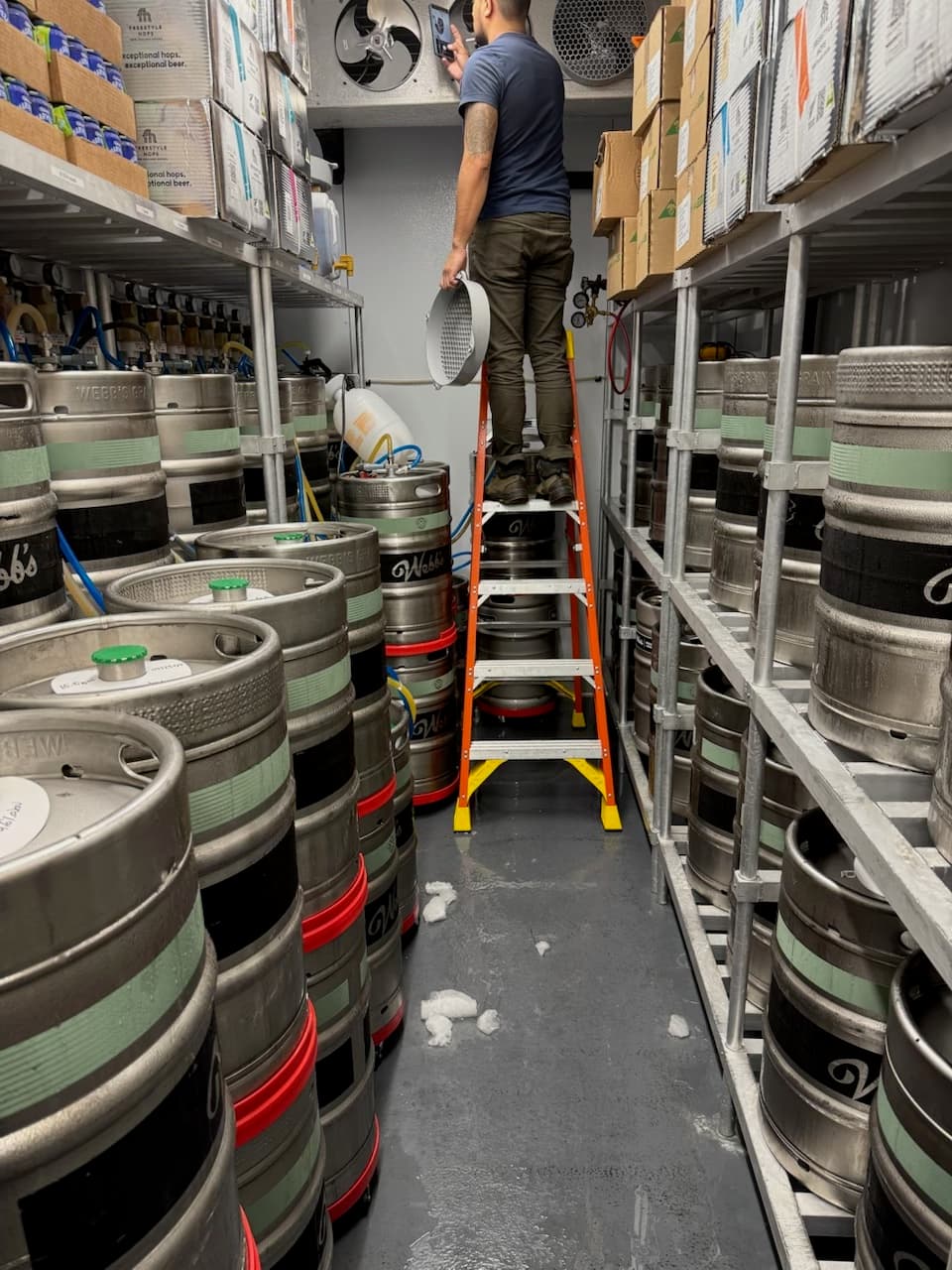
How commercial refrigeration work plays out in Garden Grove
Walk-in coolers in Garden Grove live harder lives than almost anywhere else in the county. A Vietnamese grocery on Brookhurst Street with a produce walk-in whose door opens hundreds of times a day. A bakery on Westminster Avenue where the walk-in sits next to the ovens. A seafood restaurant with a freezer that was undersized the day it was installed and has been running flat out since. A banquet hall on Garden Grove Boulevard that goes from empty to loading three days of food in one afternoon. The refrigeration is often tenant-owned, bought used, and installed by whoever was available at the time.
The failures follow from that. Evaporator coils iced solid because door gaskets are shredded and the defrost timer was bypassed years ago. Condensing units on the roof or in a back alley coated in grease from the hood discharge a few feet away, running at head pressures that kill compressors. Drain lines that freeze or back up into the box. We approach these systems by measuring rather than guessing: box temperature over time, superheat and subcooling, defrost operation, door seal condition, and condenser airflow. Then we fix the cause, which is frequently the gasket and the condenser rather than the compressor the owner was told to replace.
Food production and distribution tenants in the industrial areas near the 22 freeway and off Western Avenue run larger systems with multiple evaporators and documented temperature requirements. For them the record matters as much as the repair: our readings and photos go into the asset profile so a health inspector or a customer audit can see the history. The commercial refrigeration systems guide and the food production sector page cover those larger systems.
Garden Grove's climate and what it does to this equipment
Garden Grove is central basin with warm summers and moderate humidity. Grease and cooking-related contamination are bigger enemies of coils than salt.
For the equipment background behind this page, read our walk-in cooler and freezer guide or the full Refrigeration: Walk-In & Reach-In Coolers/Freezers service page.
- Harbor Boulevard corridorHotels and restaurants near the resort district.
- Westminster Avenue and Brookhurst restaurant stripsIndependent restaurants and bakeries with intense refrigeration use.
- Industrial areas near the 22 freewayFood production, light industrial, and warehouses.
- Civic Center areaMunicipal buildings and offices.
- Evaporator/condenser coil cleaning and defrost checks
- TXV/EEV, superheat, subcool, and pressure readings logged
- Door seals, drains, heaters, and fan packages inspected
- DaVinci Portal: temps and pressures logged by asset over time
What a commercial refrigeration visit includes, and the problems we most often find
- Check current box temperature against setpoint and recent trend
- Inspect door seals, drains, and evaporator/condenser coils for buildup
- Take superheat, subcool, and pressure readings against manufacturer spec
- Address the root cause — not just a temporary recharge
- Log readings to the asset so drift is caught early next visit
- Door seals and hinges that no longer hold a tight close
- Evaporator coils iced over from a defrost cycle issue
- Condenser coils caked with grease or debris, especially near kitchen exhaust
- Slow refrigerant leaks that show up as gradual temperature drift, not sudden failure