For Government & Public Works Projects
A union HVAC contractor built for public-sector requirements
UA Local 250 member, PLA and prevailing-wage ready, with certified payroll and safety documentation built into how we run government, military, and public agency projects — not assembled after the fact for one bid.
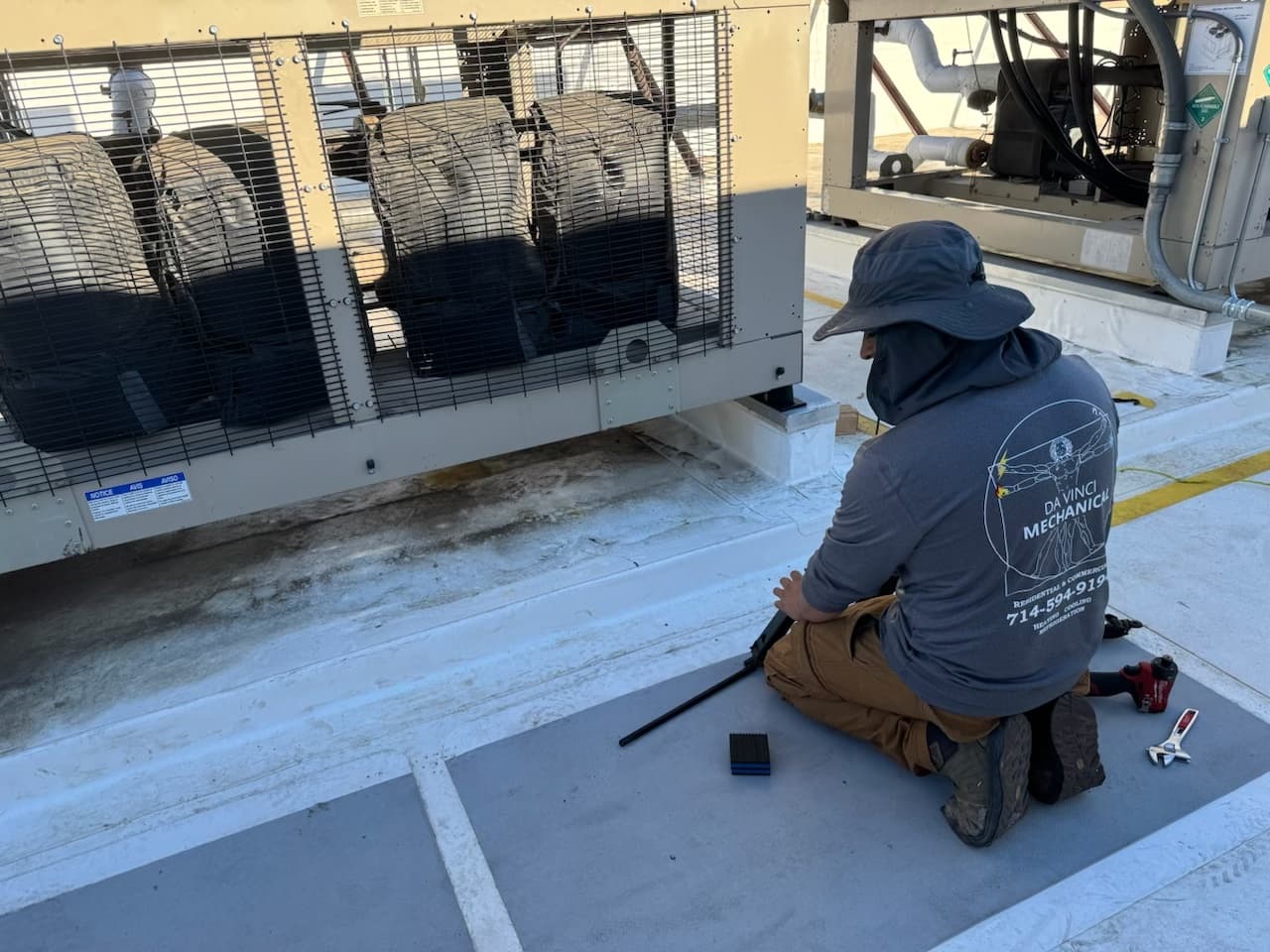
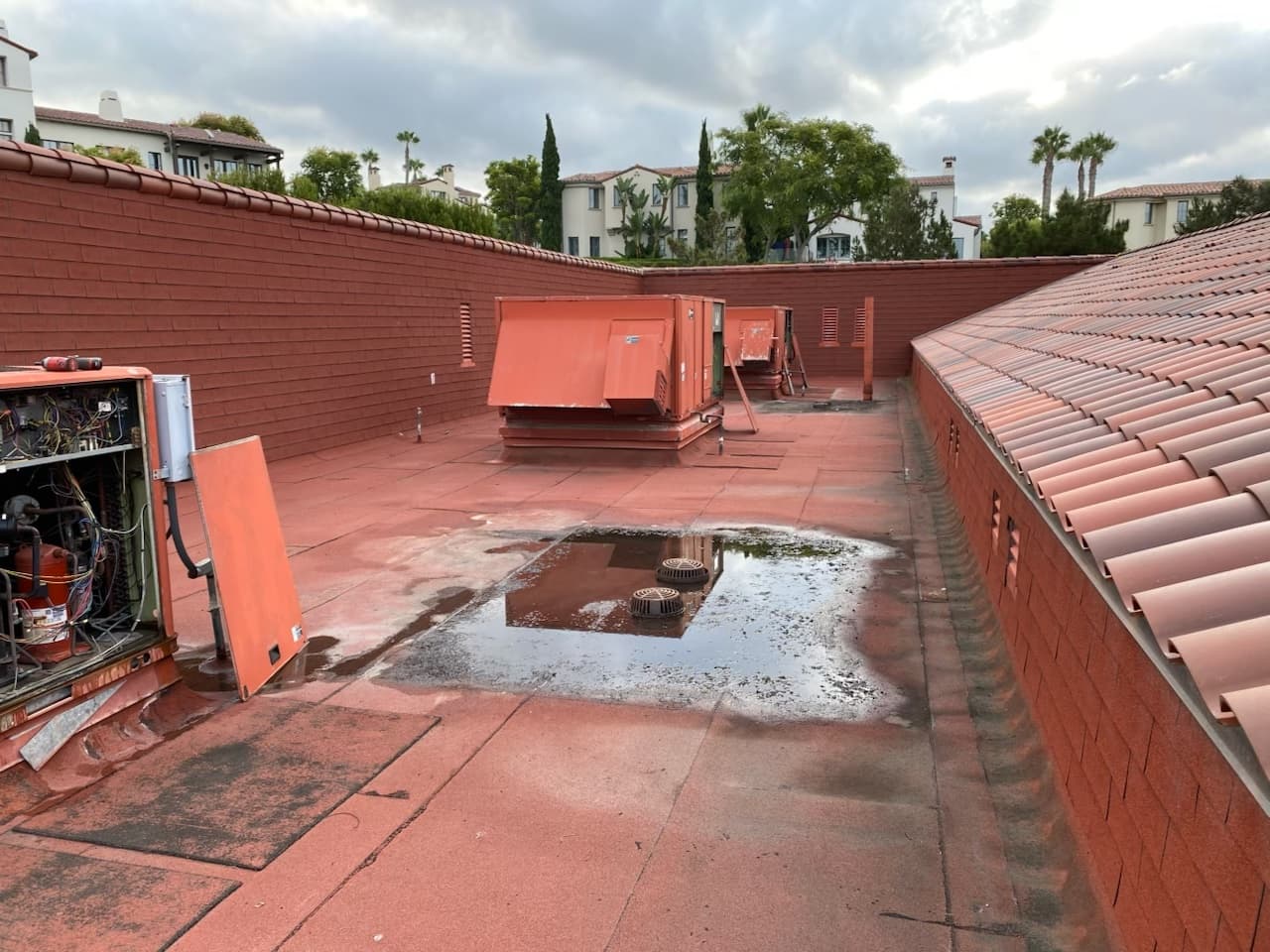
Union affiliation that public agency bid requirements often specify outright — not every commercial HVAC contractor qualifies.
Project Labor Agreement experience and prevailing wage compliance built into how we run public-sector work, not bolted on for one bid.
Base commissary, post office, and municipal building HVAC work — not a residential contractor's first attempt at a public bid.
Certified payroll records and safety documentation as a standard part of the workflow, not an afterthought when an audit comes up.
What we handle for public-sector accounts
The public-works lifecycle, from solicitation to closeout
Public projects follow a predictable path. Understanding each stage helps agencies write clearer solicitations and helps contractors submit compliant bids that don't get thrown out on paperwork.
- Solicitation and pre-bid. Agency advertises, holds a mandatory site walk, and issues addenda. Contractors confirm license, DIR registration, and bonding capacity.
- Bid. Sealed bid with bid bond, subcontractor listing, and complete forms. Low responsive, responsible bidder is awarded.
- Award and contract. Performance and payment bonds, insurance certificates, and the labor-compliance setup.
- Submittals and procurement. Equipment submittals reviewed; long-lead items ordered.
- Construction. Certified payroll submitted on schedule; daily logs, safety documentation, and inspector coordination.
- Startup and commissioning. Testing, balancing, and agency acceptance.
- Closeout. As-builts, O&M manuals, training, warranties, final payment and release of retention.
Missing addenda acknowledgments, incomplete subcontractor listings, expired registrations, and unsigned forms are the most common reasons otherwise competitive bids are rejected.
Our team builds bids and compliance documents together, with certified payroll and apprenticeship paperwork in place before award. The same discipline applies to out-of-state public work; see our bid-projects page.
How public agencies buy mechanical work
Public agencies do not hire a contractor the way a restaurant owner does. Every purchase above a threshold set by statute or by the agency's own policy has to go through a competitive process, and the process is chosen by the size and type of the work. Small repairs may be handled under a purchasing card or an informal quote process. Mid-sized work often moves through an informal bid with several written quotes. Larger projects go to formal advertised bids with sealed submissions, bonds, and a public opening. The thresholds vary by agency type and change over time; a city, a school district, a county, a special district and a state agency each follow different rules, and some have adopted alternative procedures that raise the informal limits.
The practical consequence for a facility manager at a public agency is that the HVAC problem in front of you has to be matched to a procurement path before anyone can fix it. A failed compressor on a city hall rooftop unit might be fixable under an existing on-call agreement. Replacing the whole unit might require three quotes. Replacing eight units across a campus is a formal bid, with plans and specifications, probably a design professional, and a schedule measured in months. Knowing which path applies early is the fastest way to a working building.
Cooperative purchasing agreements and piggyback contracts are a third route some agencies use, where a contract competitively awarded by one public entity can be used by others. Whether that is available depends on the agency's policy and the contract's terms. Our public agency and school procurement guide goes into the mechanics; confirm current thresholds and procedures with your purchasing department, because they are specific to your agency.
| Scope | Common path | What the contractor needs to have ready |
|---|---|---|
| Emergency or small repair | On-call agreement or purchasing authority | Active registration, insurance on file, agreed labor rates |
| Single equipment replacement | Informal quotes | Written scope, permit plan, prevailing-wage compliance |
| Multi-unit or plant project | Formal advertised bid | Bid bond, subcontractor listing, DIR registration, bonding capacity |
| Design-build or lease-leaseback | Qualifications-based selection | Statement of qualifications, design partner, past performance |
| Cooperative or piggyback | Use of another agency's awarded contract | Confirmation the contract terms permit it |
Prevailing wage, certified payroll and labor compliance
California public works projects above a modest threshold require payment of prevailing wages set by the Department of Industrial Relations for each craft and locality. For mechanical work, that means pipefitter, sheet metal, and related classifications at rates that are published and periodically updated. Contractors must be registered with the DIR to bid or work on public projects, must submit certified payroll records through the state's electronic system, and must comply with apprenticeship requirements. Agencies have their own labor compliance obligations and often a labor compliance program or a third-party monitor reviewing submissions.
As a UA Local 250 signatory, Davinci Mechanical pays union scale as a matter of course, which generally aligns with or exceeds prevailing-wage determinations for our crafts. Certified payroll is part of our normal workflow rather than something assembled for a specific project. Apprenticeship ratios and training fund contributions are handled through the union structure. Where a project is covered by a Project Labor Agreement, which a growing number of Southern California agencies and school districts have adopted for larger work, we are already positioned to sign on, since the PLA mechanism assumes union-affiliated subcontractors.
Federal projects add Davis-Bacon requirements, which have their own wage determinations and payroll forms, and some projects fall under both state and federal regimes with the higher rate controlling. The rules change, and our prevailing wage guide is written to explain the structure rather than to state current figures. For any specific project, the bid documents and the agency's labor compliance office are the authority.
A contractor who already runs prevailing-wage and certified payroll on every job does not learn the process on yours. Late or incorrect payroll submissions are a common reason public projects stall at payment, and they create exposure for the agency as well as the contractor.
On-call and as-needed agreements
Many agencies maintain on-call or as-needed mechanical contracts so that repairs and small projects can proceed without a separate procurement each time. These are typically awarded through a competitive process on the basis of hourly rates, markup on materials, and qualifications, for a multi-year term with an annual not-to-exceed amount. Work under the agreement is released by task order or work order, and each task order still carries prevailing-wage obligations and permit requirements.
A good on-call relationship depends on the contractor knowing the agency's buildings before the emergency. That is why we propose a baseline inventory at the start of any on-call term: every unit on every roof, tagged, photographed, and entered in the DaVinci Portal with its readings. When a call comes in, the technician arrives knowing the equipment, the access, and the history. For the agency, the record also supports the capital planning conversation with the governing board, since a documented condition survey carries more weight than a maintenance supervisor's memory.
On-call agreements work best with clear response expectations by priority level, a named contact on both sides, a pre-agreed process for work that exceeds a task-order limit, and quarterly reporting on spend against the not-to-exceed. We also recommend pairing an on-call agreement with a scheduled preventive maintenance program so the on-call capacity is spent on genuine failures rather than on problems a quarterly visit would have caught.
- Baseline asset inventory and condition survey at the start of the term.
- Response expectations set by priority, in writing.
- Task-order process for work above the routine limit.
- Quarterly spend reporting and an annual condition update to inform the capital list.
Documentation that survives an audit
Public money brings public scrutiny. Grand jury reviews, state audits, bond oversight committees, and internal auditors all have the right to ask how a dollar was spent on a building, and the answer has to be on paper. For mechanical work that means the procurement record, the permit, the inspection sign-offs, the certified payroll, the equipment submittals, the test and balance report, the warranties, and the service history. An agency that can produce all of that on request is in a strong position. One that has to call the contractor and ask is not.
Our approach is to produce documentation as a by-product of the work rather than as a separate task. Every service visit generates a photo-logged report with readings, attached to the asset record. Every replacement generates a permit record, startup data, and a closeout package. Every project generates submittals, RFIs, and as-built information that the agency keeps. The root-cause diagnostic record on a repair shows why the failure happened and what was done, which matters when a board member asks why the same unit was repaired twice.
Refrigerant documentation deserves its own mention. California and federal rules impose record-keeping requirements on refrigerant use, leak repair, and disposal for commercial equipment, and public agencies are not exempt. Keeping the refrigerant log attached to the asset in the Portal means the record exists when an inspector or auditor asks. The refrigerant compliance guide covers the general framework; current thresholds and reporting obligations should be confirmed with the relevant agencies.
The public facility types we serve and how they differ
Public works is not a single market. A city corporation yard, a county courthouse, a community college science building, a wastewater treatment plant and a military commissary share a procurement framework and a labor regime, but almost nothing else about the mechanical work is the same. Our sectors section breaks public and institutional facilities down by type, each with its own page, because the access rules, operating hours, equipment, and risk tolerance differ enough that one generic page would mislead.
City and county government buildings run long equipment life cycles and lean on on-call agreements. K-12 schools and districts compress most project work into summer windows and operate under Division of the State Architect oversight for structural and accessibility aspects of mechanical replacements. Courts, detention and public safety facilities require escorted access, tamper-resistant equipment and around-the-clock operation. Water and wastewater utilities put equipment in corrosive atmospheres and process buildings. Federal buildings and military installations bring Davis-Bacon, base access, and specification regimes of their own. Libraries and community centers, including aquatic facilities, have humidity and variable-occupancy issues that a standard office approach misses.
Our schools page addresses the K-12 market specifically for facility directors. The bid work section lists the agencies, districts, and institutions across Southern California whose solicitations we track and respond to, organized by region so that a facility team can see whether we are already following their agency's work.
Delivering a public mechanical project
A public project runs on a sequence that does not bend much: award, bonds and insurance, pre-construction meeting, submittals, procurement of long-lead equipment, construction with inspections, startup and commissioning, closeout, and release of retention. Mechanical equipment is frequently the longest lead item on the schedule, and the submittal review cycle has to finish before the order can be placed. A contractor who turns submittals quickly and completely, and who flags substitutions early rather than at delivery, protects the schedule more than any amount of effort later.
On occupied public sites, the work plan matters as much as the mechanical scope. Schools need fenced work zones, badged workers, and noise limits during instruction. Courthouses and detention facilities need escorts and tool control. Civic buildings need the council chamber working on meeting night. We build these constraints into the schedule at the pre-construction stage, and we are candid when a schedule assumption in the bid documents does not match the realities of the site. Our projects page describes how we approach larger work generally, and the project delivery and bidding guide explains delivery methods in more depth.
Closeout is where public projects most often drag. Operation and maintenance manuals, warranties, as-builts, training of agency staff, and the final test and balance report all have to be delivered and accepted before retention is released. We assemble the closeout package as the project runs rather than at the end, and we load every new asset into the Portal with its startup readings so that the agency's maintenance staff inherit a working record on day one rather than a box of binders.
- Pre-construction: confirm site rules, access, and schedule constraints with the agency.
- Submittals: complete first submissions, substitutions flagged early.
- Procurement: long-lead equipment ordered as soon as approvals allow.
- Construction: certified payroll on schedule, inspector coordination, daily documentation.
- Commissioning: test and balance, controls verification, agency acceptance.
- Closeout: O&M, warranties, as-builts, training, assets loaded into the Portal.
How we qualify public opportunities and where we bid
We do not bid everything. A public solicitation gets a serious look from us when the mechanical scope is substantive, the schedule is achievable, the labor requirements fit our union structure, and we can either self-perform the work or serve as the mechanical subcontractor to a general contractor we are prepared to work under. We read the specifications for scope gaps and for requirements that would need clarification before bid day, and we attend mandatory site walks with the people who will actually run the work.
Our home base is Orange County, and most of our public work is across Southern California: Orange County, Los Angeles County, the Inland Empire, San Diego County and Ventura County. We do not maintain offices outside Orange County, and when we bid a project elsewhere we state in the proposal how the site will be staffed and served. For larger public and institutional projects outside California, we pursue the work project by project, confirming the licensing path, labor agreement, bonding, and service plan for that state before we submit. The bid projects page covers how to invite us and what a bid package needs to contain for us to act on it, and the nationwide bidding guide explains the general realities of multi-state mechanical bidding.
Davinci Mechanical is the commercial and union division of Scottish Tom's Heating & Air, holding California contractor license #1083101. We are a UA Local 250 signatory, PLA and prevailing-wage ready with certified payroll, and we work only on commercial and institutional property. If your agency is planning mechanical work, or wants to add a qualified union mechanical contractor to its on-call pool, the contact page is the place to start.