Chiller & Central Plant Service in Huntington Beach, CA
Hotels along Pacific Coast Highway and office buildings inland near Beach Boulevard and Edinger operate chillers and towers in a corrosive environment. Salt air eats tower casings, basin hardware, and electrical enclosures, and humidity strains controls. We inspect for coastal damage, service chillers and pumps, and write recommendations around replacement priority, since a cooling tower rebuilt in time is far cheaper than a failed one. Written recommendations rank each item by risk and exposure, giving ownership a defensible capital plan for a coastal asset base that ages faster than inland buildings.
Coastal retail, hospitality, and office space where salt-air corrosion shortens equipment life without regular PM.
How chiller & central plant service work plays out in Huntington Beach
Central plant equipment in Huntington Beach is concentrated in a few property types: the larger hotels along the coast, the hospital and medical campus area near Beach Boulevard, some of the aerospace and industrial facilities around Gothard Street and the Boeing site, and civic buildings. What those plants share, especially the coastal ones, is that cooling towers and air-cooled chillers are exposed to salt-laden air that corrodes tower fill supports, fan assemblies, and chiller condenser coils far faster than inland plants experience.
Cooling tower water treatment is more demanding here as well. Salt and airborne debris carried in by onshore winds end up in the basin, and a treatment program designed for an inland site will not hold the chemistry. Our plant service includes tower basin inspection, fill and drift eliminator condition, water chemistry review against the treatment vendor's log, fan motor and bearing condition, and chiller performance readings such as approach temperatures and delta-T, all recorded so the engineer can see trends. For air-cooled chillers on coastal roofs, coil condition is the governing factor in capacity and we photograph it every visit.
Major repair and replacement at hospitals, civic facilities, and school district plants goes through formal procurement and prevailing-wage requirements, and we bid that work through the bid projects process. Hospitality plants run on the property's capital schedule, and we coordinate outages with the chief engineer around occupancy. The chillers and hydronic systems guide covers what a plant assessment includes.
Huntington Beach's climate and what it does to this equipment
Huntington Beach is directly coastal. Marine layer, salt, and humidity corrode coils, cabinets, and electrical connections faster than anywhere inland.
For the equipment background behind this page, read our chillers and hydronic systems guide or the full Chillers & Central Plant Service service page.
- Downtown and Pier areaRestaurants, bars, and hotels directly exposed to salt air.
- Beach Boulevard corridorRetail, medical, and office properties.
- Huntington Center and Gothard industrial areasAerospace-adjacent and light-industrial users with large RTUs.
- Bolsa Chica and Edinger business areasOffices and retail near the coast.
- Chiller, tower, pump, and VFD service with logged operating data
- Trend-based diagnosis: approach, delta-T, amp draw, and pressures
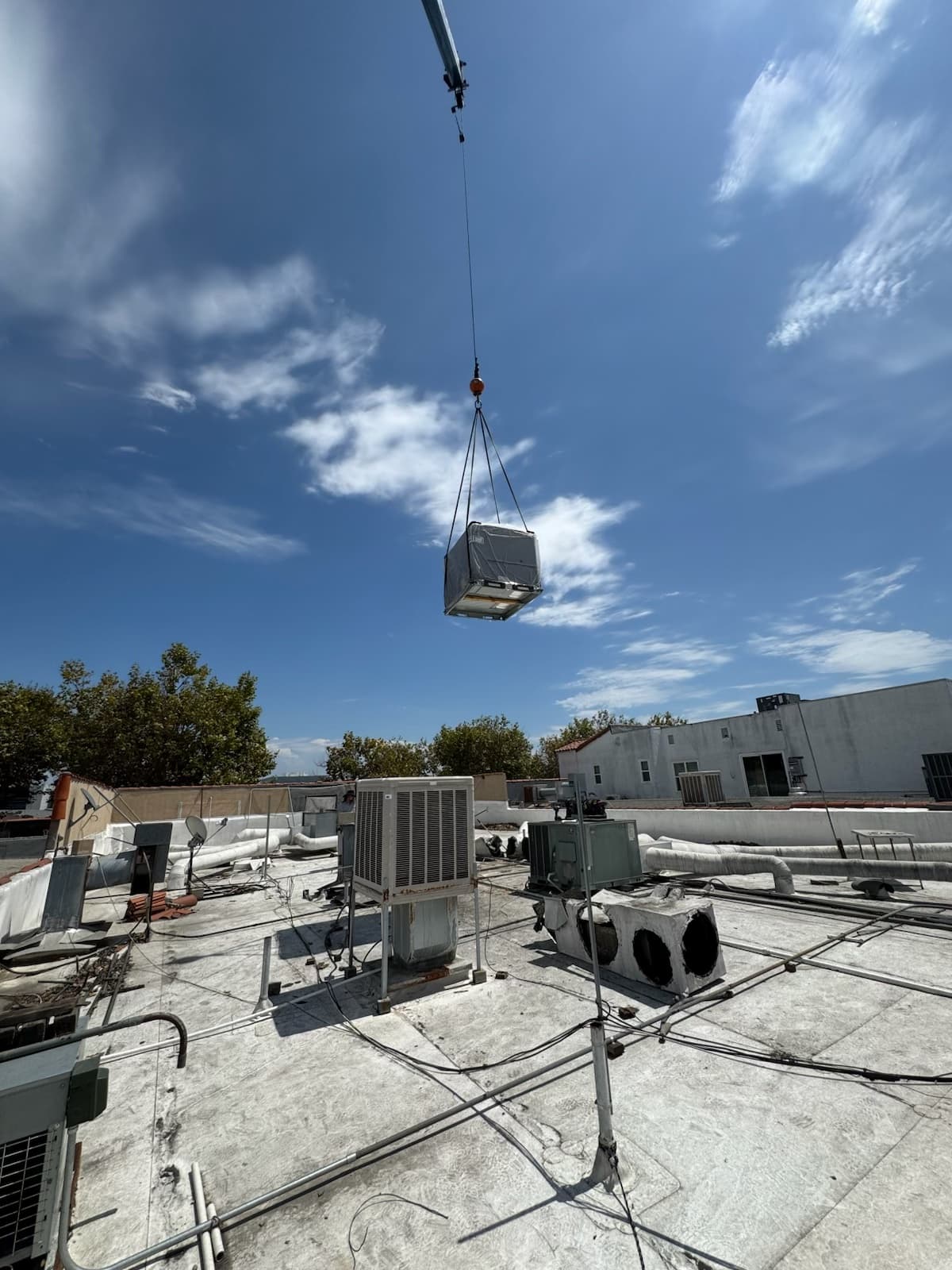
- Replacement planning with rigging, power, and temporary cooling considered
- Water-treatment and Legionella-control coordination for water-cooled plants
What a chiller & central plant service visit includes, and the problems we most often find
- Review the plant: chillers, pumps, towers, controls, and recent operating history
- Take full operating readings and compare against design and prior visits
- Inspect and test safeties, strainers, VFDs, valves, and control sequences
- Report findings with prioritized repairs and a forward capital outlook
- Document the plant by asset in the DaVinci Portal for the next visit
- Falling delta-T pushing chillers to run more than the load requires
- Fouled condenser tubes or coils raising approach temperature and amp draw
- Neglected water treatment causing scale, corrosion, and biological growth
- Controls overridden to manual and never returned to automatic