Ice Machine Service in Oxnard, CA
Fresh-product and food-service operators near the coast run ice machines hard, and coastal water and air bring their own problems. Water quality drives scale in the evaporator, and humid air encourages slime and biofilm in bins and chutes. We clean and sanitize to a documented process, check water filtration and flow, verify harvest cycles, and look at the condenser for salt and lint buildup. For a packing house or restaurant, sanitary ice is part of food-safety paperwork, so records matter.
Ventura County's largest city, built around agricultural packing, cold storage and food processing, the Port Hueneme harbor area, regional retail at The Collection and the Esplanade, and several hospitals, all under a salt-laden coastal climate.
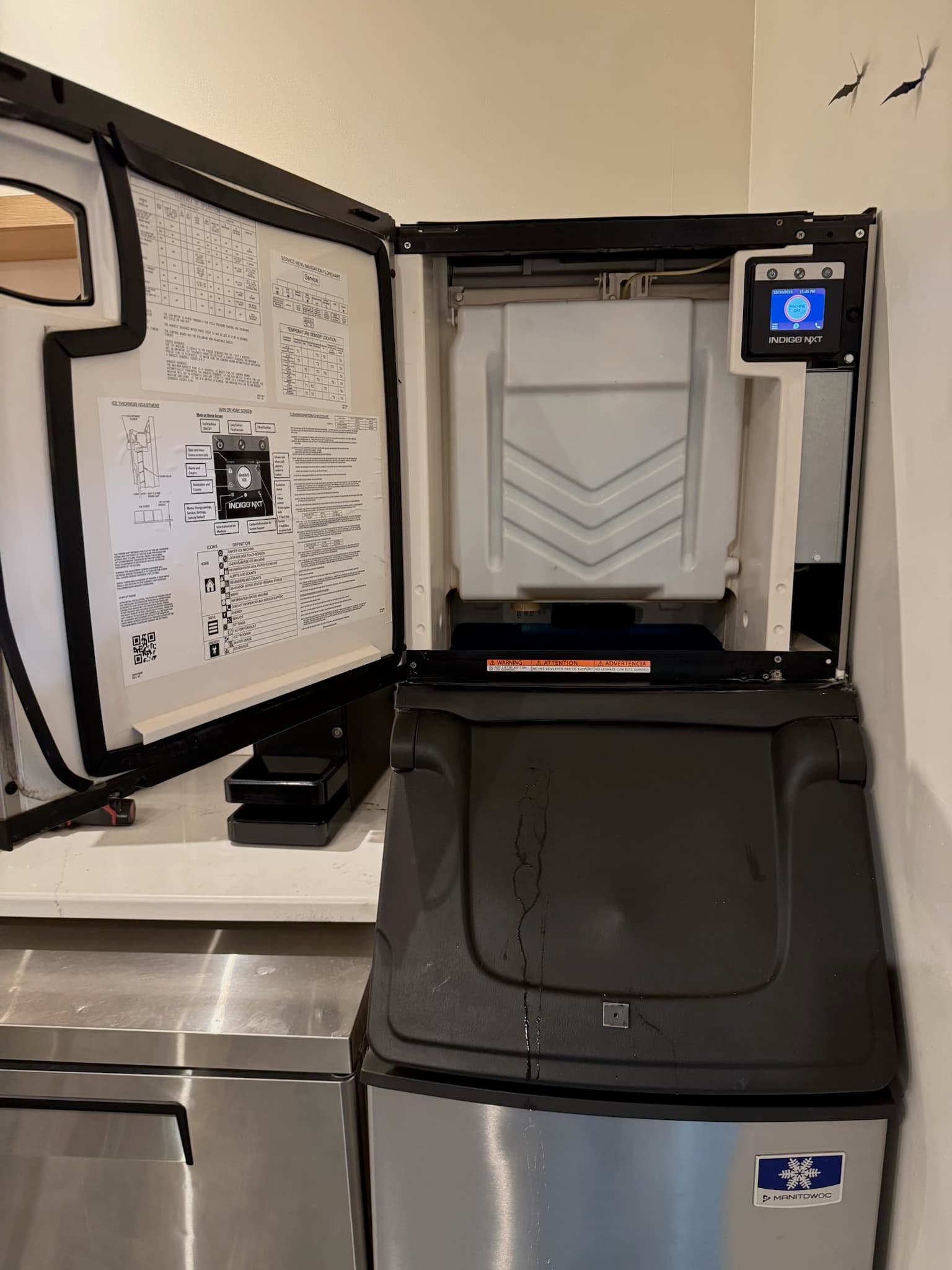
How ice machine service work plays out in Oxnard
The ice machine problem in Oxnard shows up most often as a health inspection note rather than a breakdown. A seafood restaurant at Channel Islands Harbor, a taqueria on Oxnard Boulevard, a hotel near the Collection, a hospital nutrition kitchen off Rose Avenue: all of them run ice hard, and the coastal environment pushes two failure modes at once. Humid air and warm back rooms grow slime and biofilm in bins and chutes quickly, and the mineral content in local supply water scales evaporator plates until harvest cycles stretch and production falls. A machine that has not been opened in six months in this climate is usually both dirty and slow.
Placement makes it worse in the older restaurant stock downtown and along Saviers Road. Machines get tucked into a corner of a hot dish room with a greasy, salt-laden air-cooled condenser pulling air off the floor, and the condenser clogs with lint and grease until the unit runs long cycles and shuts off on high temperature on the first warm afternoon. Food plants have a different version of the issue: ice used in packing or processing is a food contact material, and the sanitation record has to hold up to a buyer audit, not only a county inspector.
Our service is a documented process rather than a wipe-down. Descale and sanitize to the manufacturer's procedure, verify the water filter and flow, check harvest and freeze cycle times against spec, clean the condenser, inspect the drain air gap and bin drain, and photograph the result into the DaVinci Portal so the operator can show when it was done. For a kitchen that cannot be without ice, we time the work for the hours between lunch and dinner. The commercial ice machine guide explains what a clean machine should look like and how often it should be checked.
Oxnard's climate and what it does to this equipment
Oxnard has one of the mildest climates in Southern California, with a persistent marine layer, cool nights, and summer highs that stay moderate near the water. The mildness is deceptive for equipment. Salt-laden air, morning fog and high humidity attack condenser coils, fasteners, cabinet panels and electrical terminals, while airborne farm dust and fine soil clog coils and filters during dry, windy stretches. Santa Ana wind events occasionally push hot, dry air to the coast and spike loads quickly. Systems here tend to fail from corrosion and fouling long before they fail from heat.
For the equipment background behind this page, read our commercial ice machine guide or the full Ice Machines — Service & Sanitation service page.
- Agricultural packing and cold-storage corridorsPacking houses, coolers and processing buildings on the Oxnard Plain, where walk-in-scale and engineered refrigeration runs through harvest peaks.
- Port Hueneme and the Channel Islands Boulevard industrial beltMarine-adjacent warehouses, distribution and light industrial space in the harshest salt-air band of the city.
- The Collection at RiverPark and the EsplanadeOpen-air retail, restaurants, theaters and big-box tenants with dense rooftop equipment and heavy kitchen loads.
- Hospital and medical-office clustersAcute-care and outpatient buildings around the central city where reliable cooling, pressure relationships and hot water are non-negotiable.
- Scale removal, deep sanitation, and filter change-out programs
- Bin sensors, harvest cycles, pumps, and valves checked
- OEM-spec readings taken against manufacturer PM intervals
- DaVinci Portal: photo-logged cleanings and reminder scheduling
What a ice machine service visit includes, and the problems we most often find
- Check ice quality, production rate, and bin sensor operation
- Full descale of water lines and evaporator plate
- Sanitize all food-contact surfaces per manufacturer spec
- Inspect water filtration and replace if due
- Photo-document the cleaning for your compliance records
- Scale buildup from hard water slowing production and clouding ice
- Bin sensors misreading and causing over- or under-production
- Water filters overdue for change, affecting both taste and machine health
- Visible slime or mold in the bin — the most common health-inspection flag
Ice Machine Service in Oxnard: questions we get
How often does an ice machine in an Oxnard restaurant kitchen actually need a full clean and sanitize?
Manufacturers typically call for a full descale and sanitize twice a year, and in a humid coastal kitchen with heavy use that is the minimum. Harbor-area and high-volume kitchens often do better on a quarterly cycle because biofilm comes back faster in damp air. The right interval is the one that keeps the bin, chute and evaporator visibly clean between visits. If you see pink or black film before the next scheduled service, the interval is too long.
Our ice production drops noticeably in August even though the machine is clean. Why?
An air-cooled machine loses capacity as the air around the condenser gets warmer, and a back room in an Oxnard kitchen can run far above the outside temperature once cooking starts. Add a condenser coated in salt and grease and a long harvest cycle from mild scaling, and output drops exactly when demand peaks. We check inlet air temperature, condenser cleanliness and cycle times. In tight spaces the fix may be relocating the machine, ducting air to it, or switching to a remote condenser.
How often should ice machines be sanitized?
Most manufacturers recommend sanitizing every six months minimum, more often in high-mineral water areas. We'll set the interval based on your machine and water supply.
Can you fix low production without a full replacement?
Often, yes. Scale buildup, refrigerant charge, and water filtration are the most common causes of low ice production and are usually repairable.