Ice Machine Service in Thousand Oaks, CA
Ice machine demand in Thousand Oaks comes from restaurants along the boulevard, hotels, medical facilities and corporate cafeterias. Inland summer heat raises condenser temperatures and reduces production, so a machine tucked into a warm back room may struggle exactly when demand peaks. We sanitize and descale on schedule, check air and water inlet conditions, and look at placement and ventilation. For healthcare and food-service accounts, sanitation records matter.
An inland Conejo Valley city anchored by biotech and pharmaceutical campuses, Oaks Mall and Thousand Oaks Boulevard retail, suburban business parks and medical offices, with hot summers and real wildfire-smoke exposure.
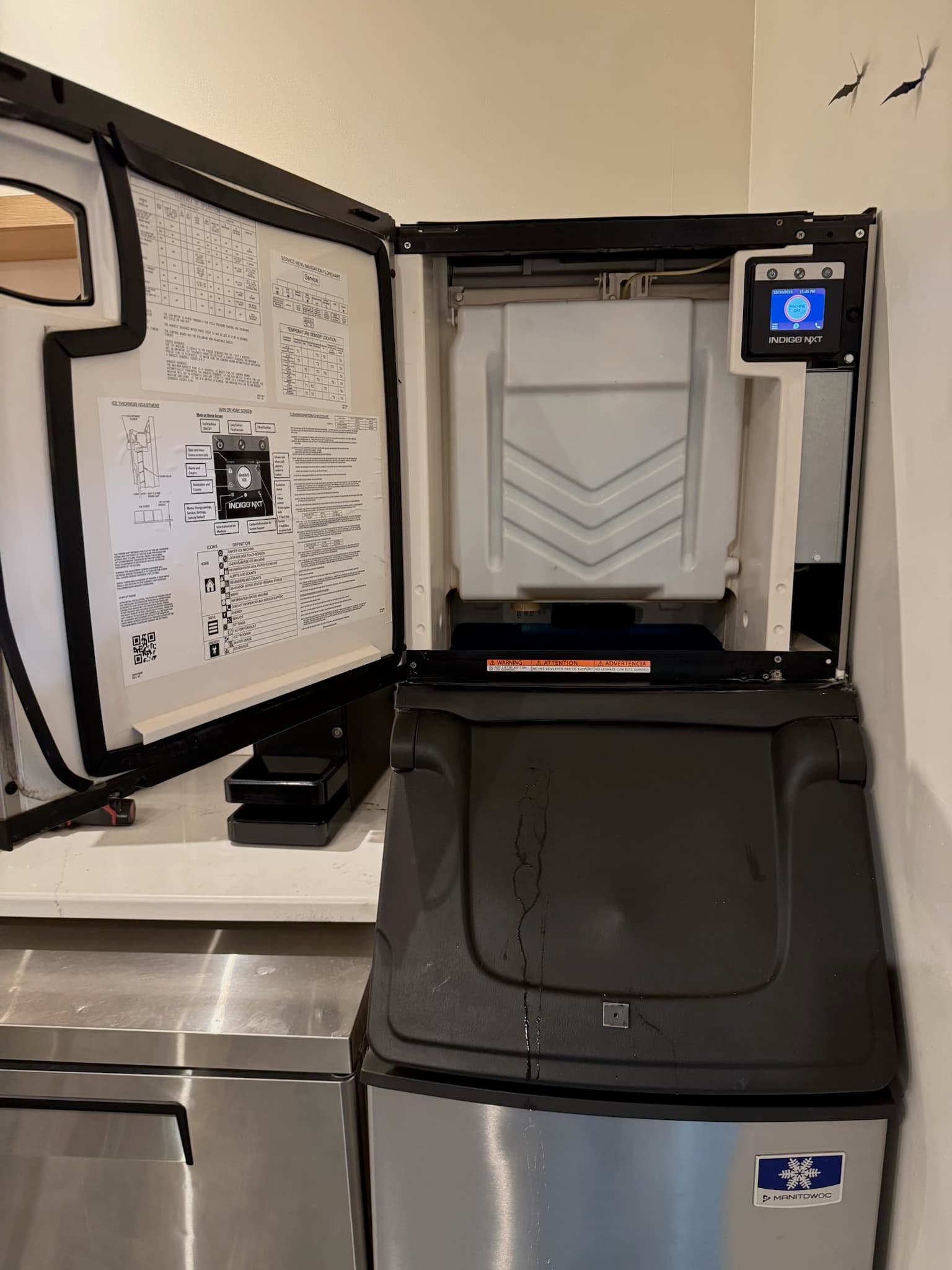
How ice machine service work plays out in Thousand Oaks
Ice machine problems in Thousand Oaks tend to show up in the same week each year: the first run of 95 degree days in late June or July, when a cuber tucked into a hot restaurant back hallway or a hotel pantry suddenly produces half of what it did in spring. Air-cooled machines lose production as the room around them heats up, and in a windowless storage closet behind a Thousand Oaks Boulevard kitchen that room can be well over 90 degrees by the dinner rush. The fix is often placement and ventilation, not a new machine.
The city's customer base for ice is broader than restaurants. Hotels near the 101 and Westlake Boulevard, the medical offices and outpatient buildings around Los Robles, senior living communities, and corporate cafeterias in the Rancho Conejo campuses all run machines that need scheduled sanitation. Healthcare and senior care sites in particular want a documented cleaning and sanitizing record because surveyors ask for it. Local water is on the hard side, so descaling intervals matter, and a neglected filter cartridge shows up as scale on the evaporator plate and slow harvests.
A service visit here covers the full sequence: descale, sanitize bin and chute, check water filtration and flow, clean the condenser, verify harvest cycle timing and look at the drain and air gap. The result is logged in the Portal with the date, the chemicals used and the production check, so a manager can hand an inspector the history rather than a verbal assurance. The commercial ice machine guide covers the fundamentals.
Thousand Oaks's climate and what it does to this equipment
Thousand Oaks is cut off from the ocean's moderating effect by the hills, so it runs noticeably hotter in summer than coastal Ventura County, with long stretches of high temperatures and cooling-dominated operation. Cool nights soften the cycle, but afternoon peaks push condensers and compressors hard, particularly on dark roofs. Fall brings Santa Ana winds and the area's history of wildfires, and smoke can foul filters and coat outdoor coils with ash. Winters are mild with occasional frost, so heating is modest but not negligible for medical and laboratory space.
For the equipment background behind this page, read our commercial ice machine guide or the full Ice Machines — Service & Sanitation service page.
- Rancho Conejo and Conejo Valley business parksBiotech, pharmaceutical, light manufacturing and corporate buildings with precise cooling, humidity and exhaust requirements.
- Thousand Oaks Boulevard retail and diningRestaurants, specialty retail and small centers with numerous mid-size rooftop units and kitchen loads.
- Oaks Mall areaLarge-format retail and entertainment with big air handlers, long run hours and landlord-managed equipment.
- Los Robles and Conejo Valley medical officesHospital-adjacent clinics and outpatient buildings where cooling, ventilation and hot water must stay dependable.
- Scale removal, deep sanitation, and filter change-out programs
- Bin sensors, harvest cycles, pumps, and valves checked
- OEM-spec readings taken against manufacturer PM intervals
- DaVinci Portal: photo-logged cleanings and reminder scheduling
What a ice machine service visit includes, and the problems we most often find
- Check ice quality, production rate, and bin sensor operation
- Full descale of water lines and evaporator plate
- Sanitize all food-contact surfaces per manufacturer spec
- Inspect water filtration and replace if due
- Photo-document the cleaning for your compliance records
- Scale buildup from hard water slowing production and clouding ice
- Bin sensors misreading and causing over- or under-production
- Water filters overdue for change, affecting both taste and machine health
- Visible slime or mold in the bin — the most common health-inspection flag
Ice Machine Service in Thousand Oaks: questions we get
Our hotel's ice machines near Westlake Boulevard drop off badly every summer. Should we switch to water-cooled or remote-condenser units?
Sometimes, but first look at where the machines live. If they are in a closed pantry with no exhaust, improving ventilation or relocating the machine can restore most of the lost capacity. If the space cannot be fixed, a remote air-cooled condenser on the roof or a water-cooled machine (where water use rules allow) keeps production stable through Conejo Valley heat. We will measure the room and the machine's actual output before recommending a change.
What sanitation records should a Thousand Oaks medical office or senior living site keep for its ice machines?
Keep a dated log of each cleaning and sanitizing with the method used, filter change dates, and any repairs, plus the manufacturer's recommended interval for your model. Surveyors and health inspectors look for consistency more than any one format. Our visits produce that record automatically in the DaVinci Portal, which you can print or export when asked. Confirm current requirements with your licensing body, since expectations differ between healthcare settings.
How often should ice machines be sanitized?
Most manufacturers recommend sanitizing every six months minimum, more often in high-mineral water areas. We'll set the interval based on your machine and water supply.
Can you fix low production without a full replacement?
Often, yes. Scale buildup, refrigerant charge, and water filtration are the most common causes of low ice production and are usually repairable.