Maintenance Plans in Thousand Oaks, CA
Plans for Thousand Oaks properties are driven by two pressures: summer heat and precision. Life-science and medical buildings need scheduled inspections that include sensors, filters, humidity control and alarm testing, while retail and office properties benefit from pre-summer coil cleaning and electrical checks. After smoke events, filters and coils need an out-of-cycle inspection. Everything is recorded in the DaVinci Portal so quality and facilities teams can pull service history by asset.
An inland Conejo Valley city anchored by biotech and pharmaceutical campuses, Oaks Mall and Thousand Oaks Boulevard retail, suburban business parks and medical offices, with hot summers and real wildfire-smoke exposure.
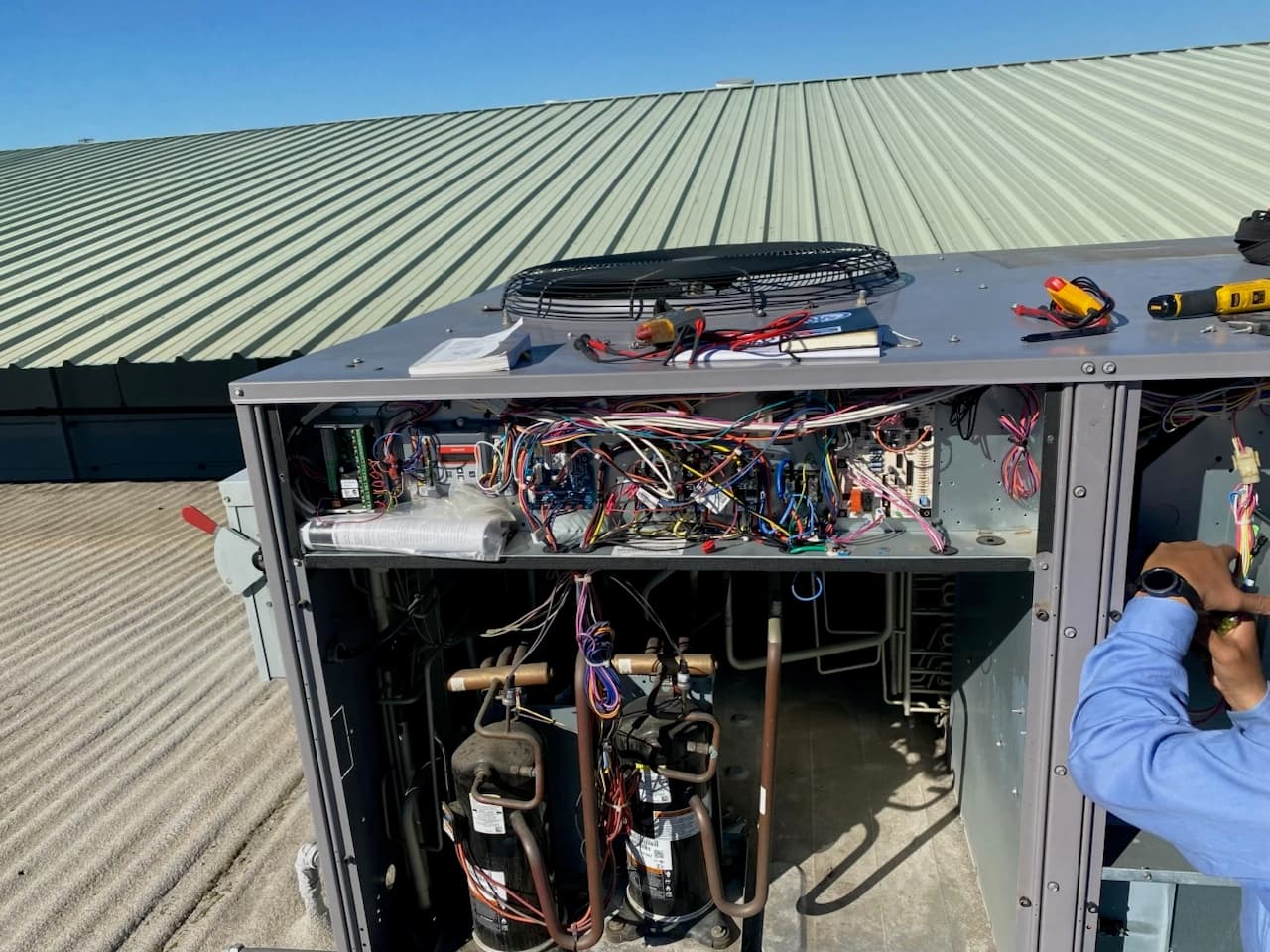
How maintenance plans work plays out in Thousand Oaks
Picture the maintenance calendar for a Conejo Valley portfolio. The first visit of the year lands in April or early May, before the first hot stretch, and it is almost entirely about heat readiness: condenser coils washed, refrigerant charge and superheat checked, belts and bearings inspected, electrical connections tightened and thermally scanned, economizer dampers proven. The second visit sits in late September or October and is about smoke and the mild heating season: filters pulled and inspected for ash loading, outdoor air sensors checked, heat exchangers and gas trains tested, and the whole system confirmed ready for the few cold weeks the valley gets.
Which properties need more than two visits? Research and manufacturing buildings in Newbury Park and Rancho Conejo, where humidity control, lab exhaust and controlled rooms cannot wait six months between inspections. Restaurants on Thousand Oaks Boulevard and the food-court side of the Oaks Mall, where kitchen heat and grease load the equipment year-round. Hospital-adjacent medical buildings near Los Robles, where a quarterly rhythm matches the operators' own compliance calendars. Offices, light retail and the smaller professional buildings around the Civic Arts Plaza area usually do well on the two-visit schedule.
Every visit in a Thousand Oaks program also includes a smoke contingency: if a wildfire event occurs between scheduled visits, an out-of-cycle filter and coil inspection is triggered rather than waiting for the next quarter. Results, photos and readings land in the DaVinci Portal per asset. The general tier structure is described on the plans page; this is how it maps onto the Conejo Valley.
Thousand Oaks's climate and what it does to this equipment
Thousand Oaks is cut off from the ocean's moderating effect by the hills, so it runs noticeably hotter in summer than coastal Ventura County, with long stretches of high temperatures and cooling-dominated operation. Cool nights soften the cycle, but afternoon peaks push condensers and compressors hard, particularly on dark roofs. Fall brings Santa Ana winds and the area's history of wildfires, and smoke can foul filters and coat outdoor coils with ash. Winters are mild with occasional frost, so heating is modest but not negligible for medical and laboratory space.
For the equipment background behind this page, read our preventive maintenance program guide or the full Commercial Maintenance Plans service page.
- Rancho Conejo and Conejo Valley business parksBiotech, pharmaceutical, light manufacturing and corporate buildings with precise cooling, humidity and exhaust requirements.
- Thousand Oaks Boulevard retail and diningRestaurants, specialty retail and small centers with numerous mid-size rooftop units and kitchen loads.
- Oaks Mall areaLarge-format retail and entertainment with big air handlers, long run hours and landlord-managed equipment.
- Los Robles and Conejo Valley medical officesHospital-adjacent clinics and outpatient buildings where cooling, ventilation and hot water must stay dependable.
- Free diagnostic on repairs for plan members
- Included labor per tier, with a member rate for anything over
- Photo-logged reports with temps, pressures, and amp draws
- DaVinci Portal included with QR tracking and self-service scheduling
What a maintenance plans visit includes, and the problems we most often find
- Walk every covered asset — RTUs, refrigeration, ice machines, water heaters
- Take and log readings against each unit's history, not a generic checklist
- Flag anything trending toward failure before it becomes a breakdown
- Deliver a photo-logged report after every visit
- Free diagnostic on any repair that comes out of the visit
- Equipment that 'seemed fine' failing without any maintenance history to catch the trend
- Multiple pieces of equipment aging out around the same time with no replacement plan
- Surprise repair costs that a documented PM history would have flagged months earlier
- Multi-location accounts with no consistent record across sites
Maintenance tiers for Thousand Oaks properties
Thousand Oaks facilities are largely biotech, medical, office and retail buildings where documentation and uptime matter, so plans typically pair quarterly or bi-annual inspections with pre-summer capacity checks and post-smoke filter and coil reviews.
See maintenance plan tiersMaintenance Plans in Thousand Oaks: questions we get
After a fire or heavy smoke event in the Conejo Valley, what should happen to our building's HVAC before the next scheduled visit?
Do not wait. Ash loads filters within hours and coats outdoor coils, and a system left running on fouled filters loses airflow and can trip on high static or high pressure. Have filters inspected and replaced, outdoor coils rinsed, and economizers checked to confirm they are not pulling smoky air in. For buildings with controlled environments, verify that pressure relationships held. Our plans include this as an out-of-cycle visit when a smoke event affects the valley.
We manage several office buildings along the 101 in Thousand Oaks. Is quarterly service overkill for standard offices?
For conventional offices with package rooftop units and no special tenants, bi-annual service timed before summer and before fall is usually the right fit in this climate. Quarterly makes sense when a building has a restaurant, medical or lab tenant, a central plant, or a history of summer failures that a closer inspection cadence would catch. We will look at the equipment list and tenant mix and recommend the tier honestly rather than defaulting to the most visits.
What's the difference between the plan tiers?
Tiers differ by visit frequency and included labor. Quarterly is best for kitchens and refrigeration-heavy sites; annual fits lighter-use office or retail space.
Can one plan cover multiple locations?
Yes — multi-site accounts are common. We'll set up the Portal so each location's equipment and history stay organized separately.