Maintenance Plans in Oxnard, CA
A maintenance plan in Oxnard has to be built around the local enemies: salt, fog, farm dust and harvest-season load. Quarterly visits suit packing and cold-storage sites that cannot afford surprises during peak weeks, with coil washing, corrosion inspection, door and defrost checks, and electrical tightening scheduled ahead of the busy season. Retail and medical sites often fit a bi-annual rhythm. Every visit lands in the DaVinci Portal so managers can show what was inspected and when.
Ventura County's largest city, built around agricultural packing, cold storage and food processing, the Port Hueneme harbor area, regional retail at The Collection and the Esplanade, and several hospitals, all under a salt-laden coastal climate.
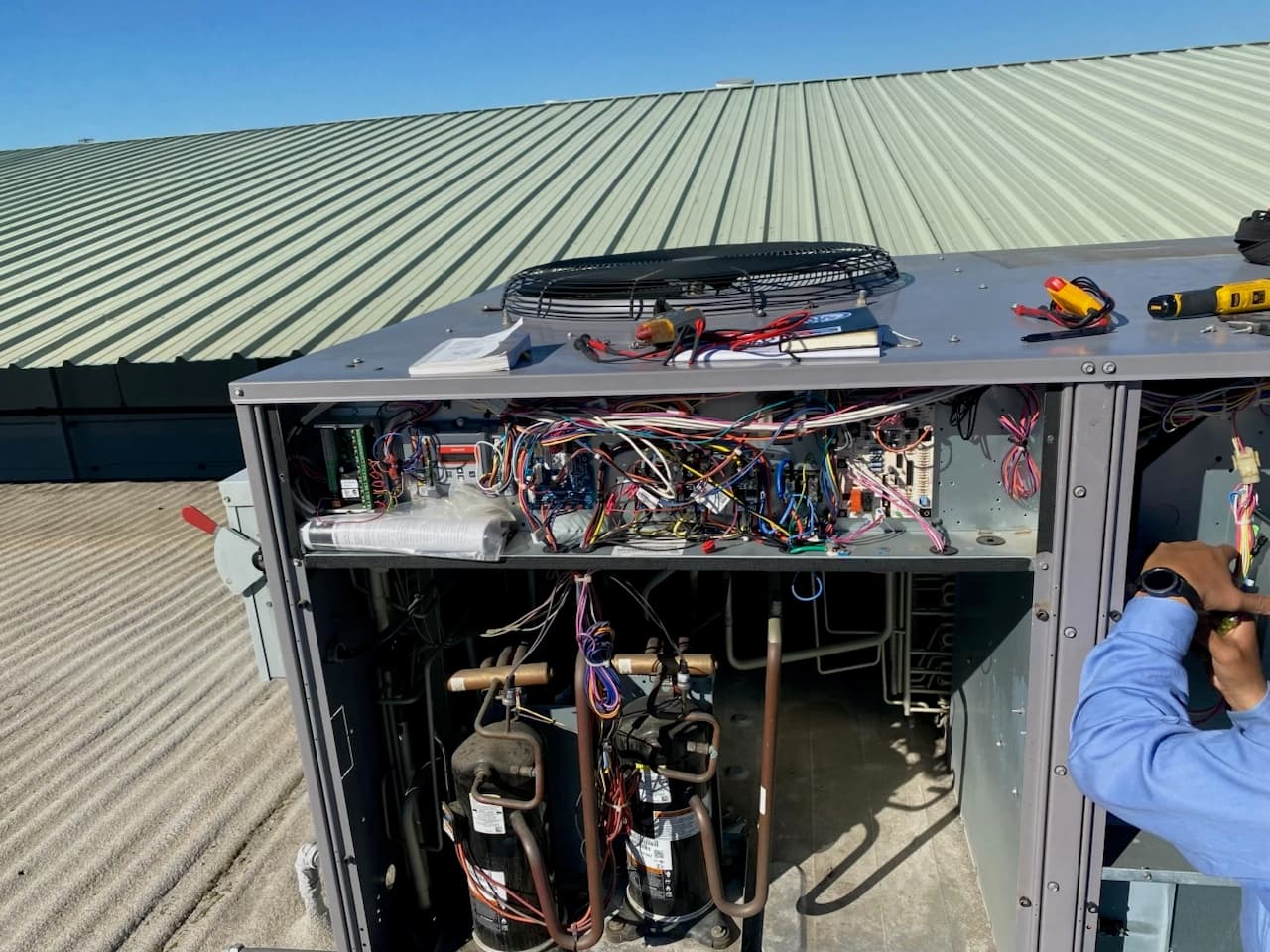
How maintenance plans work plays out in Oxnard
The calendar is the first thing a maintenance program in Oxnard has to respect. Strawberry volume on the Oxnard Plain builds through spring and peaks in late spring and early summer, vegetable and flower work runs on its own cycles, and the Port of Hueneme moves produce year-round. A packing house does not want anyone opening condenser panels in the middle of a harvest push, so the heavy work on those sites belongs in the quiet weeks before the season, with a lighter mid-season check and a post-season inspection when the rooms can be taken down one at a time. We build the schedule around the operator's calendar, not ours.
The second thing it has to respect is the air. Every visit here includes work that an inland program can skip: coils washed rather than brushed, cabinet seams and fasteners checked for corrosion, electrical terminals inspected and tightened because salt film makes loose connections heat up, condensate drains and pans cleared because fog season keeps them wet, and outdoor-air sensors verified because salt skews them. After a Santa Ana wind event, filters and coils on retail and medical roofs often need an out-of-cycle look because the dust load arrives in one afternoon.
Property type sets the rhythm. Food plants, cold storage and the restaurant rows at The Collection and the Esplanade fit a quarterly program. Medical offices around Rose Avenue and Gonzales Road, Channel Islands Boulevard warehouses with office space and the hotel stock along the 101 usually fit bi-annual visits timed before summer and before the holiday season. Light-duty single-tenant buildings can run on annual inspections with a corrosion check added. Every asset carries a QR tag and a service history in the DaVinci Portal, which is what insurers, food-safety auditors and lenders ask to see. The preventive maintenance program guide lays out what each tier should include, and plans covers how programs are structured.
Oxnard's climate and what it does to this equipment
Oxnard has one of the mildest climates in Southern California, with a persistent marine layer, cool nights, and summer highs that stay moderate near the water. The mildness is deceptive for equipment. Salt-laden air, morning fog and high humidity attack condenser coils, fasteners, cabinet panels and electrical terminals, while airborne farm dust and fine soil clog coils and filters during dry, windy stretches. Santa Ana wind events occasionally push hot, dry air to the coast and spike loads quickly. Systems here tend to fail from corrosion and fouling long before they fail from heat.
For the equipment background behind this page, read our preventive maintenance program guide or the full Commercial Maintenance Plans service page.
- Agricultural packing and cold-storage corridorsPacking houses, coolers and processing buildings on the Oxnard Plain, where walk-in-scale and engineered refrigeration runs through harvest peaks.
- Port Hueneme and the Channel Islands Boulevard industrial beltMarine-adjacent warehouses, distribution and light industrial space in the harshest salt-air band of the city.
- The Collection at RiverPark and the EsplanadeOpen-air retail, restaurants, theaters and big-box tenants with dense rooftop equipment and heavy kitchen loads.
- Hospital and medical-office clustersAcute-care and outpatient buildings around the central city where reliable cooling, pressure relationships and hot water are non-negotiable.
- Free diagnostic on repairs for plan members
- Included labor per tier, with a member rate for anything over
- Photo-logged reports with temps, pressures, and amp draws
- DaVinci Portal included with QR tracking and self-service scheduling
What a maintenance plans visit includes, and the problems we most often find
- Walk every covered asset — RTUs, refrigeration, ice machines, water heaters
- Take and log readings against each unit's history, not a generic checklist
- Flag anything trending toward failure before it becomes a breakdown
- Deliver a photo-logged report after every visit
- Free diagnostic on any repair that comes out of the visit
- Equipment that 'seemed fine' failing without any maintenance history to catch the trend
- Multiple pieces of equipment aging out around the same time with no replacement plan
- Surprise repair costs that a documented PM history would have flagged months earlier
- Multi-location accounts with no consistent record across sites
Maintenance tiers for Oxnard properties
Oxnard properties tend to be packing, cold-storage, coastal industrial and retail sites, so plans are usually structured around quarterly or pre-harvest coil, corrosion and electrical inspections with Portal records for audit and insurance.
See maintenance plan tiersMaintenance Plans in Oxnard: questions we get
When should an Oxnard packing facility schedule its major refrigeration maintenance so it does not collide with harvest?
Late winter is the usual window for the heavy work on strawberry and vegetable coolers: condenser cleaning, electrical inspection, defrost and control checks, door and gasket work, all done while rooms can be emptied in rotation. A shorter mid-season visit covers coils and alarms without taking rooms down, and a post-season visit catches the damage a hard summer caused. Each operation's peak is different, so the first step is putting your shipping calendar next to the service calendar.
We manage a mixed retail center near the 101 in Oxnard. Does every tenant's rooftop unit need the same visit frequency?
No, and treating them the same wastes money on some units while under-serving others. Restaurant and grocery units run long hours in greasy, humid air and belong on a quarterly cycle. Dry retail and office suites usually hold up well on bi-annual visits. We survey the roof once, assign each unit a tier based on tenant use and condition, and build one plan with mixed frequencies so the landlord gets a single schedule and a single set of records across the whole property.
What's the difference between the plan tiers?
Tiers differ by visit frequency and included labor. Quarterly is best for kitchens and refrigeration-heavy sites; annual fits lighter-use office or retail space.
Can one plan cover multiple locations?
Yes — multi-site accounts are common. We'll set up the Portal so each location's equipment and history stay organized separately.