RTU & Split Installs in Oxnard, CA
The coating question comes first when rooftop units are replaced in Oxnard. A standard coil on a roof two miles from the harbor will show white corrosion within a few seasons, so coated or corrosion-resistant coils, stainless or treated hardware and sealed controls enclosures belong in the specification up front. Retail pads at the Esplanade and the RiverPark area also bring crane coordination, parking-lot closures and landlord approval into play. We handle curbs, permits and Title 24 requirements as one scope so the schedule holds.
Ventura County's largest city, built around agricultural packing, cold storage and food processing, the Port Hueneme harbor area, regional retail at The Collection and the Esplanade, and several hospitals, all under a salt-laden coastal climate.
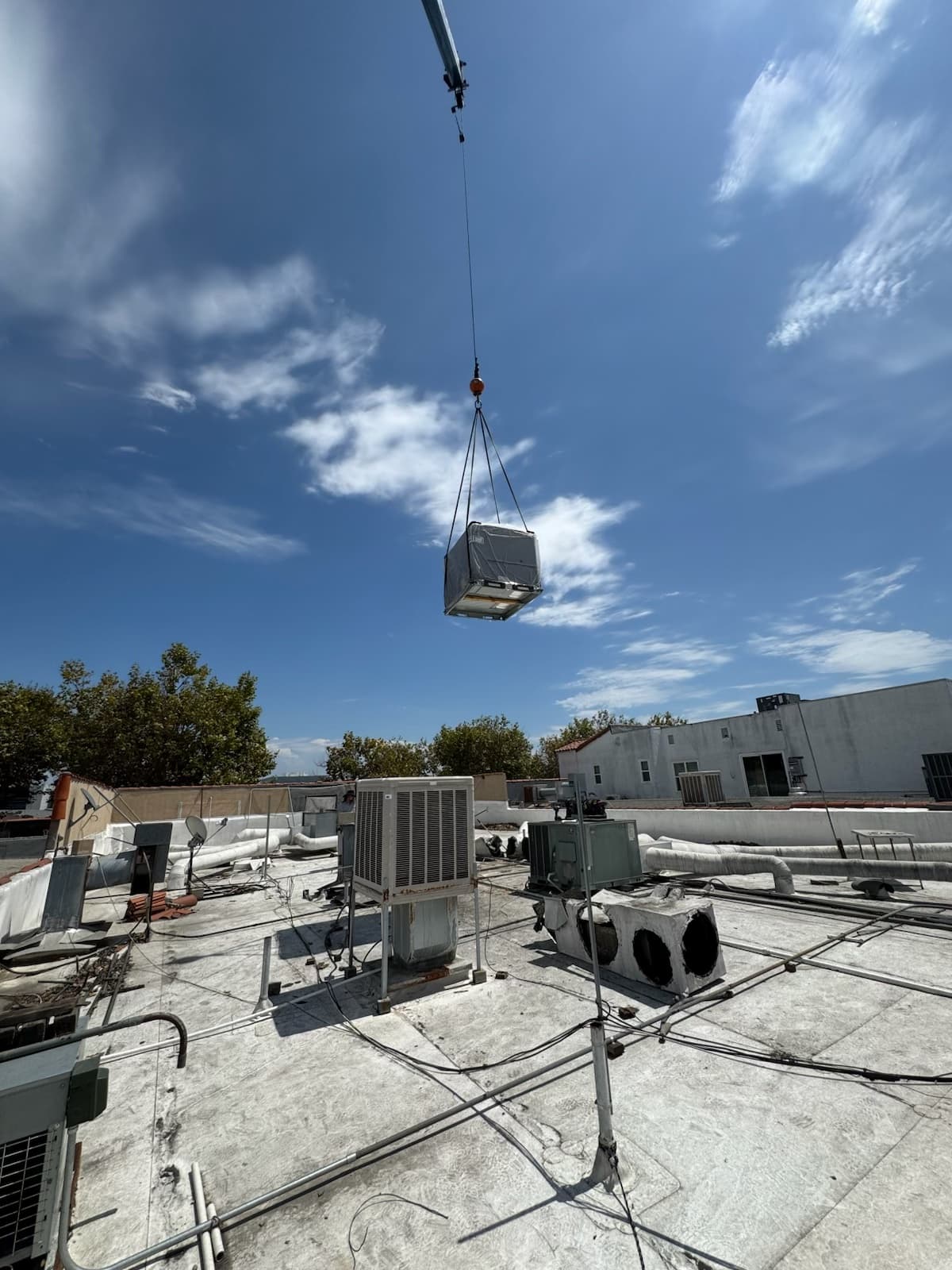
How rtu & split installs work plays out in Oxnard
Rooftop replacement in Oxnard is a specification problem before it is a lifting problem. A unit on a retail pad along Oxnard Boulevard or at the Esplanade sits in air that carries salt every morning the marine layer rolls in, and farm dust every afternoon the wind comes off the plain. Standard aluminum-fin coils show white bloom in two or three seasons. Fasteners weep rust down the cabinet. Control boards in unsealed enclosures develop green terminals. The replacement scope has to call out coated condenser and evaporator coils, corrosion-resistant hardware, gasketed control compartments and a drain pan and condensate route that will not hold standing water in fog season.
Then the logistics. The Collection at RiverPark and the Esplanade are both open-air centers with landlord-controlled roofs, published hours and shared parking fields, so a crane lift means a traffic plan, early-morning staging and a lift window that ends before the first lunch customers arrive. Older tilt-up buildings near Fifth Street or Del Norte Boulevard bring a different issue: the original curb rarely matches a modern unit footprint, and a roof that has carried a unit for twenty-five years deserves a structural look before a heavier one goes on it. City permits and the Title 24 acceptance tests for economizers and controls are part of the scope, and the Title 24 and permits guide explains what inspectors here will want to see.
For a food plant the calculation is different again. Packing and processing roofs often hold a mix of comfort units, make-up air units and refrigeration condensers, and the lift window has to land between harvest pushes. Done well, the day starts with units on the ground at dawn and ends with startup readings in the Portal. See commercial RTU replacement for how a multi-unit roof gets planned as one project.
Oxnard's climate and what it does to this equipment
Oxnard has one of the mildest climates in Southern California, with a persistent marine layer, cool nights, and summer highs that stay moderate near the water. The mildness is deceptive for equipment. Salt-laden air, morning fog and high humidity attack condenser coils, fasteners, cabinet panels and electrical terminals, while airborne farm dust and fine soil clog coils and filters during dry, windy stretches. Santa Ana wind events occasionally push hot, dry air to the coast and spike loads quickly. Systems here tend to fail from corrosion and fouling long before they fail from heat.
For the equipment background behind this page, read our commercial rooftop unit guide or the full RTU & Split System Installs service page.
- Agricultural packing and cold-storage corridorsPacking houses, coolers and processing buildings on the Oxnard Plain, where walk-in-scale and engineered refrigeration runs through harvest peaks.
- Port Hueneme and the Channel Islands Boulevard industrial beltMarine-adjacent warehouses, distribution and light industrial space in the harshest salt-air band of the city.
- The Collection at RiverPark and the EsplanadeOpen-air retail, restaurants, theaters and big-box tenants with dense rooftop equipment and heavy kitchen loads.
- Hospital and medical-office clustersAcute-care and outpatient buildings around the central city where reliable cooling, pressure relationships and hot water are non-negotiable.
- Site survey covering load, airflow balancing, and duct condition
- Clean rigging with code-correct gas, electrical, and condensate work
- Startup readings documented and stored in the Portal
- DaVinci Portal included: asset QR tag + warranty paperwork on file
What a rtu & split installs visit includes, and the problems we most often find
- Site survey — existing curb/duct compatibility, load, and airflow requirements
- Equipment selection sized to actual load and hours of operation, not just square footage
- Crane scheduling and rigging coordinated for roof access
- Install with code-correct gas, electrical, and condensate work
- Startup readings taken and documented; warranty registered in the Portal
- Undersized or oversized replacement units causing short-cycling or poor comfort
- Curb mismatches that turn a 'simple swap' into a bigger job mid-install
- Duct transitions that don't match the new unit's airflow requirements
- Aging units on refrigerant types that are getting harder and more expensive to service