Maintenance Plans in Irvine, CA
An Irvine office or R&D portfolio benefits from a plan built around comparison. When forty rooftop units of similar vintage are tagged in the DaVinci Portal, one running a few degrees worse on delta-T or drawing higher amps stands out immediately, long before a tenant calls. Our visits follow a written scope covering coils, belts, filters, economizers, contactors, and refrigerant circuits, with readings stored per unit. Property managers receive a rolled-up report by building and by suite, plus a ranked list of deferred items. That list becomes the basis for next year's capital conversation rather than a surprise during budget season.
Dense with corporate campuses, business parks, and multi-tenant office buildings around the Irvine Spectrum and Great Park areas — heavy RTU counts and tight PM windows.
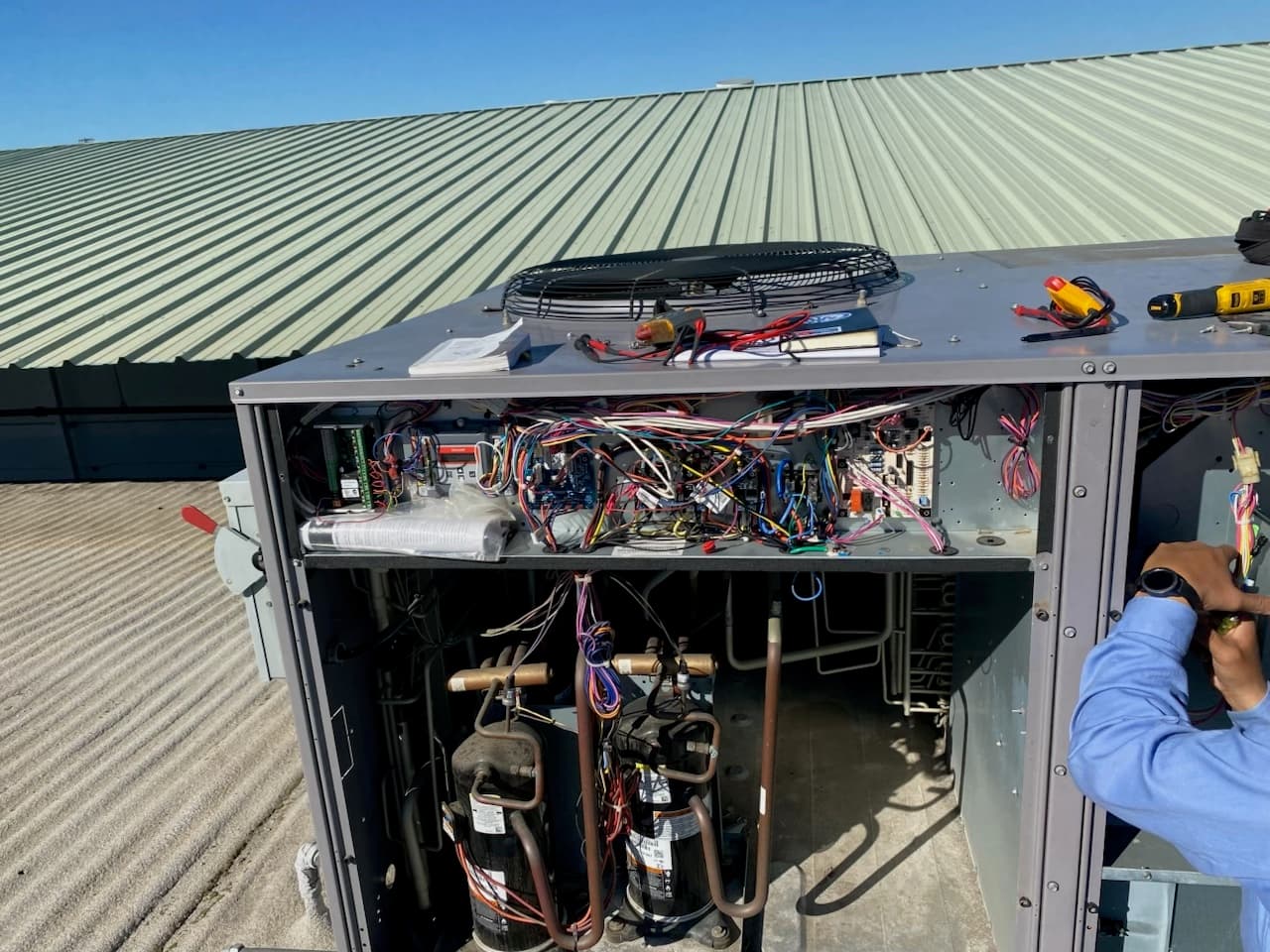
How maintenance plans work plays out in Irvine
Portfolio is the operative word for maintenance in Irvine. A single asset manager may hold a dozen buildings between the Irvine Business Complex, Sand Canyon, and the Alton and Barranca business parks, and those buildings share more than an owner: same construction era, same rooftop unit brand, same economizer control, same roofing, often the same original mechanical contractor. A maintenance program that treats each building separately throws away the comparison. Tagging every unit across the portfolio and reading them the same way on the same cycle lets the data say which building is drifting and which unit is the outlier, long before a tenant notices.
The seasonal rhythm here is simple and worth respecting. Spring, ideally April into May, is for condensers, refrigerant charge, economizer damper and sensor checks, and belt and bearing work, because the first real heat arrives in late June and the worst arrives in September. Fall, around October, is for heat exchangers, gas trains, boiler and reheat coil checks, and the controls schedule review before the holiday occupancy drop. Food-service tenants at Spectrum and the dining rows near the Great Park need visits every quarter because grease, heat, and 14-hour days age equipment at twice the office rate; a cooler coil in a restaurant line looks in July the way an office coil looks after three years.
What the program should produce is one report per building, per visit, with the same structure every time, plus a portfolio summary that ranks units by condition and projected replacement year. That is what the DaVinci Portal is built to give a manager, and it is what turns an invoice pile into a capital plan. The Irvine plans page lays out which tier fits which property type here, and the preventive maintenance program guide describes what a real visit contains.
Irvine's climate and what it does to this equipment
Irvine sits in the central basin, warm in summer with moderate humidity and little salt exposure. Cooling hours are high and rooftop condensers work hard in September heat, so spring condenser cleaning and economizer checks pay off.
For the equipment background behind this page, read our preventive maintenance program guide or the full Commercial Maintenance Plans service page.
- Irvine Spectrum and Great ParkRetail, entertainment, restaurants, and newer office and medical development with heavy kitchen and refrigeration loads.
- Irvine Business Complex (near John Wayne Airport)Dense mid-rise office, flex, and light-industrial space, with older RTU populations and tight rooftop access.
- University and Technology corridorsR&D, lab-adjacent, and tech tenants where uptime and temperature control matter.
- Sand Canyon and Alton business parksMulti-building office and flex campuses with many near-identical rooftop units.
- Free diagnostic on repairs for plan members
- Included labor per tier, with a member rate for anything over
- Photo-logged reports with temps, pressures, and amp draws
- DaVinci Portal included with QR tracking and self-service scheduling
What a maintenance plans visit includes, and the problems we most often find
- Walk every covered asset — RTUs, refrigeration, ice machines, water heaters
- Take and log readings against each unit's history, not a generic checklist
- Flag anything trending toward failure before it becomes a breakdown
- Deliver a photo-logged report after every visit
- Free diagnostic on any repair that comes out of the visit
- Equipment that 'seemed fine' failing without any maintenance history to catch the trend
- Multiple pieces of equipment aging out around the same time with no replacement plan
- Surprise repair costs that a documented PM history would have flagged months earlier
- Multi-location accounts with no consistent record across sites
Maintenance tiers for Irvine properties
Irvine properties often suit a bi-annual rooftop plan with portfolio reporting; restaurant and food-service tenants usually need quarterly visits.
See Irvine maintenance plans