Maintenance Plans in Lake Forest, CA
Business parks in Lake Forest benefit from plans that treat the whole roof as a single system. A landlord with a dozen similar units can use consistent filters, belts, and contactors, which shortens repair time and makes the records easy to compare. We number every unit, set seasonal visit windows before the warm months and again before the cooler ones, and keep a replacement outlook that flags units nearing their expected life. Tenants who share the roof see the same findings, which prevents disputes about neglected equipment.
Business parks and light-industrial/flex space along the El Toro corridor.
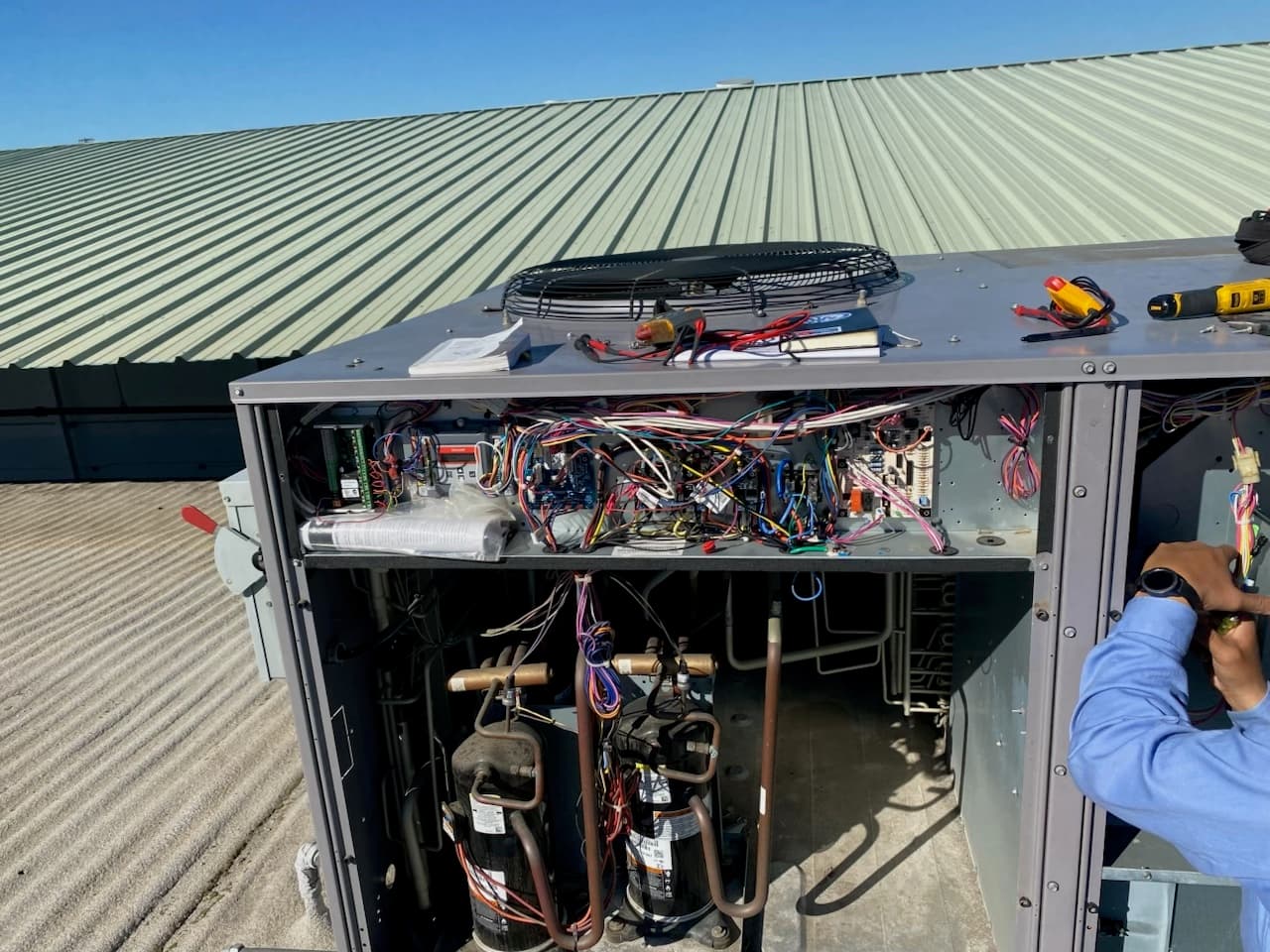
How maintenance plans work plays out in Lake Forest
A business park owner in Lake Forest with three or four tilt-up buildings and forty rooftop units has a different maintenance problem than a restaurant owner with one roof. The units are similar, the roofs are easy, and the failure modes repeat, so the value of a program is less about any single unit and more about the data: which of the forty are declining, which tenants' spaces are served by equipment that will not make another summer, and what the next two years of replacement spending looks like. A bi-annual program with per-unit records in the DaVinci Portal answers those questions in a way that reactive service never does.
The timing in this city is set by heat and by wind. Spring visits ahead of the first hot stretch cover condenser cleaning, refrigerant and electrical checks, economizer operation, and belts and bearings. Fall visits, ideally after the Santa Ana season has deposited its dust, clean coils again and verify heating before the cool mornings arrive. Properties with kitchens, markets, or refrigeration in the El Toro Road and Foothill Ranch centers, and distribution or food users in the parks, step up to quarterly because their equipment carries load year-round and fouls faster.
Lake Forest also has a public and institutional layer: schools under Saddleback Valley Unified, city facilities, and parks and sports complexes with concessions and restrooms. Those owners typically procure maintenance through formal agreements and need prevailing-wage compliance and documentation that satisfies their own auditors. The plans page describes the tiers; the Lake Forest plan detail explains how they fit here, and the public works page covers agency agreements.
Lake Forest's climate and what it does to this equipment
Lake Forest is inland south county: warm and drier than the coast, with notable afternoon heat and some exposure to wildfire smoke and Santa Ana winds.
For the equipment background behind this page, read our preventive maintenance program guide or the full Commercial Maintenance Plans service page.
- El Toro Road corridorRetail, restaurants, and medical office.
- Business parks near Bake and Rancho ParkwayMulti-tenant office and flex with many identical RTUs.
- Foothill RanchRetail centers and light industrial.
- Lake Forest Drive areaOffices and professional services.
- Free diagnostic on repairs for plan members
- Included labor per tier, with a member rate for anything over
- Photo-logged reports with temps, pressures, and amp draws
- DaVinci Portal included with QR tracking and self-service scheduling
What a maintenance plans visit includes, and the problems we most often find
- Walk every covered asset — RTUs, refrigeration, ice machines, water heaters
- Take and log readings against each unit's history, not a generic checklist
- Flag anything trending toward failure before it becomes a breakdown
- Deliver a photo-logged report after every visit
- Free diagnostic on any repair that comes out of the visit
- Equipment that 'seemed fine' failing without any maintenance history to catch the trend
- Multiple pieces of equipment aging out around the same time with no replacement plan
- Surprise repair costs that a documented PM history would have flagged months earlier
- Multi-location accounts with no consistent record across sites
Maintenance tiers for Lake Forest properties
Bi-annual plans across multi-unit business parks are the usual fit in Lake Forest.
See Lake Forest maintenance plans