Maintenance Plans in Garden Grove, CA
A Garden Grove plan usually splits in two. Restaurants and food producers receive quarterly visits covering refrigeration, ice machines, and kitchen HVAC, with monthly checks on critical boxes where product loss would be severe. Landlords receive a twice-yearly rooftop program that includes coils, belts, drains, electrical connections, and economizers. Responsibilities are written out so tenant and landlord equipment are never confused. Each asset gets a QR tag in the DaVinci Portal, which means a new manager, a new owner, or an inspector can see history without hunting through invoices.
Light-industrial and restaurant-dense commercial strips near the 22 freeway.
How maintenance plans work plays out in Garden Grove
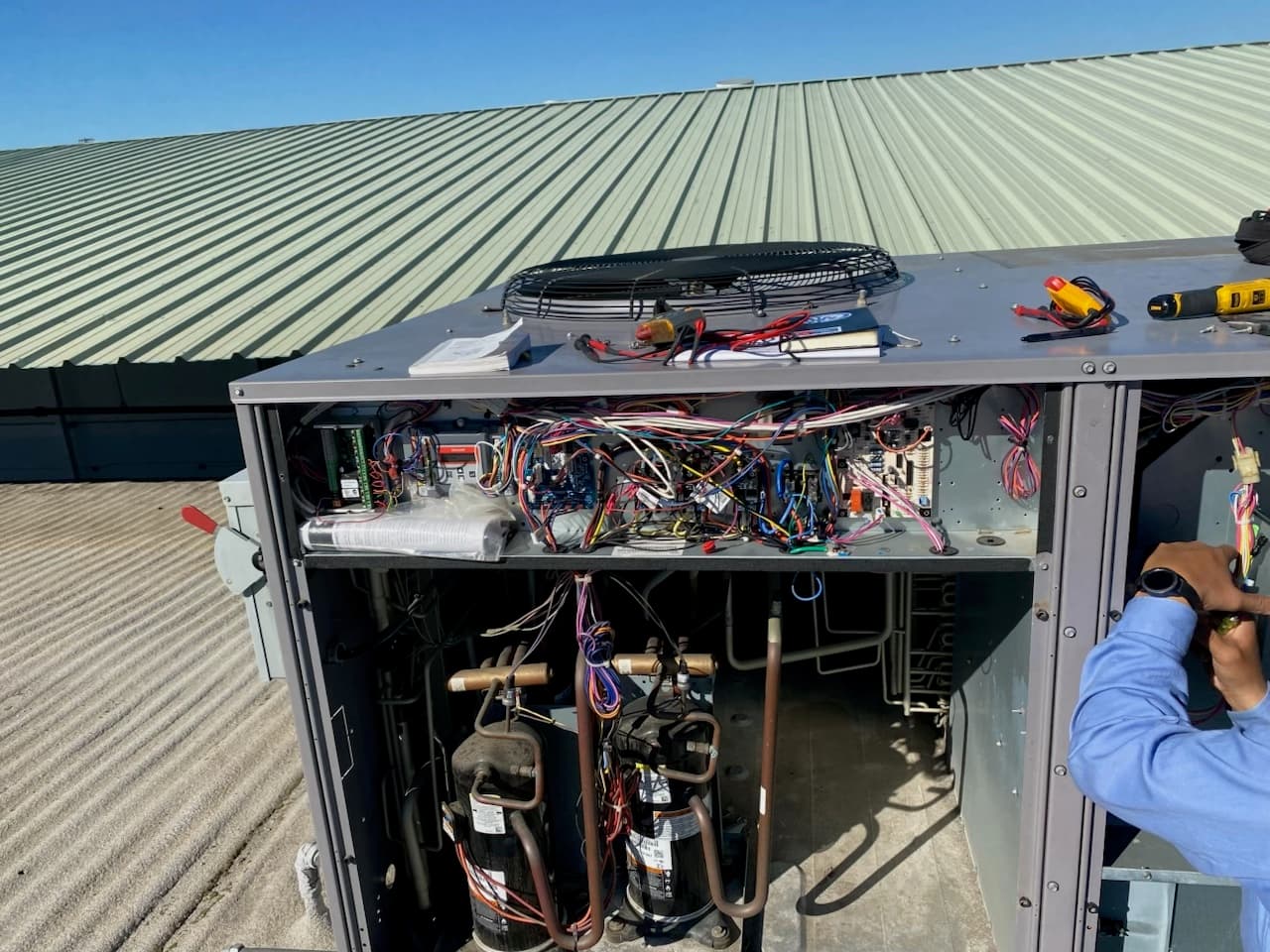
In Garden Grove a maintenance program is usually two programs wearing one name. The landlord of a strip center on Chapman Avenue or Garden Grove Boulevard owns the rooftop units and wants them checked twice a year with a record that supports lease negotiations and eventual replacement planning. The restaurant tenant underneath owns the walk-in, the reach-ins, the ice machine, the water heater, and often the hood exhaust and make-up air, and that equipment needs attention every quarter because grease and heat do not take six months off. We set both up in the same visit cycle where possible, with separate reports and billing, so neither party pays for the other's equipment.
Quarterly visits for kitchens here follow the operating reality: condensers cleaned every visit because grease fouls them that fast, walk-in gaskets and defrost checked, ice machines descaled and sanitized, hood fan belts and bearings inspected, and water heaters checked for sediment and venting. Bi-annual rooftop visits land in spring and fall, with particular attention to filters and coils on units that sit downwind of hood discharge. For the hotels on Harbor Boulevard and the food production tenants near the 22 freeway, the program scales up to cover guest floor systems, banquet kitchens, and documented refrigeration temperatures with the frequency those operations require.
Every visit produces readings, photos, and a prioritized findings list in the DaVinci Portal. For a Garden Grove restaurant owner, that is the difference between a health inspection that goes smoothly and one that does not. The Garden Grove plans page matches tiers to the property types in the city.
Garden Grove's climate and what it does to this equipment
Garden Grove is central basin with warm summers and moderate humidity. Grease and cooking-related contamination are bigger enemies of coils than salt.
For the equipment background behind this page, read our preventive maintenance program guide or the full Commercial Maintenance Plans service page.
- Harbor Boulevard corridorHotels and restaurants near the resort district.
- Westminster Avenue and Brookhurst restaurant stripsIndependent restaurants and bakeries with intense refrigeration use.
- Industrial areas near the 22 freewayFood production, light industrial, and warehouses.
- Civic Center areaMunicipal buildings and offices.
- Free diagnostic on repairs for plan members
- Included labor per tier, with a member rate for anything over
- Photo-logged reports with temps, pressures, and amp draws
- DaVinci Portal included with QR tracking and self-service scheduling
What a maintenance plans visit includes, and the problems we most often find
- Walk every covered asset — RTUs, refrigeration, ice machines, water heaters
- Take and log readings against each unit's history, not a generic checklist
- Flag anything trending toward failure before it becomes a breakdown
- Deliver a photo-logged report after every visit
- Free diagnostic on any repair that comes out of the visit
- Equipment that 'seemed fine' failing without any maintenance history to catch the trend
- Multiple pieces of equipment aging out around the same time with no replacement plan
- Surprise repair costs that a documented PM history would have flagged months earlier
- Multi-location accounts with no consistent record across sites
Maintenance tiers for Garden Grove properties
Garden Grove restaurants are well suited to quarterly plans; food-production sites may need monthly checks on critical refrigeration.
See Garden Grove maintenance plans