Commercial Refrigeration in Aliso Viejo, CA
The Town Center and surrounding mixed-use buildings host restaurants, specialty groceries, and wellness-oriented food tenants whose refrigeration sits in newer, tidier spaces than most of the county. Problems here tend to be gradual: slowly rising box temperatures from dirty condensers, creeping evaporator frost, controllers drifting out of calibration. We take baseline readings during the first visit and compare them on later ones, so slow degradation shows up as a trend. Reports list each box with its setpoint, observed range, and any corrective action, helping managers address problems before they become spoilage events.
Modern business parks and mixed-use retail/office development.
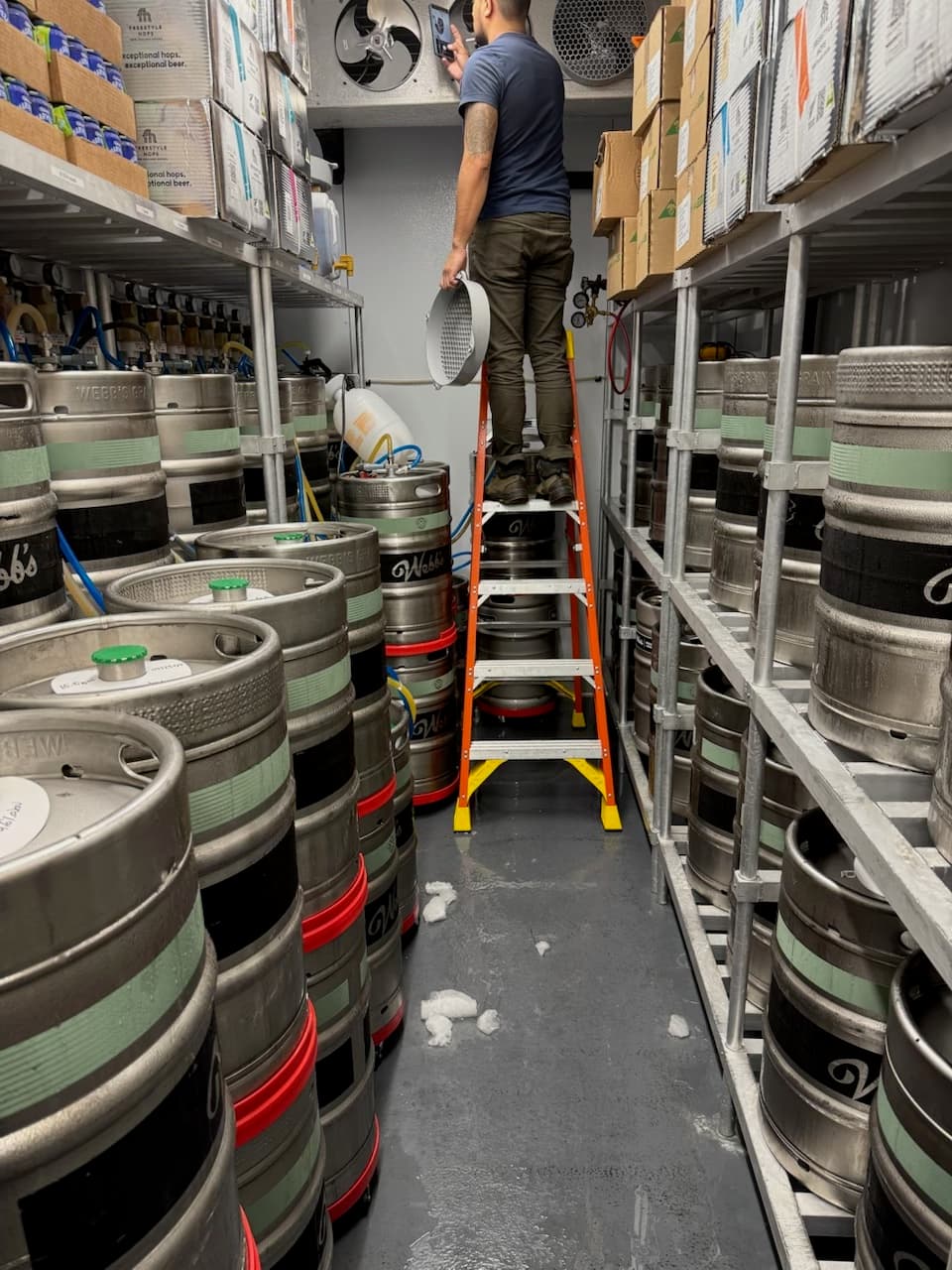
How commercial refrigeration work plays out in Aliso Viejo
The Town Center is where most of Aliso Viejo's commercial refrigeration lives: a grocery anchor, full-service and fast-casual restaurants, a cinema with concessions, coffee and juice bars, and specialty food tenants in the pedestrian retail blocks around it. The second cluster is quieter and more technical: medical, dental and life-science tenants in the office campuses along Enterprise and Pacific Park Drive with vaccine refrigerators, sample storage, lab cold rooms and the occasional ultra-low freezer. The two kinds of refrigeration fail differently and need different documentation.
Restaurant refrigeration in the Town Center is mostly remote-condensed walk-ins with condensers on the roof of a multi-tenant building, which means roof access through a property management process and shared rooftop space with other tenants' equipment. Reach-ins and prep tables take the daily abuse. The clinical and lab refrigeration has a different failure mode: it rarely breaks dramatically, but a unit drifting a few degrees or cycling too wide can ruin inventory that has to be documented, so temperature logging and alarm verification are the service, not an extra.
We keep a per-unit record in the DaVinci Portal with temperatures, defrost settings, gasket and door condition and photographs, so a health inspector, a lab manager or a landlord can see the history. Refrigerant rules in California affect both the grocery scale and the small clinical units, and they change; confirm current requirements for your charge size and refrigerant. The commercial refrigeration systems guide covers the categories, and the clinics and medical office sector page covers the clinical side.
Aliso Viejo's climate and what it does to this equipment
Aliso Viejo has moderate temperatures with some coastal influence; cooling load is significant on summer afternoons but corrosion pressure is lower than at the beach.
For the equipment background behind this page, read our walk-in cooler and freezer guide or the full Refrigeration: Walk-In & Reach-In Coolers/Freezers service page.
- Aliso Viejo Town CenterMixed-use retail, restaurants, and offices.
- Business parks along Aliso Creek and EnterpriseCorporate and technology tenants.
- Medical and life-science buildingsTemperature-sensitive spaces and storage.
- University and school facilitiesEducational buildings with scheduled maintenance windows.
- Evaporator/condenser coil cleaning and defrost checks
- TXV/EEV, superheat, subcool, and pressure readings logged
- Door seals, drains, heaters, and fan packages inspected
- DaVinci Portal: temps and pressures logged by asset over time
What a commercial refrigeration visit includes, and the problems we most often find
- Check current box temperature against setpoint and recent trend
- Inspect door seals, drains, and evaporator/condenser coils for buildup
- Take superheat, subcool, and pressure readings against manufacturer spec
- Address the root cause — not just a temporary recharge
- Log readings to the asset so drift is caught early next visit
- Door seals and hinges that no longer hold a tight close
- Evaporator coils iced over from a defrost cycle issue
- Condenser coils caked with grease or debris, especially near kitchen exhaust
- Slow refrigerant leaks that show up as gradual temperature drift, not sudden failure