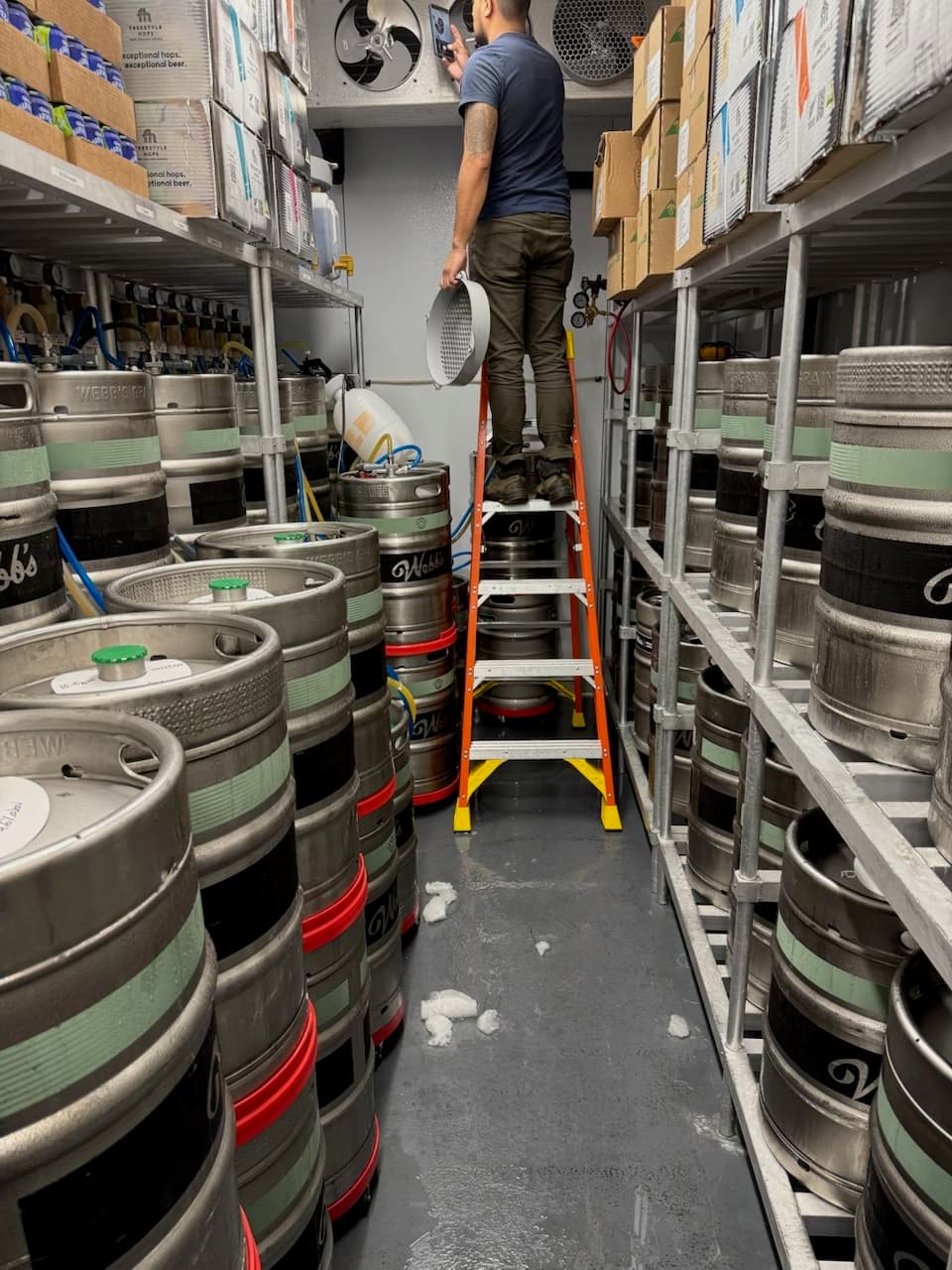
For Veterinary Clinics & Animal Hospitals

HVAC and refrigeration built for patient care, not just comfort

Medication cold storage, surgical suite climate control, and boarding areas that can't go without conditioning — we treat veterinary and animal healthcare facilities with the urgency that patient care requires.

UA Local 250 Member
PLA / Prevailing Wage Ready
Certified Payroll & Compliance
Licensed • Bonded • Insured
Veterinary facility refrigeration service
Surgical and recovery spaces can't drift

Temperature and airflow stability matters for patient safety during procedures and recovery, not just staff comfort.

Medication and vaccine refrigeration is non-negotiable

Vaccines, medications, and biologics need consistent, documented cold storage — a refrigeration failure isn't just inventory loss, it's a compliance issue.

You can't close for a service call

Boarding animals and scheduled procedures mean HVAC and refrigeration issues need same-day attention, not a next-week appointment.

Documentation matters for licensing and insurance

Logged temperature and service records through DaVinci Portal give you a real record, not a guess, when it's asked for.

What we handle for veterinary & healthcare accounts

Medication storage, surgical suites, and air you can document

Veterinary clinics and small medical practices share a set of mechanical problems that restaurants and retail don't: temperature-controlled medication and vaccine storage, procedure and surgical rooms that need stable conditions, odor and airflow control in kennels and treatment areas, and records that may be reviewed during inspections or after an incident.

Three zones, three different priorities

ZoneWhat mattersTypical equipment
Medication and vaccine storageStable, logged temperature; alarms; backup plan if the unit failsPharmacy refrigerators, reach-ins, small walk-ins
Surgery and procedure roomsComfortable, stable temperature and clean airflow with defined pressure relationships where requiredSplit systems, rooftop units, dedicated controls
Kennels, wards, and treatment areasVentilation, odor control, humidity, and separation of air between areasRooftop units with outside air, exhaust fans, ductless splits

Because many clinics are small tenants in multi-use buildings, equipment ownership can be unclear. Establish early which units serve you and who is responsible; our asset tags in the DaVinci Portal give each unit a documented record.

  • Log medication-fridge temperatures daily and keep a plan for relocating product if the unit fails.
  • Ask for readings and photos after service so you have a record of what was found.
  • Schedule maintenance around surgery days and avoid shutting down systems during procedures.
  • Treat sudden odor or humidity changes as symptoms worth a service call, not just a housekeeping issue.

What the mechanical inventory looks like by practice type

Veterinary facilities range from a two-exam-room general practice in a strip center to a multi-specialty referral hospital with an MRI suite, an ICU, and a boarding wing. The mechanical inventory scales with that range, and so does the exposure when something fails. The table below is a reasonable picture of what a facilities person inherits in each case.

Typical mechanical inventory by veterinary facility type
FacilityHVACRefrigeration and other
General practice (2 to 6 exam rooms, inline suite)One or two packaged rooftop units shared with or separate from neighboring tenants; a ductless split in the surgery room added after build-out; restroom and kennel exhaust fansOne or two medical-grade or household-type refrigerators for vaccines and medications; a small reach-in for food and samples; a tank water heater
Full-service animal hospital with boarding (freestanding)Several rooftop units zoned by function (lobby and exam, treatment and surgery, kennels and wards); dedicated kennel exhaust; sometimes a make-up air unit for the kennel wingPharmacy refrigerators and a freezer; a walk-in or large reach-in for food and deceased-animal holding; commercial water heater sized for cage washing and laundry; sometimes an ice machine
Specialty and emergency hospital (24-hour)Larger rooftop or split systems with redundancy for ICU and surgery; dedicated cooling for imaging rooms; isolation rooms with dedicated exhaust; VRF or split systems where zones differ widelyMultiple pharmacy refrigerators with alarms; freezers for biologics; blood-bank refrigeration where offered; higher-capacity water heating; laundry and sterilization equipment with their own ventilation needs
Equine and large-animal facilitiesOffice and clinic area conditioning; barn and treatment area ventilation and heat relief fans; often evaporative coolingPharmacy refrigeration; feed and medication storage; wash-stall hot water

The common pattern across all of them is a mix of comfort HVAC and small, high-stakes refrigeration, with specialty rooms whose requirements were often met with add-on equipment rather than designed in. A ductless split hung in a surgery room after the practice opened is normal, and so is a vaccine fridge plugged into a circuit shared with a centrifuge. The first thing we do on a new account is tag every unit in the DaVinci Portal so the practice has a true inventory with nameplate data, refrigerant type, and the room each unit serves.

Surgery, isolation, kennels, imaging: what each zone asks of the mechanical system

The industry-level page above explains why medication storage, surgical suites, and kennel areas have different priorities. This section goes a level deeper on what those priorities mean for equipment selection and service.

Surgery and procedure rooms

Veterinary surgery rooms in California are not typically held to the air-change and pressurization standards of human operating rooms, but accreditation programs and good practice expect a clean, stable, filtered environment, with air moving from the surgical suite outward rather than inward from a treatment area or a kennel. In practice that means a dedicated supply with higher-grade filtration, a thermostat the surgical team controls, and a system that does not shut off mid-procedure for a scheduled defrost or an economizer changeover. Ductless splits are common here and work well if they are sized for the equipment heat load and cleaned on a schedule, since their coils and blower wheels load with lint and dander quickly.

Isolation and infectious-disease rooms

Isolation rooms should exhaust directly outdoors and run slightly negative to the corridor so air moves in, not out. This is often achieved with a dedicated exhaust fan and a damper on the supply, and it fails silently when the fan belt breaks or someone closes the damper to make the room warmer. Verifying the pressure relationship with a smoke test or a manometer reading is a routine maintenance task that most general HVAC contractors skip because nobody asked.

Kennels, wards, and boarding

Kennel wings are the largest ventilation load in most hospitals: high occupancy, constant cleaning with water and disinfectant, and odor and humidity that have to leave the building rather than migrate to the lobby. Exhaust fans run continuously, make-up air has to replace what is removed or the building goes negative and pulls air in through every door, and the rooftop unit serving the wing takes a beating from moisture and chemical vapor. Corrosion on coils, blower housings, and drain pans is faster here than almost anywhere else outside a pool building.

Imaging and laboratory

CT and MRI rooms generate steady heat and need stable temperature and humidity for the equipment, usually with a dedicated split or a chilled-water system supplied by the imaging vendor. In-house laboratories have analyzers that are sensitive to temperature swings. These rooms benefit from their own zone and from being excluded from any building-wide setback schedule.

The medical office and clinic HVAC guide covers the human-healthcare equivalents, and much of it transfers. For practices considering a remodel or expansion, the VRF and split systems page explains why zoning by function is easier with those systems than with a single rooftop unit.

When things fail in a veterinary building, and why

Veterinary facilities see the same Southern California seasonal stresses as any commercial building, with two differences: the refrigeration that matters most is small and indoors, and the building cannot be allowed to drift because animals are in it overnight.

  • Spring. Pollen and dust load filters and coils. Practices that run outside-air economizers for ventilation pull a season's worth of debris into the system. Allergy season for staff is also allergy season for the rooftop unit. Filter changes should step up in frequency from March onward.
  • Summer. The real risk is a rooftop unit failure over a boarding wing on a Friday evening, with the building closed until Monday and animals inside. Facilities with boarding should have a monitored alarm on kennel temperature and a plan for who responds. Pharmacy refrigerators in rooms that lose cooling also drift, because their small condensers cannot reject heat into a warm room, and that is how vaccines are lost without the refrigerator itself failing.
  • Fall. Santa Ana wind events bring hot, dry, dusty air. Exhaust fans working against wind pressure can reverse airflow in isolation rooms. Dust on pharmacy refrigerator condensers, which are usually at floor level, reduces their capacity.
  • Winter. Heating sections fire for the first time and fail on first call. Kennel wings that were comfortable all summer are now cold because the make-up air is untempered and the exhaust never stops. Rain finds its way into rooftop unit electrical compartments through curbs and penetrations.

Because so many veterinary buildings are closed overnight with patients inside, the single most valuable upgrade for most practices is a monitored temperature alarm on the kennel area and on each medication refrigerator, with alerts that reach a person. We can supply and configure these as part of a maintenance program. The heat wave readiness guide has a pre-event checklist that applies directly to hospitals with boarding.

Documentation for accreditation, licensing, and the day something goes wrong

Veterinary practices in California are licensed through the state veterinary medical board, which inspects premises and reviews drug storage and record-keeping among other things. Practices that pursue voluntary accreditation through a national hospital-accreditation program are evaluated against standards that include facility condition, medication storage, surgical environment, and documentation practices. Pharmaceutical distributors and vaccine manufacturers expect cold-chain handling that keeps products within labeled ranges. None of these bodies inspect your HVAC contractor, but all of them can ask how you know your refrigerators held temperature and how you know your surgery room is maintained. Confirm current standards with the relevant program, since requirements are revised periodically.

Who may askWhat they tend to look forWhat we provide
State licensing inspectionDrug storage conditions, refrigerator temperature monitoring, general premises condition and sanitationService records and readings for each medication refrigerator and for the HVAC serving pharmacy and treatment areas
Hospital accreditation evaluationEvidence of a maintenance program for facility systems; medication storage temperature logs; surgical suite environmentPer-asset service history with photos; filter change records; documented pressure checks on isolation rooms; a written PM schedule
Vaccine and drug suppliers, after a lossTemperature history and evidence the storage unit was maintained and monitoredRefrigerator service history; alarm configuration records; the diagnosis of what failed and when
Insurance carrier, after a claimMaintenance records demonstrating the loss was not from neglectDated work orders, readings, and the asset record showing a program was in place
LandlordProof that tenant-maintained HVAC was serviced per leaseAnnual or quarterly service reports per unit

Most of this documentation is a by-product of good service, not an extra task, provided the service is recorded per asset rather than per visit. Each refrigerator, split, rooftop unit, and exhaust fan in your building has its own QR tag and its own record in the portal, and a practice manager can pull it up on a phone during an inspection. The preventive maintenance program guide describes what a written program should contain.

Scheduling around surgery days, boarding, and a building that is never empty

A veterinary hospital cannot simply close for a service call, but it does have a predictable rhythm that service can be fitted around. Most general practices concentrate surgeries on certain mornings; emergency hospitals have quieter stretches midweek; boarding is heaviest around holidays and school breaks. The scheduling rules we follow are straightforward.

  1. No shutdown of a system serving surgery while a procedure is scheduled. Surgery room equipment is serviced on non-surgical days or after the day's cases, and we ask for the surgery schedule before planning a visit.
  2. Kennel wing HVAC and exhaust are serviced with the exhaust running or with temporary ventilation in place, because the odor and humidity load does not pause.
  3. Medication refrigerator service is coordinated with the practice manager so product can be moved to a backup unit or a cooler with ice packs and a thermometer for the duration. We will not open a pharmacy refrigerator without someone from the practice present.
  4. Roof work proceeds during business hours since it does not disturb patients, staff, or clients.
  5. Replacements are planned for the lightest stretch, which for most practices is a weekday without surgeries in the cooler months, with temporary cooling staged for any room that has animals in it.
Boarding changes the risk

If your facility boards animals, the building is occupied every night and every holiday. Tell us, because it changes how we prioritize your calls, how we configure alarms, and how we plan any work that takes a zone offline.

Repair or replace: the decision points for a clinic

Veterinary practices are often small businesses with a single owner making capital decisions, and the repair-or-replace question deserves a clear framework rather than pressure. Here is how we think about each category of equipment in a clinic.

EquipmentRepair whenReplace when
Rooftop unit serving exam, lobby, or treatmentComponent failure with a sound compressor and heat exchanger; refrigerant available; unit under roughly twelve to fifteen yearsCompressor or heat exchanger failure on an older unit; R-22 system; corrosion from kennel exhaust; capacity that no longer matches the floor plan after a remodel
Ductless split in surgery or imagingBoard, sensor, fan, or drain repairs; coil cleaning restores capacityCompressor failure out of warranty; inability to hold temperature with imaging equipment heat load; refrigerant leak in a line set buried in the wall
Medication or vaccine refrigeratorDoor gasket, thermostat, fan, or condenser cleaning; unit is a purpose-built medical modelAny compressor fault on a household-type unit being used for pharmaceuticals; repeated temperature excursions; a model without alarm capability when accreditation or supplier expectations call for one
Kennel exhaust fan and make-up airBelt, bearing, motor, or damper actuator replacementHousing corrosion, fan curve mismatched to current kennel count, or make-up air unit heat section failed on an untempered design that should be upgraded
Water heaterThermocouple, gas valve, igniter, anode, or recirculation pumpTank leak; recovery inadequate for cage washing and laundry on a busy day; flue or combustion-air deficiencies that are expensive to correct

One specific recommendation: household refrigerators and dorm-style units are a poor place to store vaccines and controlled drugs, and when one fails we recommend replacing it with a purpose-built pharmaceutical unit with a digital alarm rather than repairing it. The product at risk is worth more than the appliance. When a contractor has told you a larger system needs replacing and you are not convinced, our second-opinion diagnostic provides a full set of readings and a candid read on what the unit has left.

Maintenance tiers, multi-site groups, and Southern California specifics

Which tier fits

Our plans differ by visit frequency and included labor. For veterinary facilities the fit depends mostly on whether the practice boards animals and how much specialty equipment it runs.

  • Quarterly for hospitals with boarding, 24-hour emergency facilities, and specialty hospitals with imaging and ICU. The kennel wing alone justifies it: filters, coils, exhaust fans, and drain pans in that environment need attention four times a year, and medication refrigerators get checked on every visit.
  • Bi-annual for general practices without boarding, where the building is empty at night, the refrigeration is a couple of pharmacy units, and the HVAC is one or two rooftop units and a surgery split. Spring and fall visits catch cooling and heating readiness.
  • Annual is rarely appropriate for a practice that stores vaccines, and we will say so rather than sell it.

Multi-location groups

Veterinary consolidation has produced regional groups operating many practices acquired from different founders, each with its own equipment and its own habits. The operational fix is the same one that works for restaurants and grocers: one asset register across all practices, the same visit scope and report at every site, a capital list ranked by risk and reviewed twice a year, and emergency routing with authorization limits so a practice manager can get a surgery room cooled on a Saturday without a chain of approvals. Regional directors see across practices in the portal while each practice sees its own equipment.

What is specific to this region

  • Many practices are inline tenants in Orange County retail centers and medical office parks, where the rooftop unit may be shared or the lease is unclear on responsibility. Settling ownership per unit is part of our first visit; the property management page explains the typical arrangements.
  • Coastal practices in Newport Beach, Laguna, Dana Point, or along the San Diego coast see rooftop coil and cabinet corrosion earlier than inland sites and benefit from coated coils and more frequent rinsing.
  • Inland practices in Riverside, Temecula, the San Fernando Valley, or the high desert face roof ambient temperatures that push undersized splits and rooftop units past their limits on the same afternoons that boarding is fullest.
  • Air district rules on gas-fired water heaters and boilers continue to change, and water heater replacements should account for current South Coast Air Quality Management District requirements. Confirm at the time of the project.
  • Title 24 applies to rooftop and split replacements including efficiency, controls, and acceptance testing, and permits are required even for like-for-like swaps. The Title 24 and permits guide explains the framework.

Practices affiliated with a university veterinary program or operating within a larger medical campus may fall under the procurement and compliance structures described on the colleges and universities and medical offices and clinics sector pages. For everyone else, the relevant service pages are commercial repair, refrigeration, and building controls for alarm and schedule setup.

More questions, answered

Our vaccine refrigerator is a regular household model. Is that a problem?
It is a risk, and most accreditation programs and vaccine suppliers recommend against it. Household refrigerators cycle through a wider temperature range than a pharmaceutical unit, often have cold spots near the back and warm spots in the door, and rarely have a meaningful alarm. If yours is working, add an independent data-logging thermometer with alerts and keep product away from the walls and door. When it fails, replace it with a purpose-built unit rather than repairing it, since the product inside is worth more than the appliance.
Can you service the surgery room HVAC without disrupting procedures?
Yes, by scheduling around the surgery calendar. We ask for your surgical days before planning a visit and service surgery room equipment on non-surgical days or after the day's last case. Roof work on the unit serving the surgery can usually proceed during business hours as long as the system is not shut off for long. We will never take a surgery room's cooling down while a procedure is scheduled, and we will tell you in advance what will be off and for how long.
What should we document for an accreditation evaluation?
Evaluators generally want evidence of a maintenance program for the building systems, temperature logs for medication storage, and a surgical environment that is maintained and filtered. Per-asset service records with readings and photos, filter change dates, documented pressure checks on any isolation room, and a written PM schedule cover the mechanical side. All of that is recorded in the DaVinci Portal as a by-product of our visits, so it exists before the evaluation is scheduled. Confirm the current standard with the program, since requirements are revised periodically.
Our kennel wing smells and the lobby is drafty. Are those related?
Very often. A kennel wing with exhaust fans running continuously needs make-up air to replace what is removed. If the make-up air unit has failed or was never adequate, the building goes negative and pulls outside air through every door, which produces drafts in the lobby and can reverse the airflow that is supposed to keep kennel odor out of client areas. The fix is to measure the pressure relationship and correct the make-up air, not to add air fresheners. This is a root-cause problem rather than a parts problem.
We board animals overnight. What happens if the HVAC fails after hours?
That is the scenario a boarding facility should plan for before it happens. We recommend a monitored temperature alarm on the kennel area that alerts a person by phone, a documented response plan naming who gets called, and a maintenance program that catches drifting equipment before summer. Our priority response treats a cooling loss over occupied kennels as urgent. Temporary cooling can be staged if a repair will take time, and the alarm configuration and response history are recorded on the asset so the plan is reviewable.
We are a group with practices in several counties. Can you handle all of them?
Yes. From our Orange County base we run multi-site programs across Los Angeles, Riverside and San Bernardino, San Diego, and Ventura counties as a single account. Every practice's equipment goes into one asset register with the same report format, visits are grouped by geography so the same crew covers a cluster, and regional directors see across practices in the portal while each practice manager sees only their own. Capital planning is reviewed with your operations lead twice a year.