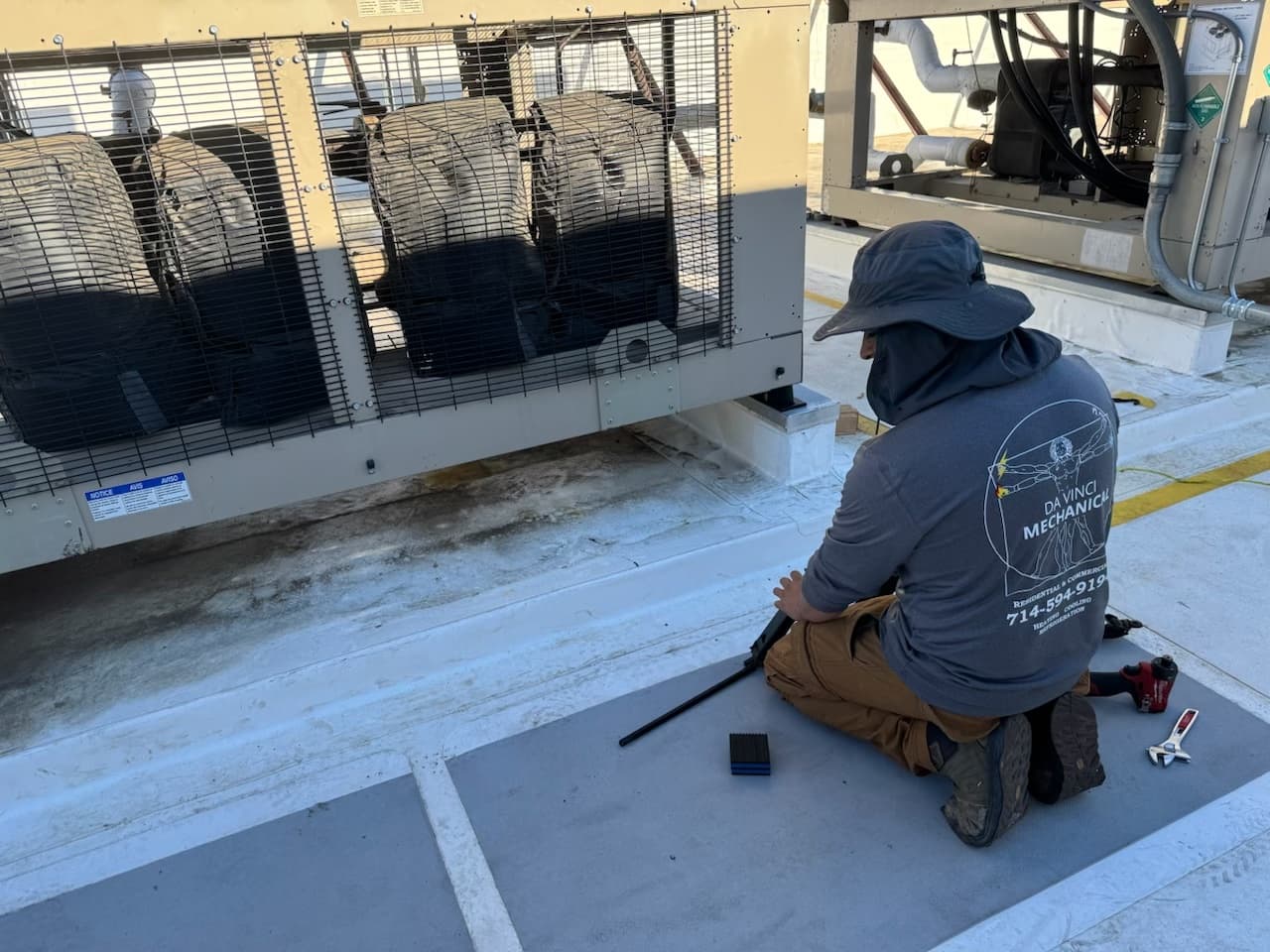
If you manage facilities for a school district, municipality, water district, or other public agency, you have likely run into "PLA-ready" or "prevailing wage" as requirements in a bid package. They are not just paperwork. They change who is actually eligible to do the work, they change how the job has to be run day to day, and they change what can go wrong partway through. This post explains both terms in practical language, shows how they overlap and where they differ, and gives you a short list of things to verify before you award HVAC or refrigeration work under either one.
Rules in this area vary by agency and change over time. Treat what follows as orientation, and confirm current requirements with your agency's procurement and labor compliance staff for any specific project.
What a Project Labor Agreement (PLA) is
A PLA is a pre-hire collective bargaining agreement, typically negotiated between a public agency (or a large private owner) and a council of building trades unions, that sets the labor terms for a specific project or program of projects before bidding opens. It generally requires every contractor and subcontractor on the job to operate under agreed wage, benefit, hiring-hall, and dispute-resolution terms for the life of the project, regardless of whether the contractor's own shop is otherwise union or non-union.
In practice a PLA usually means:
- Craft workers are dispatched through the signatory union's referral process, with some allowance for a contractor's core employees
- Contributions to the union trust funds for health, pension, and training
- A no-strike, no-lockout commitment and a defined grievance procedure
- Local-hire, apprenticeship, or targeted-hiring goals written into the agreement
- Jurisdictional rules about which trade performs which scope, which matters on HVAC work where piping, sheet metal, electrical, and controls meet
For a mechanical scope, the relevant trade for piping, refrigeration, and much HVAC service work in Southern California is the United Association. Davinci Mechanical is a UA Local 250 signatory, which is what lets us staff PLA projects through the normal dispatch process rather than scrambling to become signatory after an award.
What prevailing wage requires
Prevailing wage laws set a minimum hourly wage and fringe benefit rate for construction and trade work on public works projects, based on the determined rate for that craft in that geographic area rather than a contractor's normal shop rate. In California the Department of Industrial Relations publishes the determinations; federally funded work may also fall under the Davis-Bacon Act, and the two can apply at the same time with the higher rate controlling for each classification. Prevailing wage applies whether or not a PLA is in place, and it comes with real compliance obligations:
- Contractor registration with the state before bidding or working on public works
- Certified payroll records submitted electronically on a set schedule, not just kept on file
- Accurate classification of each worker by craft and level for every hour worked
- Apprentice-to-journeyman ratios that have to be maintained on the job, with apprentices requested from an approved program
- Training fund contributions and fringe benefit payments, or their cash equivalent
- Job-site postings and recordkeeping that a labor compliance officer can audit at any time
The threshold at which prevailing wage applies, the posting requirements, and the reporting platform are all things that have changed over the years. Confirm the current rules for your agency and funding source.
PLA versus prevailing wage: how they differ
| Prevailing wage | Project Labor Agreement | |
|---|---|---|
| Source | Statute; applies automatically to covered public works | Negotiated agreement adopted by the owner for a project or program |
| Who must comply | Every contractor and subcontractor on the covered project | Every contractor and subcontractor that signs on to the project |
| Wage floor | Published determination for the craft and area | Union agreement rates, which typically meet or exceed the determination |
| Workforce source | Contractor's choice, subject to apprentice ratios | Union referral process, with limited core-employee exceptions |
| Union membership required | No | Not necessarily, but workers typically pay into union trusts for the project |
| Primary paperwork | Certified payroll, apprentice requests, postings | Letter of assent, trust fund remittances, plus all prevailing wage items |
The short version: prevailing wage is about what workers are paid and how that is proven. A PLA is about where the workforce comes from and under what labor relations terms. A PLA job is nearly always a prevailing wage job as well, so a contractor on a PLA project has to handle both sets of obligations at once.
Why this eliminates contractors before the bid is even scored
A contractor who has never run certified payroll, does not have a relationship with the relevant trade union, or does not have the administrative process for wage compliance built into how they operate is not just at a disadvantage on these projects. They are often disqualified outright at the responsiveness check, or they underbid the labor cost and run into compliance problems mid-project. For a facility manager, that second case is the real risk: a contractor pulled off a chiller replacement partway through for a compliance issue is worse than a somewhat higher bid up front, because now you have an open mechanical room, a stop-work situation, and a re-procurement on your calendar.
Service work gets caught by this too, not just large projects. A maintenance contract on a district's rooftop units, an on-call repair agreement, or a walk-in cooler replacement at a school kitchen can all be covered public works depending on the agency and the dollar threshold in effect. If your agency operates under a PLA for maintenance and repair, every service call under that program carries the same labor obligations as a new construction job.
What it looks like when a contractor is genuinely ready
"PLA-ready" should mean something specific. For an HVAC or refrigeration contractor, the realistic checklist is:
- Current public works contractor registration with the state
- Signatory status with the relevant trade, or a documented path to sign a letter of assent for the project
- Certified payroll produced from the payroll system as a routine output, with staff who know the reporting platform
- Apprentices on the payroll through an approved program, so ratio requirements are met with people who already work for the shop
- Safety program, OSHA logs, and training records organized and current
- Bonding and insurance capacity appropriate to the contract size
- A field workflow that produces the daily records, equipment documentation, and closeout materials a public owner expects
The last item is underrated. Public owners audit more than payroll. Equipment submittals, startup reports, test-and-balance data, commissioning records, and as-built documentation all get reviewed, and a contractor whose field documentation is thin will struggle at closeout even if the payroll is perfect. Our DaVinci Portal records exist partly for this reason: every unit we touch carries its service history, readings, and photos on a QR tag, which is the kind of asset record facility staff and auditors can actually use after the project closes.
What to actually verify before awarding
- Active public works registration and license status, checked directly rather than taken from the bid form
- Union affiliation relevant to the mechanical trade, and whether the contractor is already signatory or would need to sign on for this project
- Evidence of certified payroll submission on prior public work, not just a claim of being "prevailing wage familiar"
- How apprentices are sourced and whether the contractor currently employs any
- Safety and compliance documentation that is part of the normal workflow, not assembled after the fact
- Experience on public agency or school district projects specifically; private commercial experience alone is not the same thing, because the paperwork burden is different
- Who on the contractor's side will own labor compliance for the project, by name
What changes on the job site
For the facility manager, a compliant contractor is mostly invisible; the work gets done and the paperwork arrives. But a few things do look different from a private commercial job, and it helps to expect them. Crews will likely be larger on some tasks because jurisdictional rules assign scope by trade rather than by who happens to be on site. Schedules may be shaped by dispatch timing when additional workers are needed. The contractor will ask your agency for the project's wage determination, PLA documents, and reporting portal registration early, and will submit payroll on the agency's cadence rather than at closeout. Apprentices will be on site for part of the work, which is both a requirement and a good sign; a shop that trains people is a shop that plans to be around. None of this slows a well-run project, but a contractor who is surprised by any of it probably has not done this kind of work before.
Where to go deeper
The California prevailing wage guide for HVAC contractors goes into registration, classifications, and reporting in more detail. The public agency and school HVAC procurement guide covers the procurement side, from informal bidding thresholds to piggyback contracts and job order contracting, and when each tends to apply to mechanical work.
Davinci Mechanical is a UA Local 250 signatory and PLA and prevailing-wage ready, with certified payroll and compliance built into how we run public-sector and school district projects. See our public works and government page, or reach out to talk through a specific bid requirement.