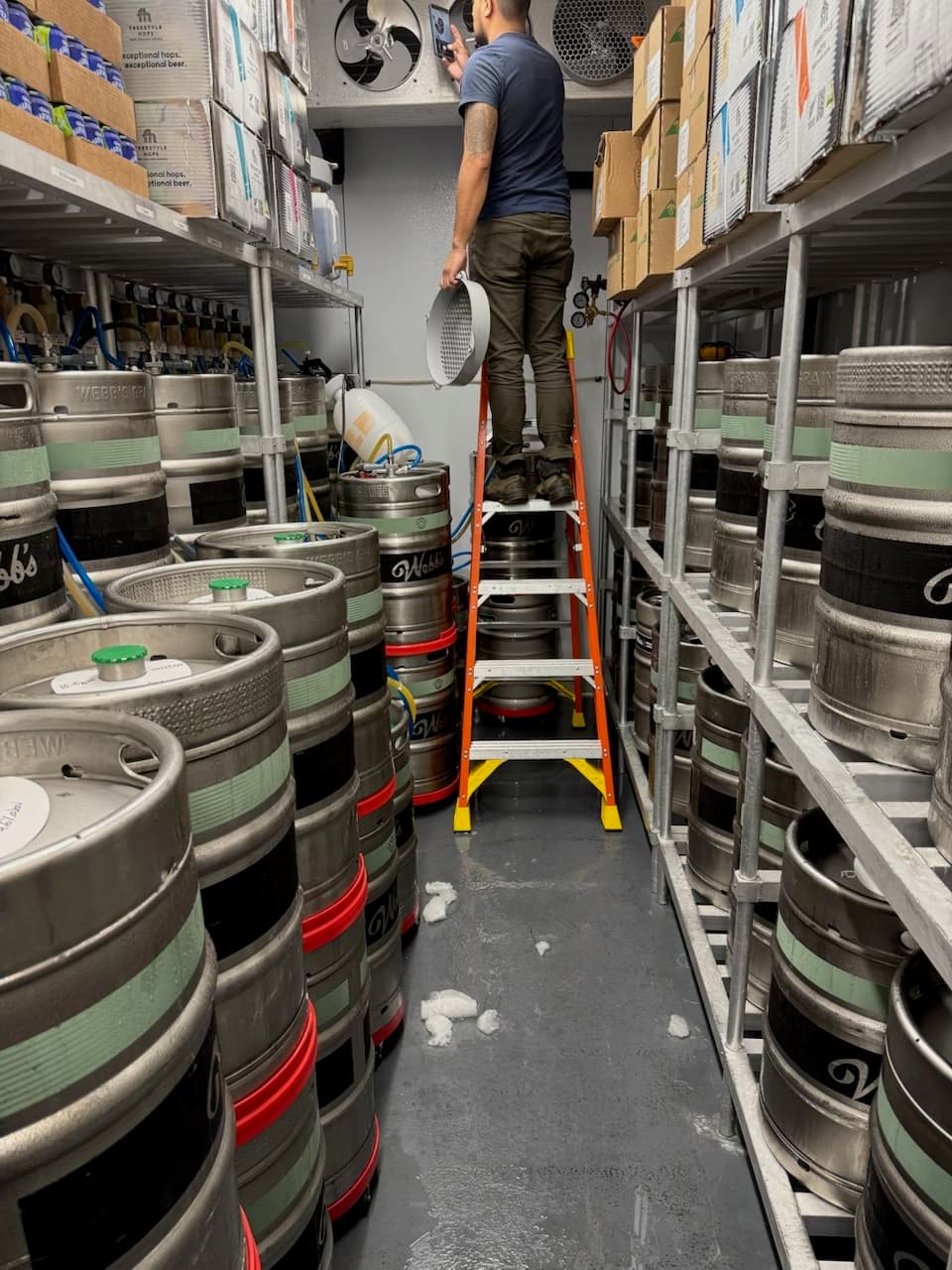
Most facility managers have heard something about refrigerants being phased out, usually in vague terms: "R-22 is gone," "the new stuff is flammable," "my HVAC guy mentioned something about 2026." The regulations behind it are real, they are actively changing, and one part of them already applies to a lot of commercial refrigeration and HVAC equipment right now. Here is the practical version, written for someone who has to manage a building, not litigate a rule.
One caveat up front: this is general information, not legal advice. EPA has revised dates and thresholds more than once, and California layers its own requirements on top of the federal ones. Confirm current requirements for your equipment category and sector before making a decision that depends on a specific date.
The short version of what is happening
The AIM Act directs the EPA to phase down HFC refrigerants, the ones most commercial RTUs, walk-ins, and reach-ins currently run on, by roughly 85 percent by 2036. That phasedown is already underway and works by shrinking the amount of HFC that can be produced or imported each year. Separately, EPA's Technology Transitions Rule sets maximum global warming potential (GWP) limits for refrigerants in new equipment, with different compliance dates depending on the type of equipment and industry sector. And a third piece, the Emissions Reduction and Reclamation rule, covers leak detection, repair, recordkeeping, and the use of reclaimed refrigerant in existing equipment.
Those three pieces do different jobs. The phasedown affects supply and therefore the cost and availability of refrigerant for service. The GWP limits affect what you can buy new. The leak rules affect how you operate what you already own. Facility managers tend to hear about the first two and miss the third, which is the one with obligations today.
What is actually in effect right now
As of January 1, 2026, EPA's leak detection and repair requirements apply to owners and operators of equipment with a refrigerant charge of 15 pounds or more that uses an HFC or HFC blend. That threshold covers a lot of commercial equipment: larger RTUs, walk-in refrigeration systems, supermarket and convenience store racks, and many condensing units serving prep areas. In practice, the rule means:
- Documented, periodic leak inspections on qualifying equipment, with frequency tied to charge size
- Repair within a defined window once a leak above the applicable rate is identified
- Verification that the repair held, typically an initial and a follow-up test
- Recordkeeping that can be produced if requested, not just "we probably checked it"
- For some larger systems, automatic leak detection equipment requirements phase in on later dates
This is the part that is actionable today, independent of any future equipment replacement decision. If nobody has confirmed which of your units cross the 15-pound threshold, that is worth finding out before it becomes a compliance gap. Charge size is on the nameplate for packaged equipment; for field-built walk-in and rack systems it has to be calculated or pulled from the installation record.
The California layer
California already had refrigerant management rules through the Air Resources Board for larger commercial refrigeration systems before the federal rule took effect, including registration and reporting for facilities above certain charge thresholds. If you operate in California, you may have obligations under both programs, and they do not always line up on thresholds or schedules. The California refrigerant compliance guide walks through how the two interact in more detail.
What is coming, and why the dates keep moving
New-equipment GWP limits are being phased in for retail refrigeration, cold storage, and other sectors over the next several years. EPA proposed and then finalized changes to several of these dates during 2025 and 2026; some deadlines were extended, and some thresholds were relaxed for a period before tightening again later in the decade. Manufacturers are already shifting new equipment toward lower-GWP options, most commonly A2L refrigerants like R-454B and R-32 for comfort cooling and CO2 or lower-GWP blends for refrigeration, and that shift will keep happening regardless of exactly where a given compliance date lands.
For a facility manager, the practical implication is not "panic-replace everything before a specific date." It is this: when a unit is up for replacement anyway, the refrigerant type and GWP limit that applies to your equipment category and site should be part of that conversation, not an afterthought discovered after the equipment is already ordered. The RTU replacement process now includes a refrigerant decision that did not exist five years ago.
A2L refrigerants: what changes on site
The newer A2L refrigerants are classified as mildly flammable. That sounds alarming, and it is a real change, but the practical consequences for a building owner are mostly procedural:
- Equipment designed for A2L refrigerant includes leak sensors and mitigation controls that older equipment did not have
- Technicians need training and tooling specific to A2L handling, and recovery equipment has to be rated for it
- Mechanical room ventilation and equipment placement may have additional requirements depending on charge size
- You cannot retrofit an A2L refrigerant into a system designed for R-410A; the equipment itself changes
Ask any contractor proposing new equipment what refrigerant it uses and whether their technicians are trained on it. It is a fair question and a quick way to tell whether the shop has kept up.
How the pieces compare
| Rule | Who it affects | What it requires | Status |
|---|---|---|---|
| HFC phasedown | Everyone indirectly, via supply | Nothing directly of owners; affects refrigerant cost and availability for service | Underway, stepping down through 2036 |
| Technology Transitions (GWP limits) | Buyers of new equipment, by sector | New equipment must use refrigerant under the GWP cap for that category | Phasing in by sector; dates have been revised |
| Leak detection and repair | Owners of HFC equipment at or above 15 lb charge | Inspections, repair windows, verification, records | In effect as of January 2026 |
| California ARB refrigerant management | California facilities above state thresholds | Registration, reporting, leak inspection, records | In effect; separate from federal rule |
What existing equipment owners do not need to worry about
Working systems on R-410A and other current HFC refrigerants do not need to be replaced just because they are not the newest refrigerant type. Servicing existing equipment with its current refrigerant remains allowed, and reclaimed refrigerant is explicitly part of how the rules expect existing equipment to be kept running. The compliance requirements are aimed at leak management on qualifying equipment now, and at what refrigerant goes into new installations going forward, not at forcing early replacement of equipment that is working fine.
What does change is the economics of a large leak repair on an older system. If a walk-in rack or a 20-ton RTU on a legacy refrigerant develops a coil leak, the cost and lead time of the refrigerant itself becomes a bigger share of the decision, and that is one of the inputs in the repair-or-replace conversation.
Who is responsible: owner, operator, or contractor
The leak rule puts the obligation on the owner or operator of the appliance, not on the service contractor. Your contractor performs the inspections, does the repairs, and should hand you the records, but if an inspector asks for documentation, it is the facility that has to produce it. That matters in a few common situations. In a leased space, the lease determines whether landlord or tenant is the operator for a given piece of equipment, and the answer is often different for a base-building RTU than for a tenant-owned walk-in. In a multi-site operation, the records need to be findable by site, not buried in a regional accounts-payable folder. And when you change contractors, the history has to come with the equipment. Ask any contractor how they deliver leak inspection records and what happens to those records if you stop working with them. A good answer is that the records belong to you and are attached to the equipment, not to the contractor's invoicing system.
What good recordkeeping looks like
The leak rule is ultimately a documentation rule. An inspector or auditor will want to see, for each qualifying appliance, the charge size, the inspection dates and results, the leak rate calculation when refrigerant was added, repair dates, and verification tests. Paper service tickets in a filing cabinet technically count, but they are hard to produce on request and nearly impossible to trend. A record that lives with the equipment, where any technician can see the full history and add to it, is both easier to maintain and more credible when someone asks for it. That is a large part of why we built the DaVinci Portal: a QR tag on the unit opens the full service record, including refrigerant added, leak checks, and photos, which is exactly the material a compliance review wants.
A reasonable way to handle this
- Inventory every refrigeration and HVAC appliance with its refrigerant type and charge size, and flag everything at or above 15 pounds
- Confirm whether any California state thresholds also apply to your larger systems
- Set a leak inspection schedule for qualifying equipment and make sure the results are documented, not just performed
- When refrigerant is added, record how much and calculate the leak rate; that number triggers repair obligations
- When a unit is genuinely due for replacement, ask what refrigerant the new equipment will use and whether that fits your category's current requirements
- Do not treat any single deadline as fixed; these rules have changed more than once and may change again
We handle leak inspection documentation and refrigerant guidance as part of standard commercial refrigeration service and maintenance plans. For anything site-specific, confirm current requirements for your equipment and sector before making a decision.